
6 Natural Sky Displays That Look Like Special Effects

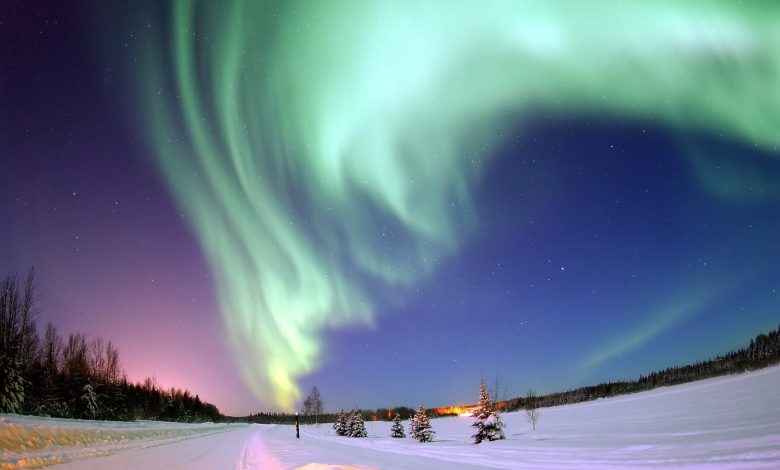
Aurora. Photo: United States Air Force photo by Senior Airman Joshua Strang / Wikimedia Commons. Public domain. Resized; original image licence applies.
The sky can briefly look as though someone has changed the lighting on an enormous stage. A pale ribbon crosses the stars, bright spots flank the Sun, or city lights seem to stretch straight upwards. These effects do not all have the same cause. Some involve particles high above Earth; others depend on ice crystals and the angle from which we see the light. The photographs below make a good starting point for telling them apart.
1. Aurora: a curtain with a connection to space
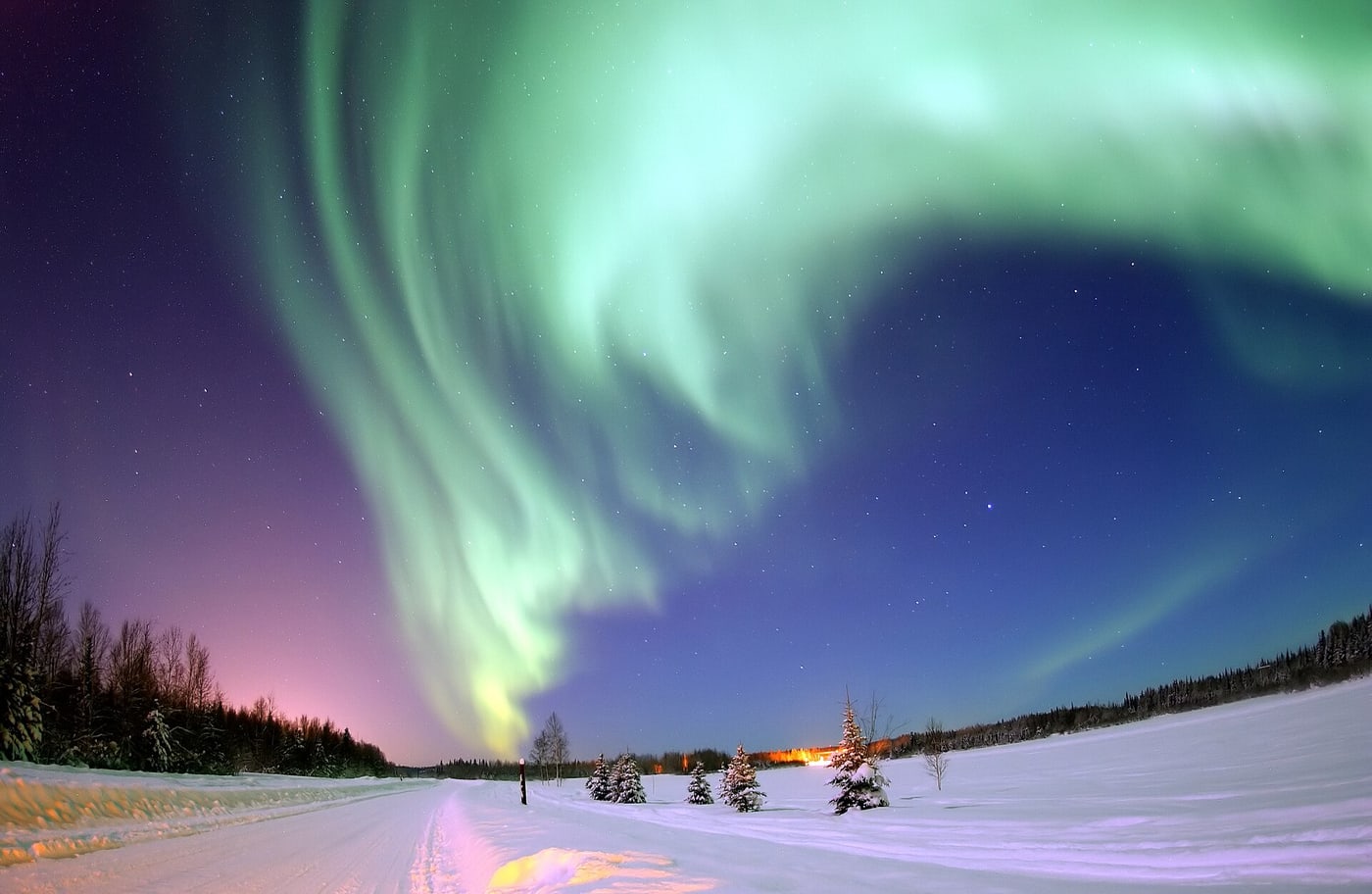
An aurora can spread into arcs, folds and long curtains that seem to move across the sky. The light is produced when energetic particles interact with gases in Earth’s upper atmosphere. Oxygen and nitrogen are involved in the different colours, with the exact appearance also depending on altitude and the particles’ energy.
A photograph may show a richer palette than an observer notices at the time, because cameras can gather light over a longer exposure and process the result. That does not make the event imaginary, but it is useful context for a particularly vivid image. Look at the structure as well as the saturation: the curved sheets and narrow rays are often what make an aurora photograph feel alive. [1]
2. STEVE: a purple ribbon with a surprisingly friendly name
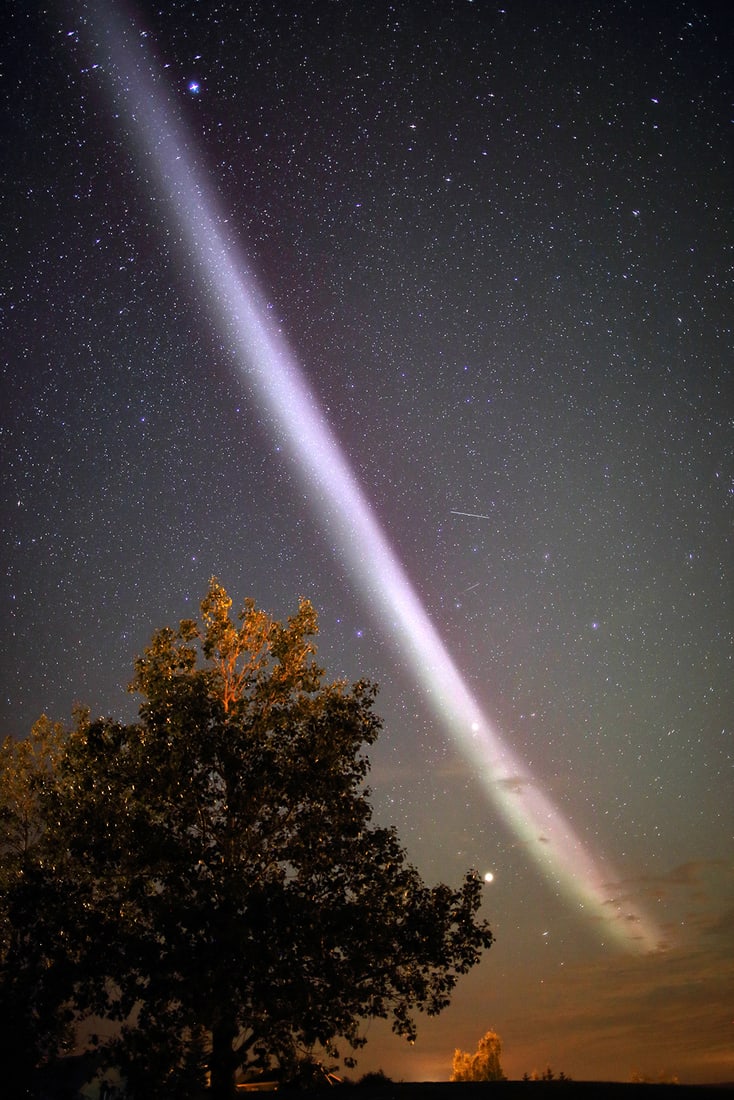
STEVE is the name used for a narrow, often purple-looking arc associated with conditions in the upper atmosphere. It can occur closer to the equator than the main auroral display. Citizen observers played an important role in bringing it to researchers’ attention, and NASA has described work combining ground photographs with satellite measurements.
The image is striking partly because of its restraint. Instead of filling the sky with broad curtains, the feature can appear as one clean line across the stars. Its relationship to auroral activity is a subject of scientific study, and treating every purple night-sky glow as the same phenomenon would miss that complexity. The name makes it memorable; the collaboration between observers and researchers gives the story another appealing dimension. [2]
3. Sun dogs: bright companions beside the Sun
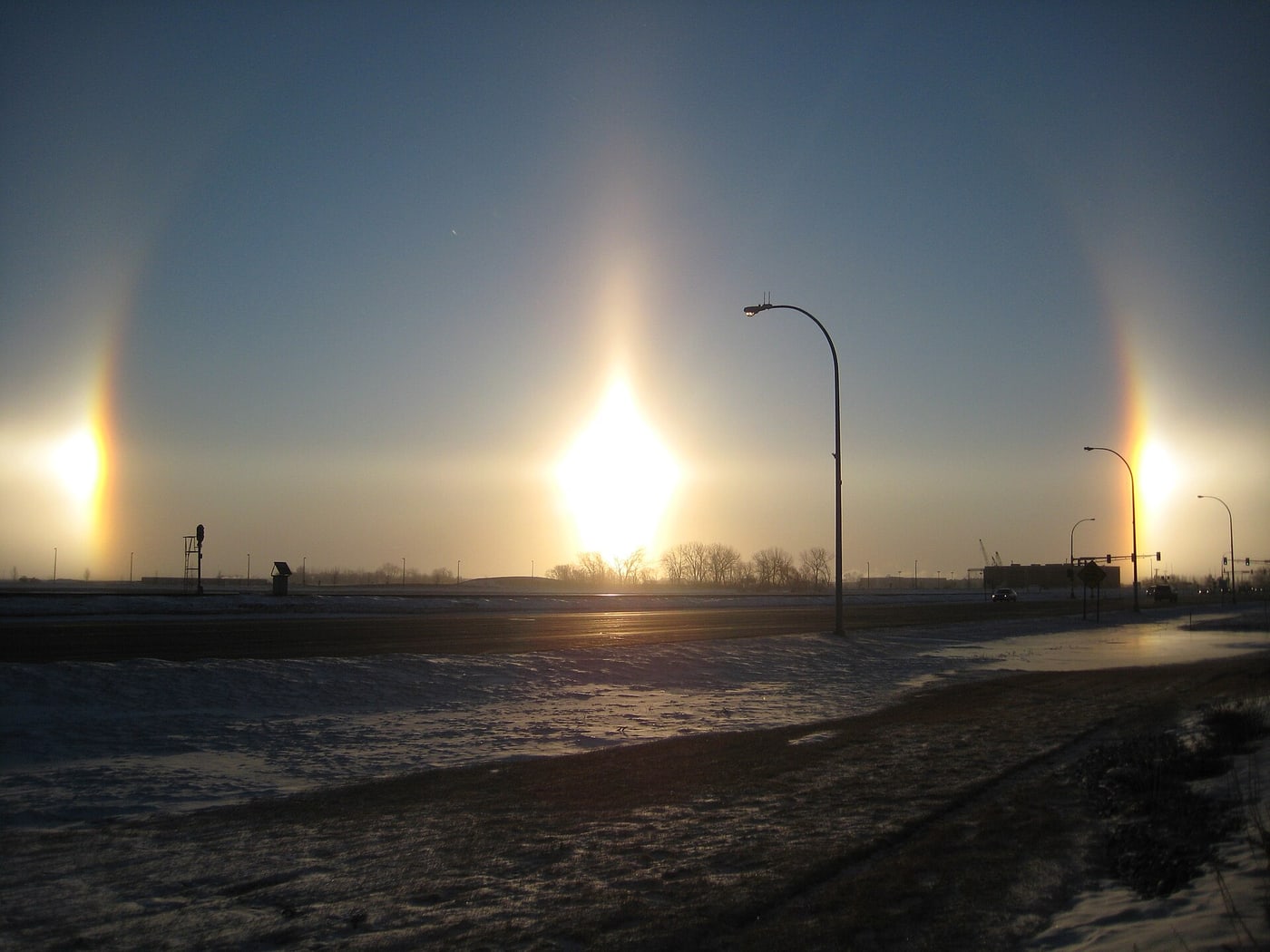
Sun dogs are bright patches that can appear to either side of the Sun, often with a hint of colour. They form when sunlight is refracted through appropriately oriented ice crystals. Their placement makes the effect look orderly, almost as though additional lights have been positioned along a horizontal line.
The photograph is a record of a particular alignment between light, crystals and the viewer. Change those conditions and the display changes or disappears. A sun dog is therefore different from a rainbow made by liquid water droplets, even though both invite us to admire separated colours. The central Sun remains extremely bright, so enjoy such displays without staring directly at it. A nearby obstruction can help keep the Sun itself out of view. [3]
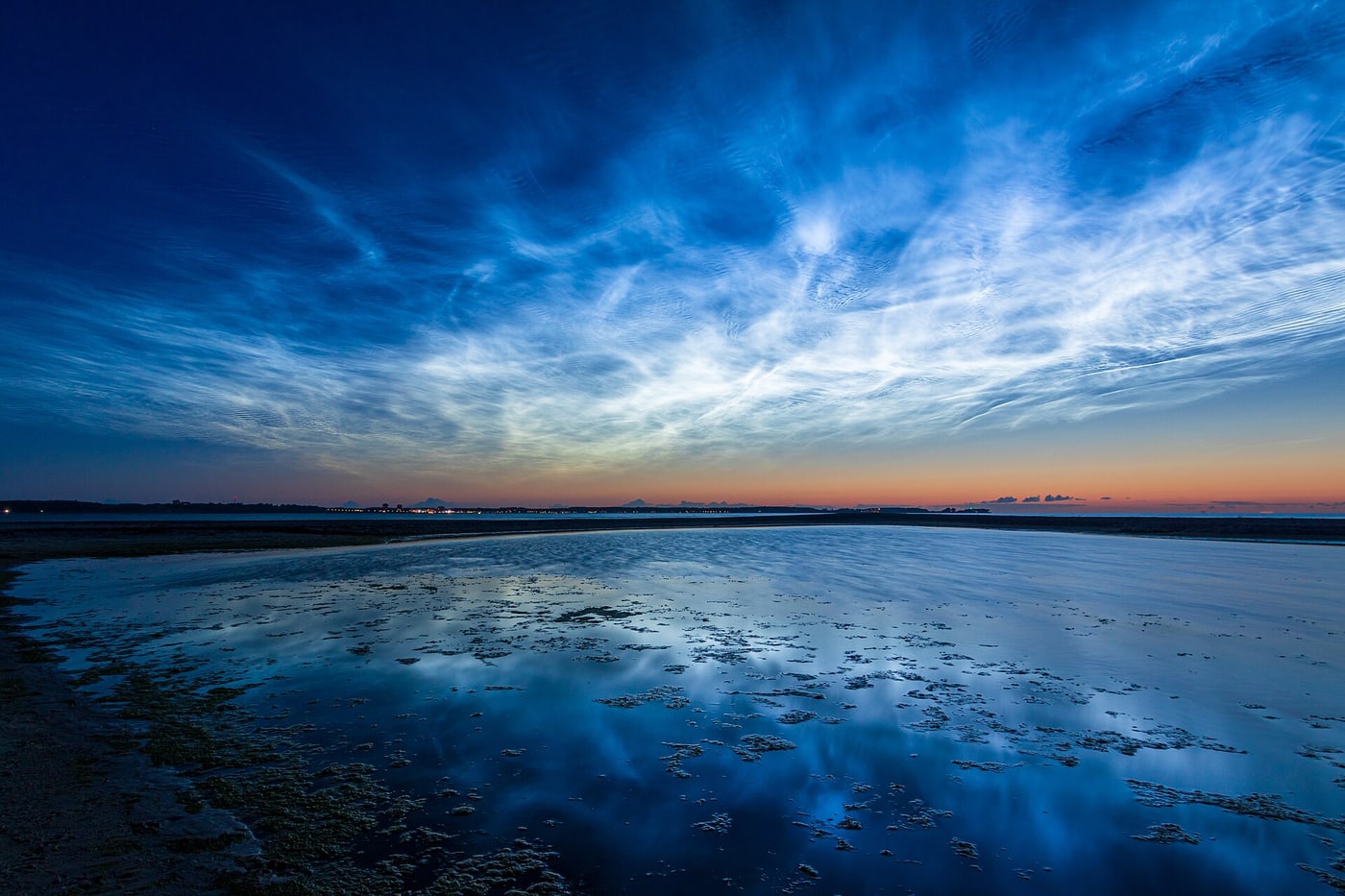
4. Noctilucent clouds: the day’s last light reaches unusually high
Noctilucent means night-shining, an apt description for the silvery or bluish wisps that can remain visible against a darkening sky. These clouds form high in the mesosphere, around 50 miles above the ground. Their altitude allows sunlight to illuminate them while the observer below is already in twilight or darkness.
In a photograph, their fine ripples and threads can resemble a delicate fabric pulled across the sky. The effect becomes clearer when darker ordinary clouds sit below them, giving the image two very different levels. NASA’s AIM mission studied these high clouds from space, adding a scientific perspective to a display that skywatchers can sometimes see from the ground. They are especially associated with summer conditions at higher latitudes. [4]
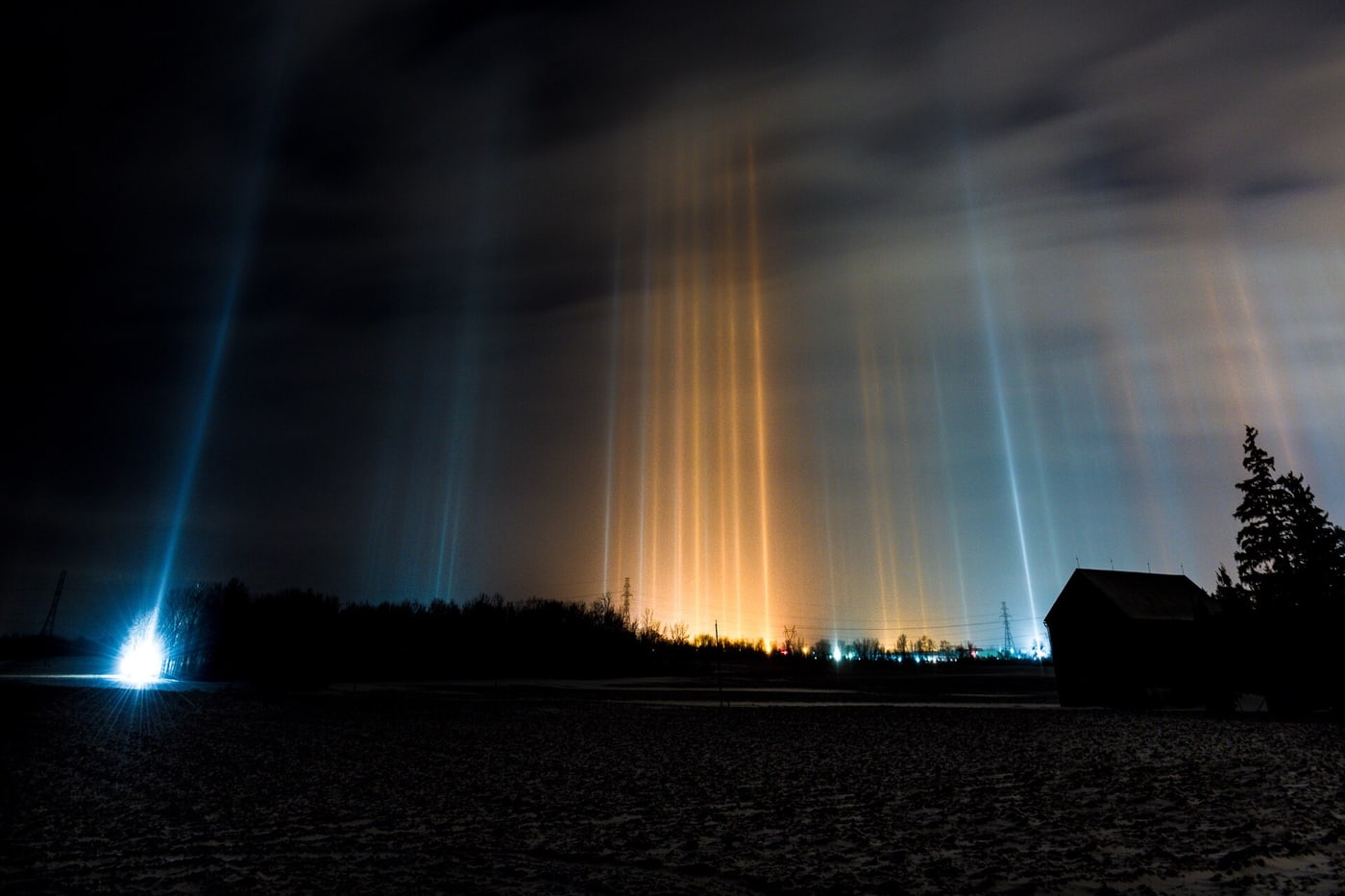
5. Light pillars: ordinary lights acquire extraordinary height
A group of light pillars can make a town resemble a science-fiction landing site. Flat ice crystals suspended in the air reflect light towards the viewer, creating the appearance of vertical columns. The original lights may be quite ordinary; the atmospheric arrangement gives them their dramatic new shape.
A pillar is an apparent structure in the view, not a solid beam or object hanging over a building. The colours can reflect those of the lights contributing to the effect. A still photograph emphasizes the strange geometry, especially when the ground is dark and the columns seem to have no obvious source. The contrast between everyday street lighting and an unusual winter atmosphere is what makes the scene so compelling. [5]
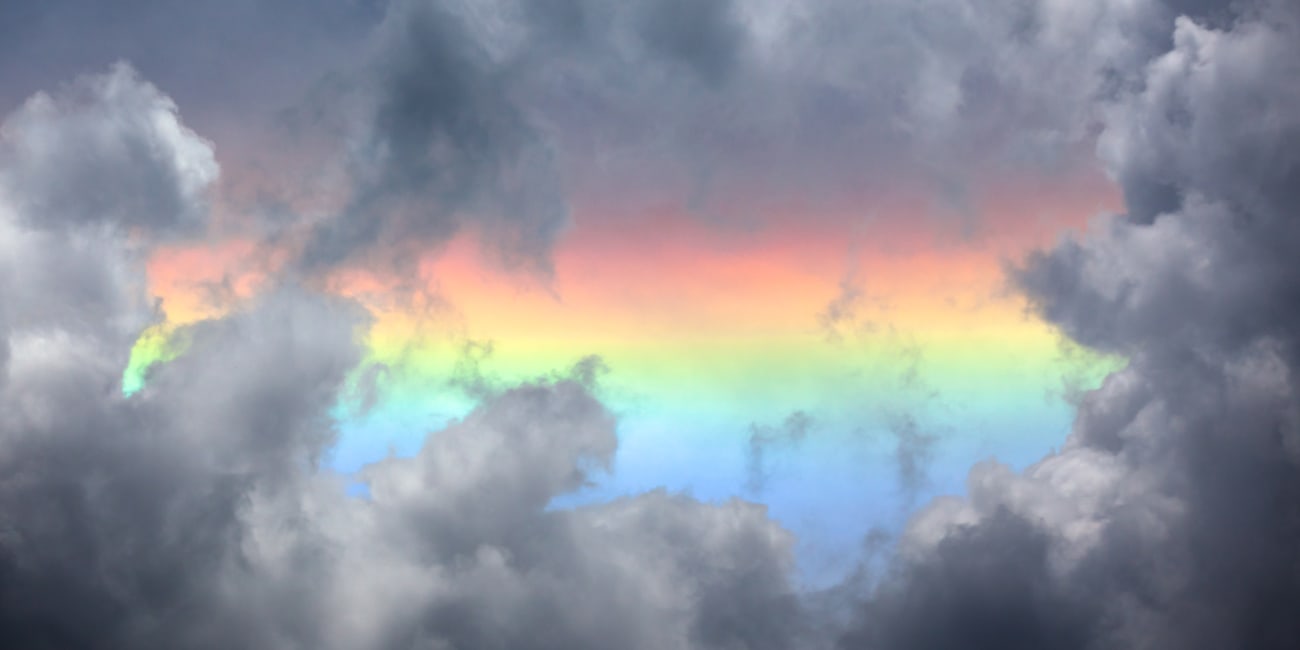
6. The circumhorizontal arc: a bright band without any fire
The popular nickname “fire rainbow” is eye-catching but unhelpful. A circumhorizontal arc involves sunlight passing through ice crystals with the right orientation while the Sun is high in the sky. It can appear as a horizontal band of separated colours across thin cloud, rather than the familiar curved rainbow seen opposite a rain shower.
The photograph can make the cloud seem to contain a glowing stripe. Its shape follows the optical geometry, while gaps and changes in the cloud determine which parts are visible. The National Weather Service has documented examples and explained why they are neither ordinary rainbows nor sun dogs. Learning the longer name is worthwhile: it gives a precise label to a display that is otherwise very easy to miscaption. [6]
Colour alone is rarely enough to identify a sky phenomenon. Shape, position, time of day and the surrounding conditions all help. These photographs are also a reminder that an unfamiliar sight can have a clear physical explanation while remaining every bit as beautiful once you know it.



_in_the_Nepal_Himalayas.jpg)