
6 Ordinary Things That Become Extraordinary Up Close

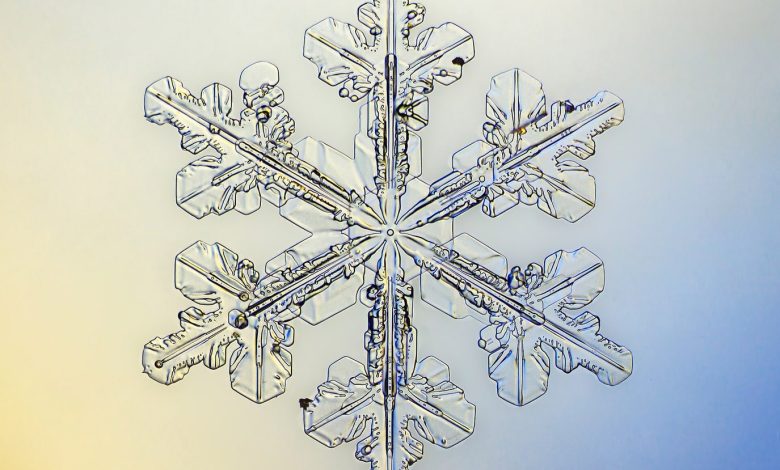
Snowflake. Photo: Janek Lass / Wikimedia Commons. CC BY 4.0. Resized; original image licence applies.
A change in scale can make an ordinary material feel unfamiliar. Sand becomes a collection of separate shapes. A smooth-looking feather reveals a branching structure. The coloured surface of a butterfly wing breaks into rows of tiny overlapping pieces. These photographs are not all taken at the same magnification, but they share one useful trick: they slow down the moment when the eye decides it already knows what something is.
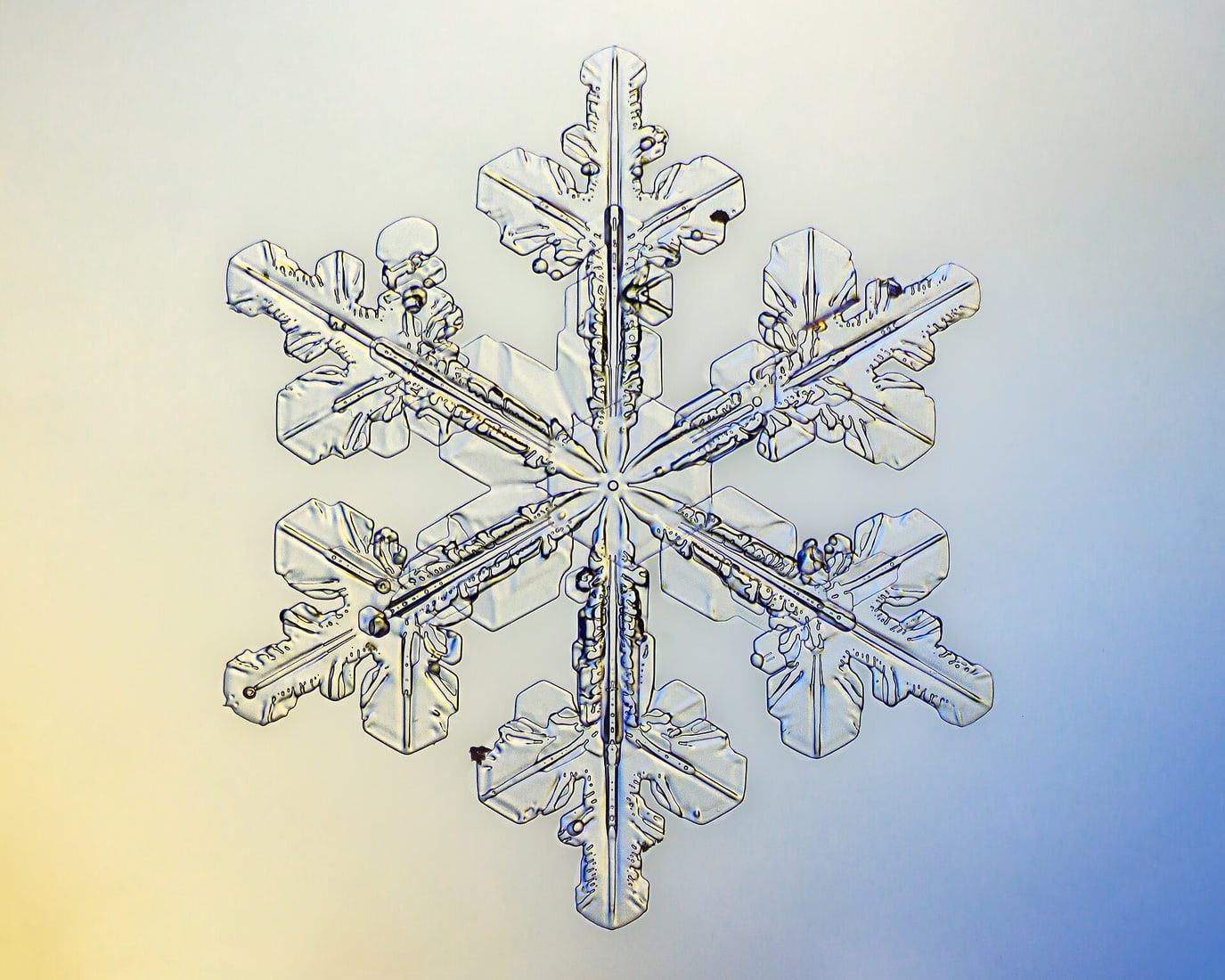
1. A snow crystal becomes a piece of intricate geometry
The familiar six-sided snow-crystal pattern has a molecular explanation. The arrangement of water molecules in the ice crystal helps produce its sixfold symmetry, while temperature and humidity influence how it grows. The resulting shape can have delicate branches, flatter plates or other forms that differ from the perfect decorative snowflake on a winter greeting card.
The photographed crystal gives you time to follow details that would disappear quickly in a warm hand. Look from the centre towards the tips: the same broad pattern repeats, but the smaller branches invite comparison. The beauty comes partly from that balance between order and variation. Physicist Kenneth Libbrecht’s SnowCrystals resource documents the process in detail, making it a rewarding next stop after the initial surprise of seeing so much structure in something so small. [1]
2. Sand stops being a single colour
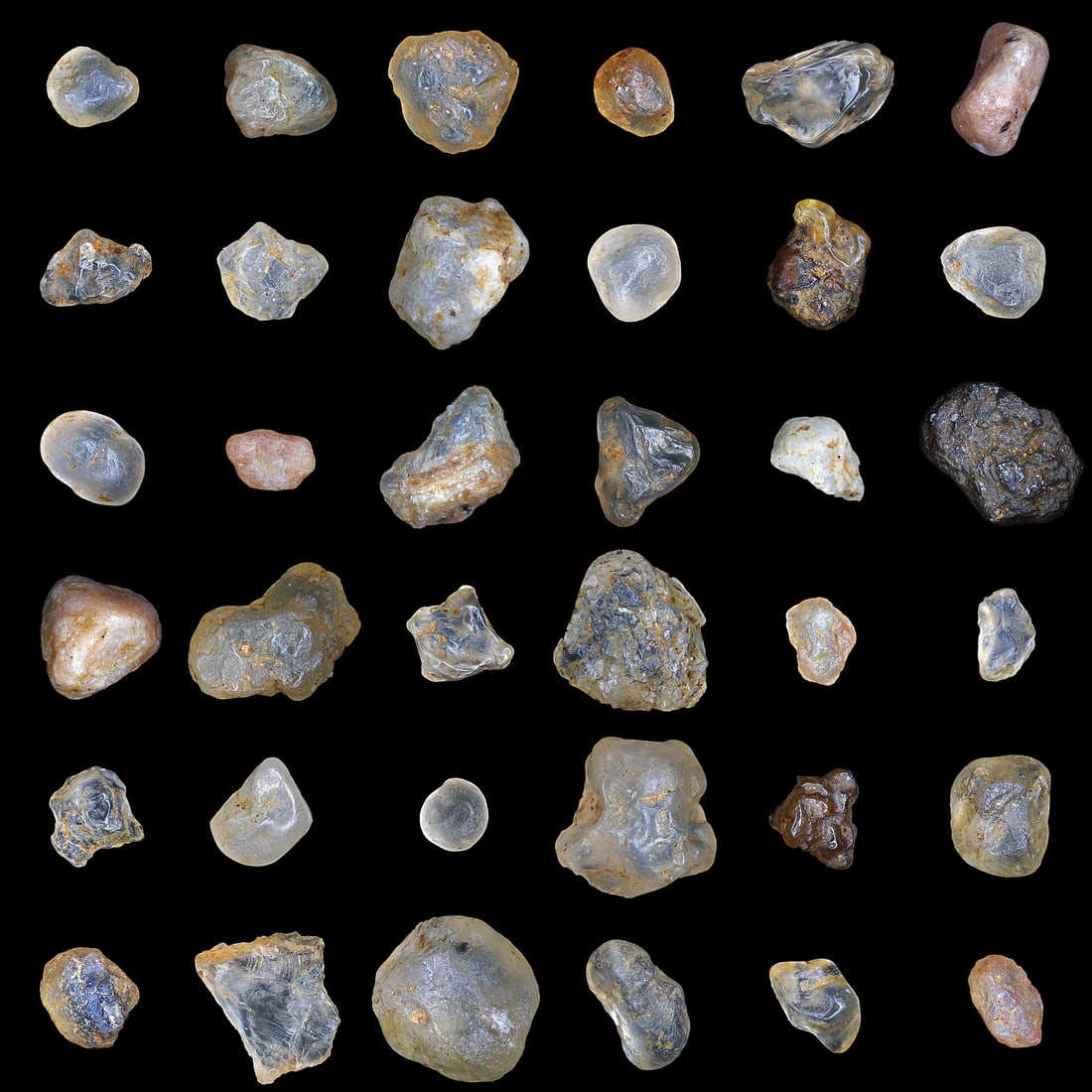
From a standing position, a patch of sand can seem beige, white or dark. Closer inspection breaks that uniform impression into individual grains with different edges, colours and degrees of transparency. The photograph presents selected grains against a dark background, allowing each small piece to hold the eye for a moment.
Sand describes a size range rather than one universal substance. Its ingredients depend on its source and history; mineral fragments and biological material can contribute in different places. The National Park Service’s beach-geology resources explain why those differences matter. A close-up does more than make a beach look attractive. It hints at the materials that reached it and the processes that broke, transported and sorted them before they came to rest together. [2]
3. Salt reveals edges that disappear in a pinch
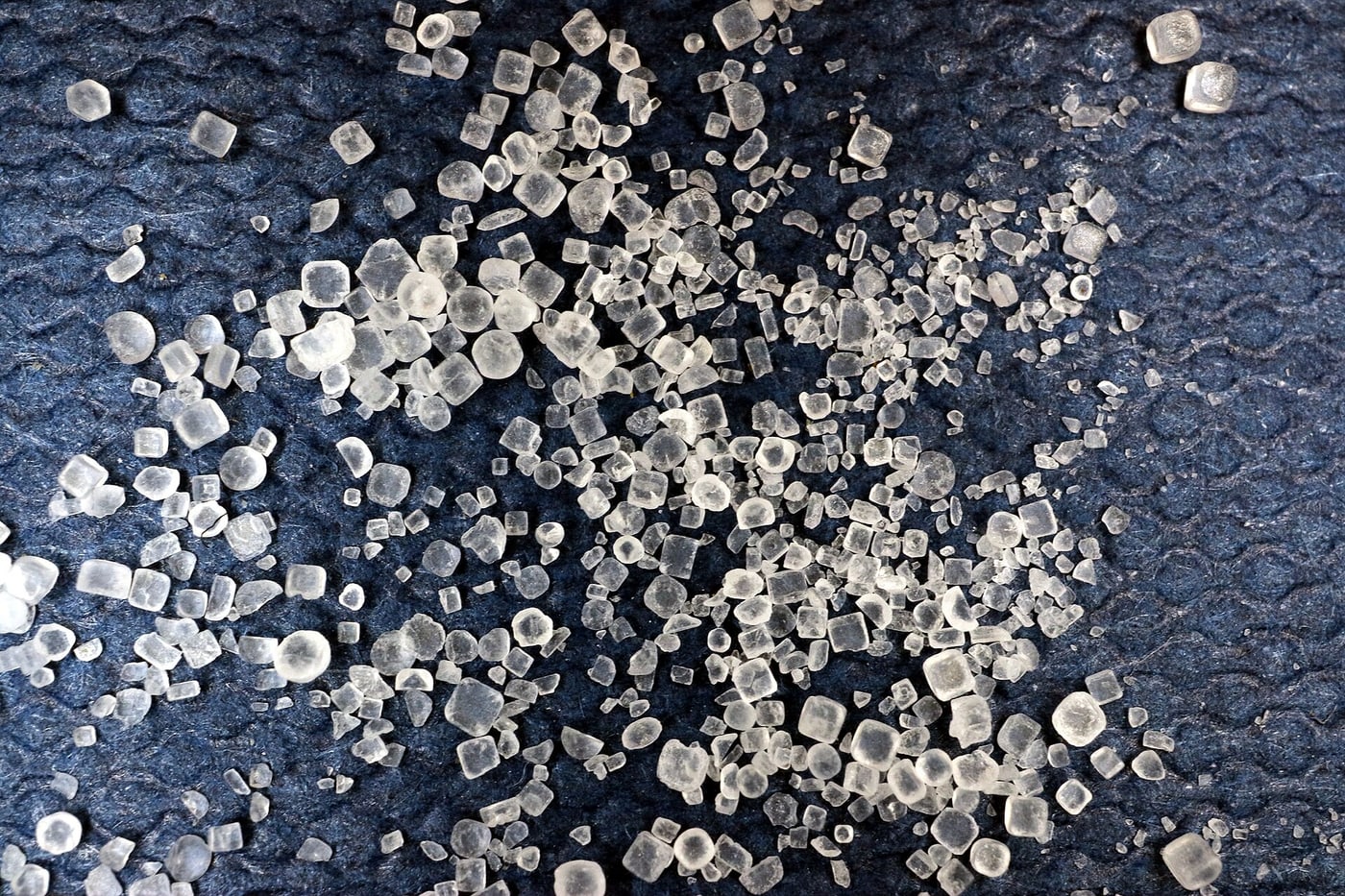
Kitchen salt is easy to think of as a white powder, especially when seen inside a shaker. Enlarged, the separate grains become visible objects with edges, surfaces and varying sizes. Sodium chloride has a cubic crystal structure, although crushed or processed grains will not all appear as perfect little cubes. That distinction helps explain why the photograph looks varied rather than geometrically uniform.
Light catches the particles differently, turning some bright and leaving others more translucent against the background. The result resembles a collection of tiny stones more than an ingredient. It is a simple example of how naming a material can make us stop looking at it. The word “salt” tells us what we use it for, while the photograph draws attention back to what the material actually looks like. [3]
4. A feather turns into a branching landscape
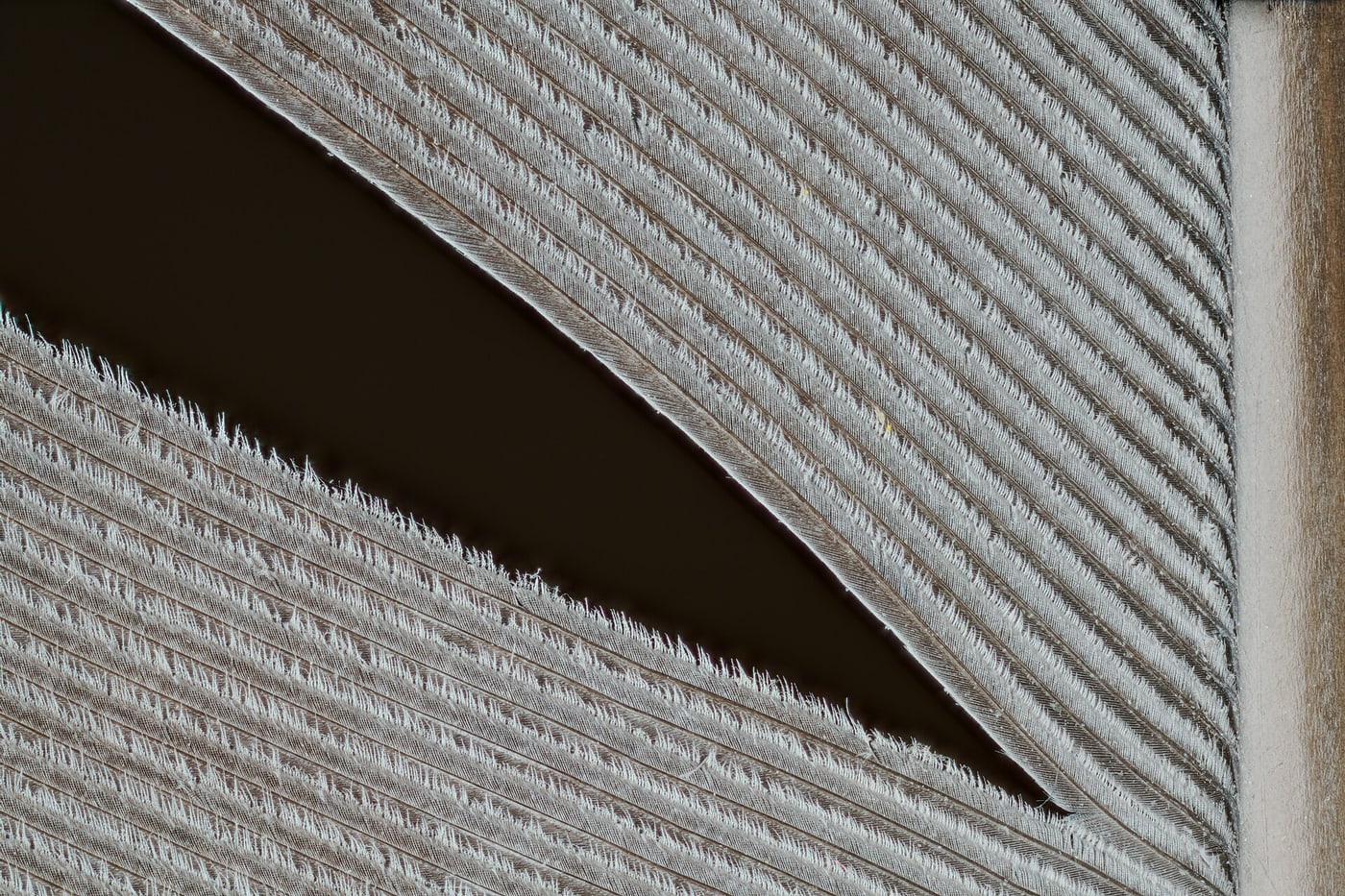
At normal viewing distance, the vane of a feather can look like one continuous surface. Move closer and it resolves into branches: barbs extending from a central shaft, with smaller barbules branching from them. In many flight and contour feathers, tiny structures help adjoining parts connect, producing a surface that combines lightness with organization.
The close-up photograph shows a break in that apparent sheet, making the construction easier to read. Repeated lines run alongside one another, while the gap exposes how much of the smooth-looking form depends on their arrangement. Cornell’s feather guide explains how different feather types vary, so the pattern here should not be applied to every feather. The broader surprise is the same: a familiar soft object contains a carefully structured hierarchy of parts. [4]
5. A butterfly wing becomes a tiled surface
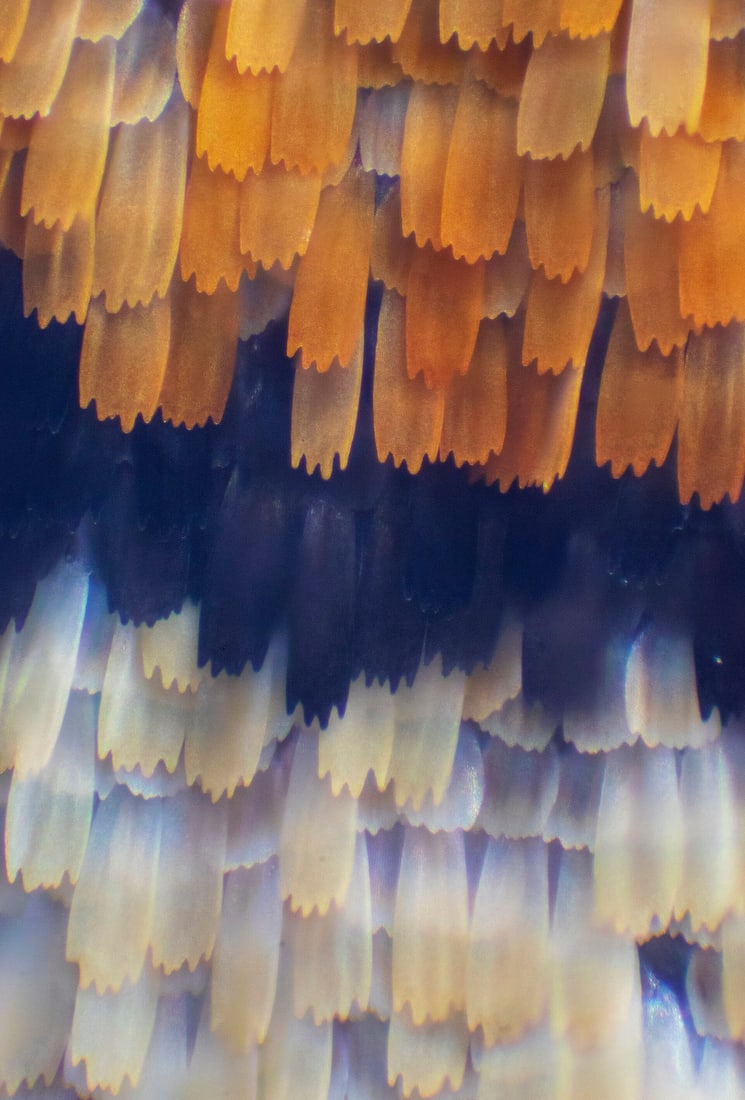
The colour on a butterfly wing is carried by a surface covered in tiny scales. Under magnification, they can resemble overlapping roof tiles, with different patches contributing to the pattern seen from farther away. Some colours come from pigments, while microscopic structure can also play an important role in the way light is reflected.
The photograph moves through several bands of colour, giving the eye a way to connect individual scales to the larger pattern. A wing that looks smoothly painted at first becomes a layered physical surface. The Natural History Museum explains how these structures help create the extraordinary range of butterfly appearances. The image also makes fragility easier to understand: there is a real, finely organized surface here, rather than a colour that exists independently of the wing. [5]
6. A familiar fastening strip becomes a forest of hooks
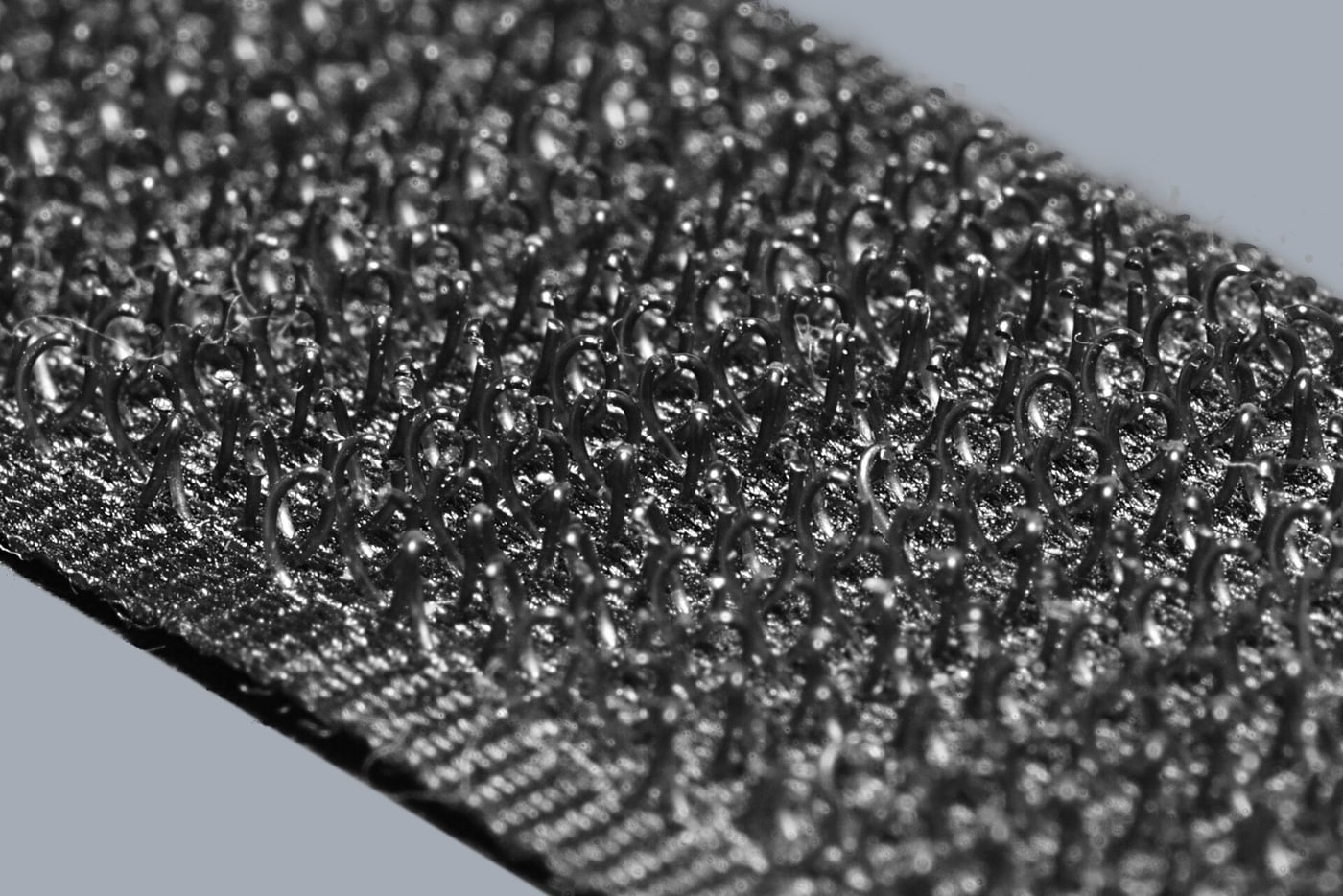
The rough side of a hook-and-loop fastener looks quite different when enlarged. Instead of one abrasive patch, the photograph reveals a dense field of small hooked shapes. Pressed against the matching looped surface, many of those hooks engage at once. Pulling the two sides apart releases them, producing the familiar ripping sound.
The design has a well-known connection to nature. Velcro’s account describes George de Mestral examining burrs that clung to fabric and fur, then developing a manufactured fastening system around the idea. It is a fitting final image because it connects observation with invention. Looking closely at an ordinary irritation suggested a useful structure—and looking closely at the resulting product lets us see why it works. [6]
The world in these photographs was present before the camera moved closer. Magnification simply gave the eye enough space to notice it. That makes the gallery easy to continue beyond the screen: familiar materials often become more interesting when you look for their edges, repetitions and small irregularities.


.jpg)


.jpg)
.jpg)
