
6 Space Images With Stories as Amazing as the Pictures

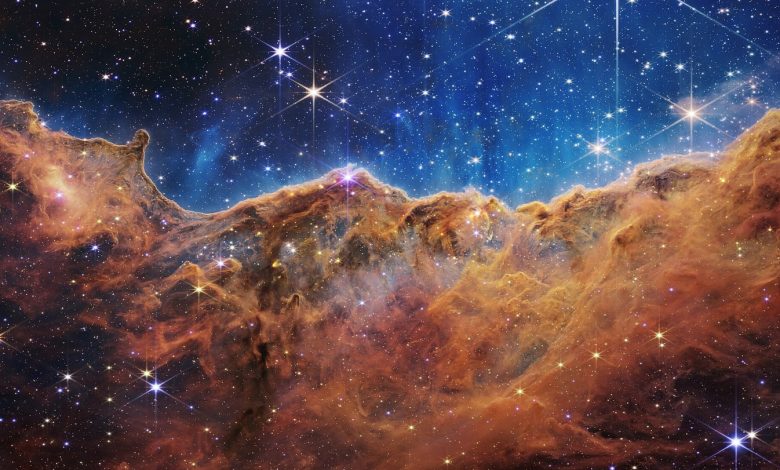
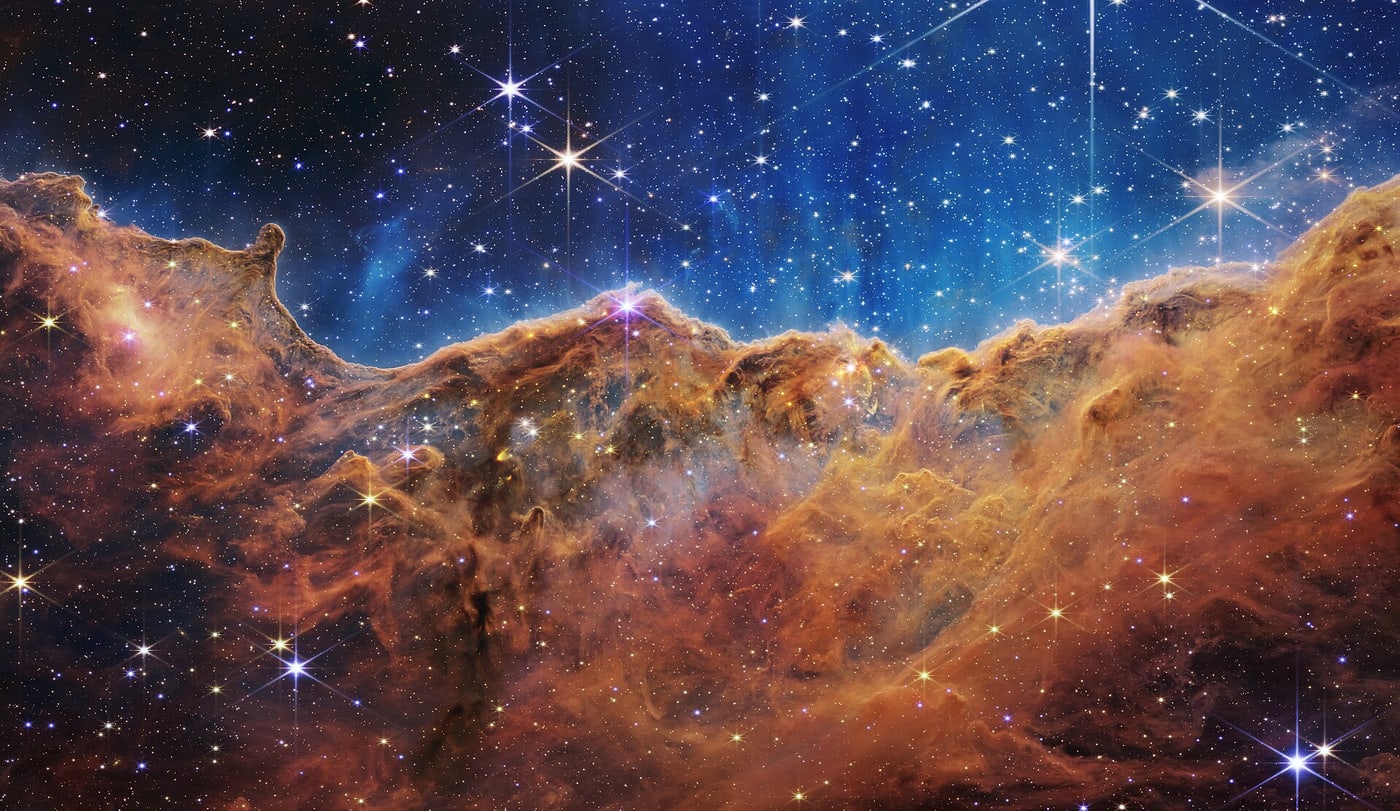
Webb’s Cosmic Cliffs in NGC 3324, using assigned colours to display infrared observations. Photo: NASA, ESA, CSA and STScI / Wikimedia Commons. Public domain. Resized; original image licence applies.
Space pictures can feel immediately familiar even when their subjects are almost impossible to imagine. We see cliffs, pillars, a heart or a glowing ring because those shapes give us a way into the image. The next step is to ask how the picture was made. Some are camera views from spacecraft; others combine observations into a form our eyes can interpret. These six images become even more impressive when their visual shorthand is unpacked.
1. The Pillars of Creation: the image that made a stellar nursery famous
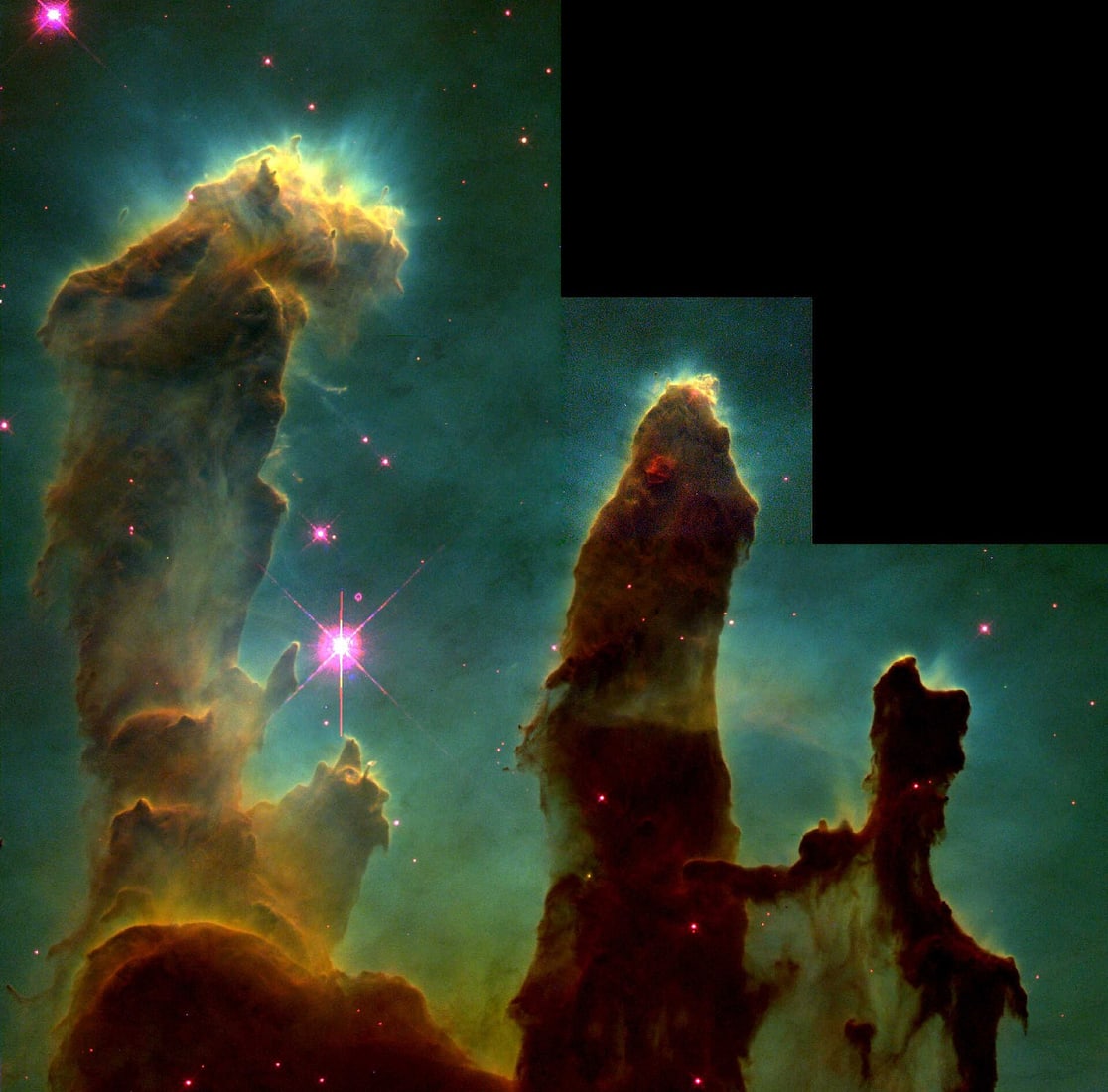
Hubble’s 1995 view of the Pillars of Creation turned structures in the Eagle Nebula into one of astronomy’s most recognizable pictures. The towering forms are clouds of gas and dust associated with star formation. They look substantial and architectural, yet their material is enormously more diffuse than the stone or earth suggested by the name.
The colours in this kind of image help represent observations made through selected filters. They are a way of revealing structure, rather than a promise that a traveller’s eyes would see the same palette. The stepped shape around part of the original picture also reflects how the observations were assembled. Those details do not weaken the image. They let you see both the distant subject and the instrument’s role in making it visible. [1]
2. Pluto: a distant point becomes a complicated world
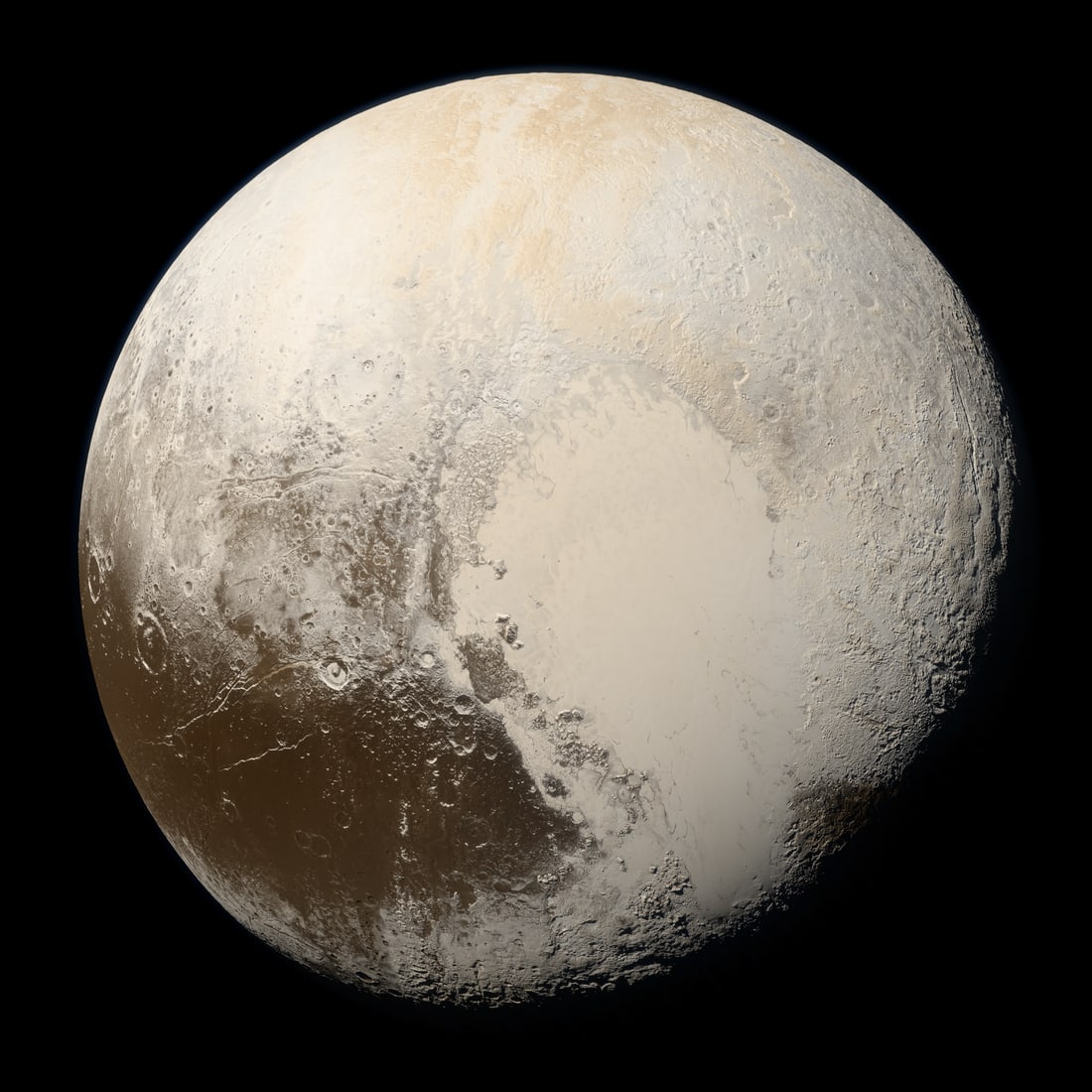
The pale heart-shaped region on Pluto is one of the easiest features in the Solar System to recognize at a glance. NASA’s New Horizons flyby in July 2015 gave us the detailed observations behind this view. The image shown here is a natural-colour reconstruction, processed to approximate the colours a human observer would see.
The real revelation lies in the variation across the surface. A world once represented by a distant point or a blurry disc suddenly displayed contrasting regions and textures. The heart gives your eye somewhere to start, but the darker areas around it make the whole globe interesting. It is worth looking beyond the familiar shape and following the transition towards the edge, where lighting and curvature reveal that this is an entire world, not a flat emblem. [2]
3. Saturn’s hexagon: an atmosphere that seems to know geometry
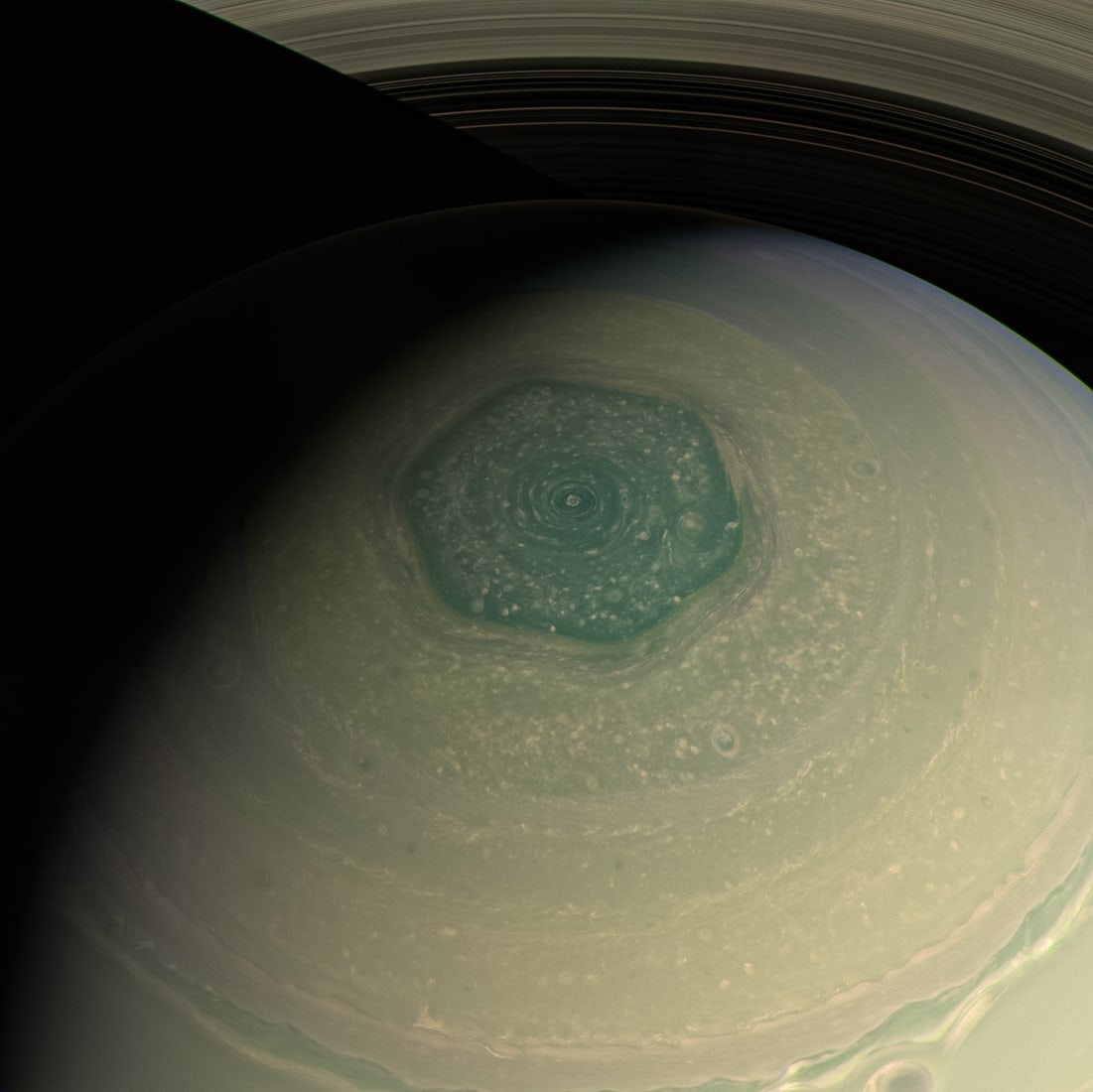
A six-sided pattern around Saturn’s north pole sounds like something an illustrator might add to make a planet unusual. Cassini observed the real feature in detail. NASA describes the hexagon as a jet-stream pattern, part of the planet’s atmosphere rather than a solid boundary traced on its surface.
That distinction is easy to lose in a still image. The shape looks fixed and constructed, while the clouds within and around it belong to a moving system. Look at the smaller swirls as well as the large outline: they help replace the impression of a drawn polygon with a view of weather. The photograph is remarkable because a familiar geometric form emerges at planetary scale, in material that is continually moving rather than holding a rigid shape. [3]
4. Earthrise: the mission looks back towards home
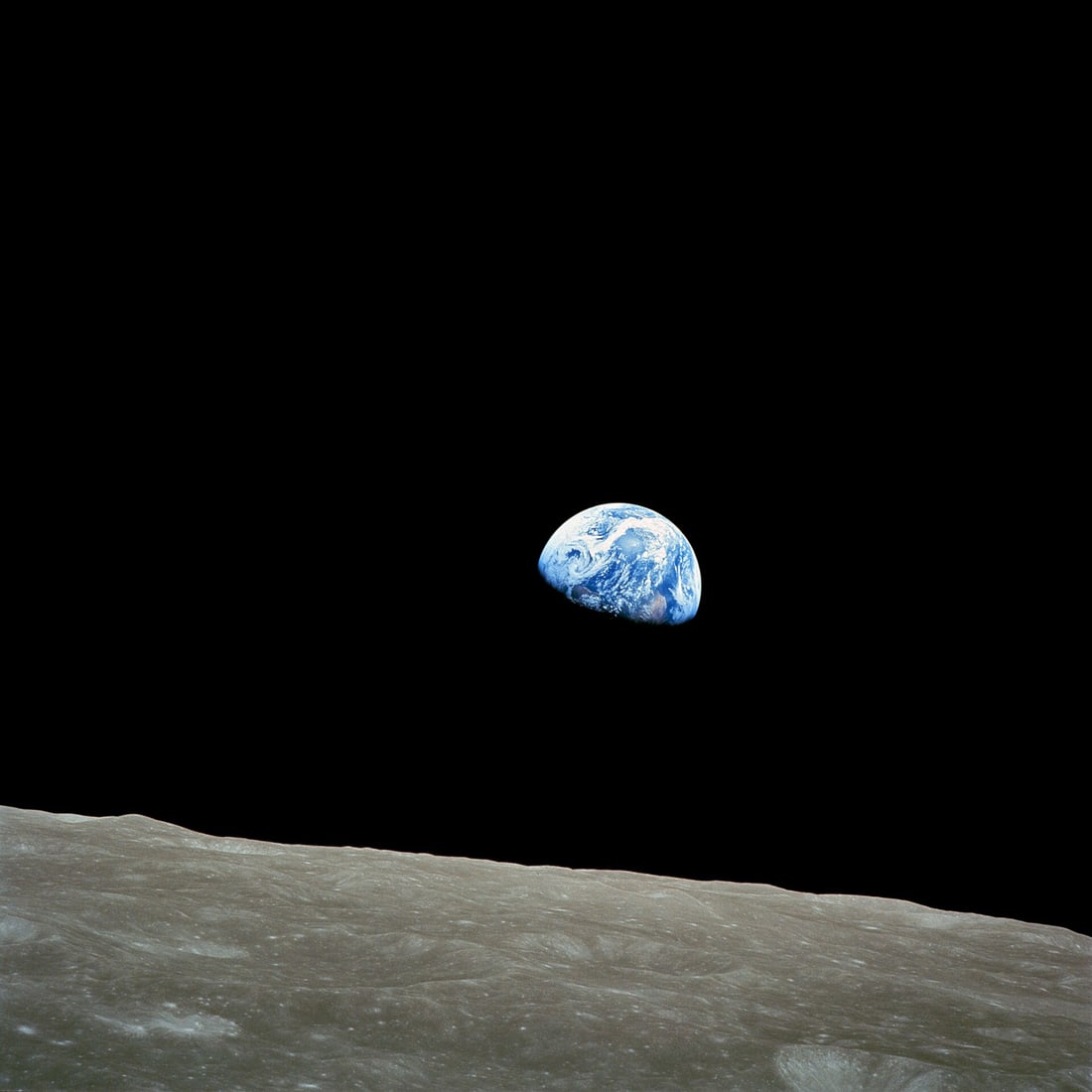
Bill Anders took the famous colour Earthrise photograph during Apollo 8’s lunar mission on December 24, 1968. The composition is spare: a rough grey foreground, a huge area of darkness and a small, bright Earth. Its emotional force comes partly from that imbalance. Everything familiar is concentrated in a comparatively tiny part of the frame.
The word “rise” describes what the astronauts saw from their moving spacecraft, rather than an everyday sunrise-like event for a person standing at the same lunar location. The photograph also reverses our usual direction of attention. A mission travelling towards the Moon produced an enduring view of Earth. The blue and white detail becomes more striking because the rest of the picture gives it so much room. [4]
5. M87*: a ring made from a planet-wide observing effort
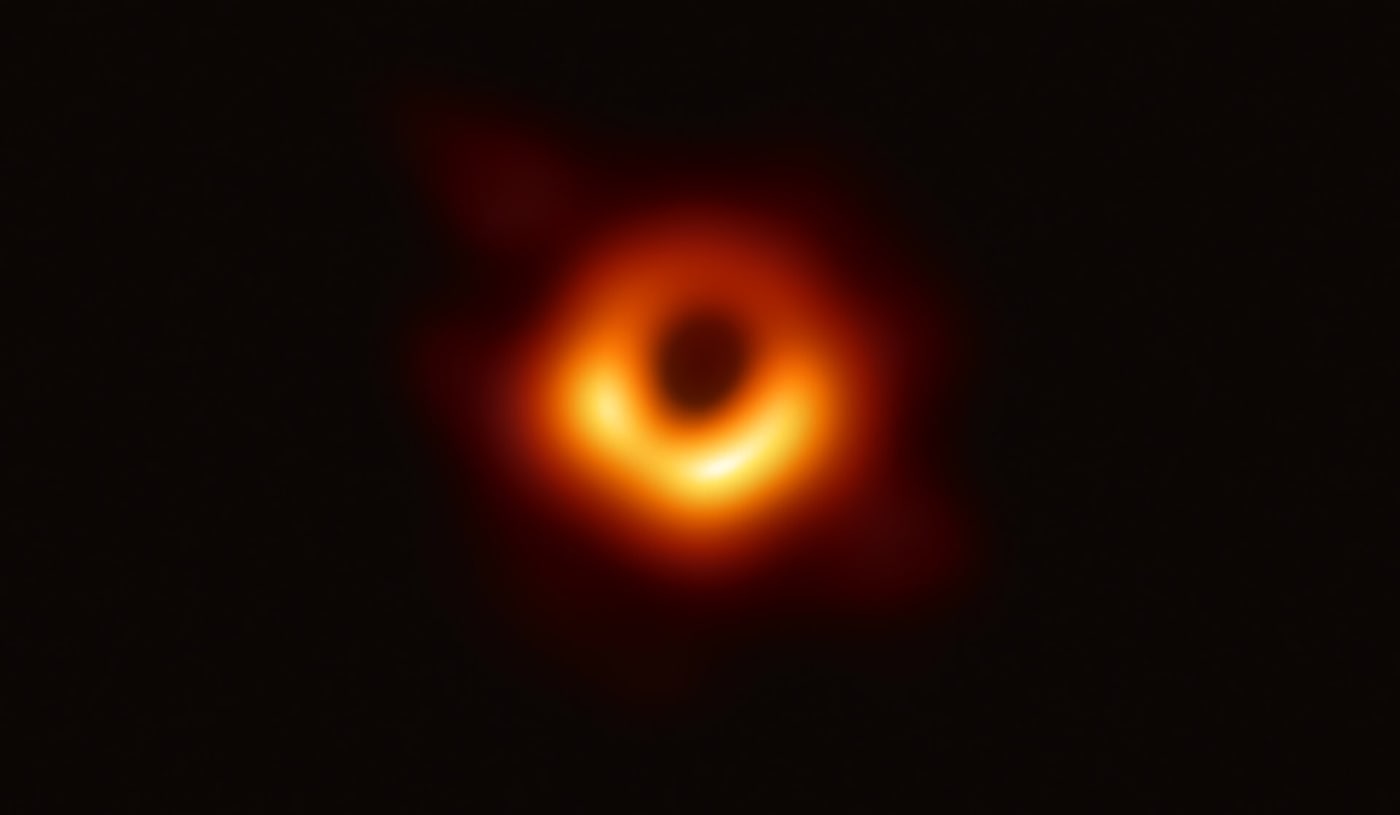
The first published Event Horizon Telescope image of the black hole in galaxy Messier 87 appeared in 2019. Its bright ring and dark centre became instantly recognizable. The result came from coordinated radio observations and extensive processing, using telescopes distributed around Earth to resolve a target far beyond the reach of an ordinary camera.
The dark area is associated with the black hole’s shadow against emission from the surrounding material. It is not a photograph of a solid black surface. The orange appearance is a chosen representation of the radio data, which our eyes cannot see directly. Knowing this adds to the achievement: the image translates measurements into a view that lets a very difficult astronomical result become visually understandable. [5]
6. The Cosmic Cliffs: a landscape made of gas and dust
Webb’s Cosmic Cliffs image resembles a mountain range under a star-filled sky. NASA identifies the scene as the edge of a huge gaseous cavity in the star-forming region NGC 3324, within the wider Carina Nebula area. The apparent peaks and valleys are a useful visual analogy, but they are not terrain you could stand on.
Webb’s infrared observations reveal detail that becomes visible to us through assigned colours. Follow the boundary between the warm-looking lower region and the bluer area above: small structures appear along an edge that initially seems like one continuous ridge. The picture rewards the same kind of slow looking as a landscape photograph, while requiring a very different sense of scale and material. Its beauty and its scientific purpose are closely connected. [6]
There is no single recipe for a truthful space image. The useful questions are what was measured, how the data were turned into a picture and what the colours represent. With those answers in mind, the familiar shapes become a starting point for understanding rather than the whole story.



.jpg)

