6 Libraries That Look Like They Belong in a Fantasy Film

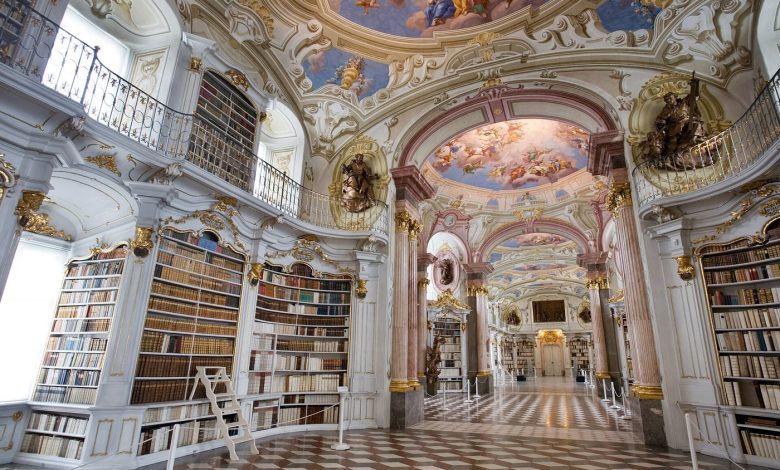
Admont Abbey Library. Photo: Jorge Royan / Wikimedia Commons. CC BY-SA 3.0. Resized; original image licence applies.
A library can make you lower your voice before anyone asks. Sometimes it is the height of the ceiling; sometimes it is the sight of thousands of books arranged beyond easy reach. The six places in this gallery create that feeling in very different ways, from dark timber to bright painted vaults. These are photographs taken at particular moments, rather than live views, and conservation work can change what a visitor sees.
1. Trinity College Dublin: a room that seems to continue forever
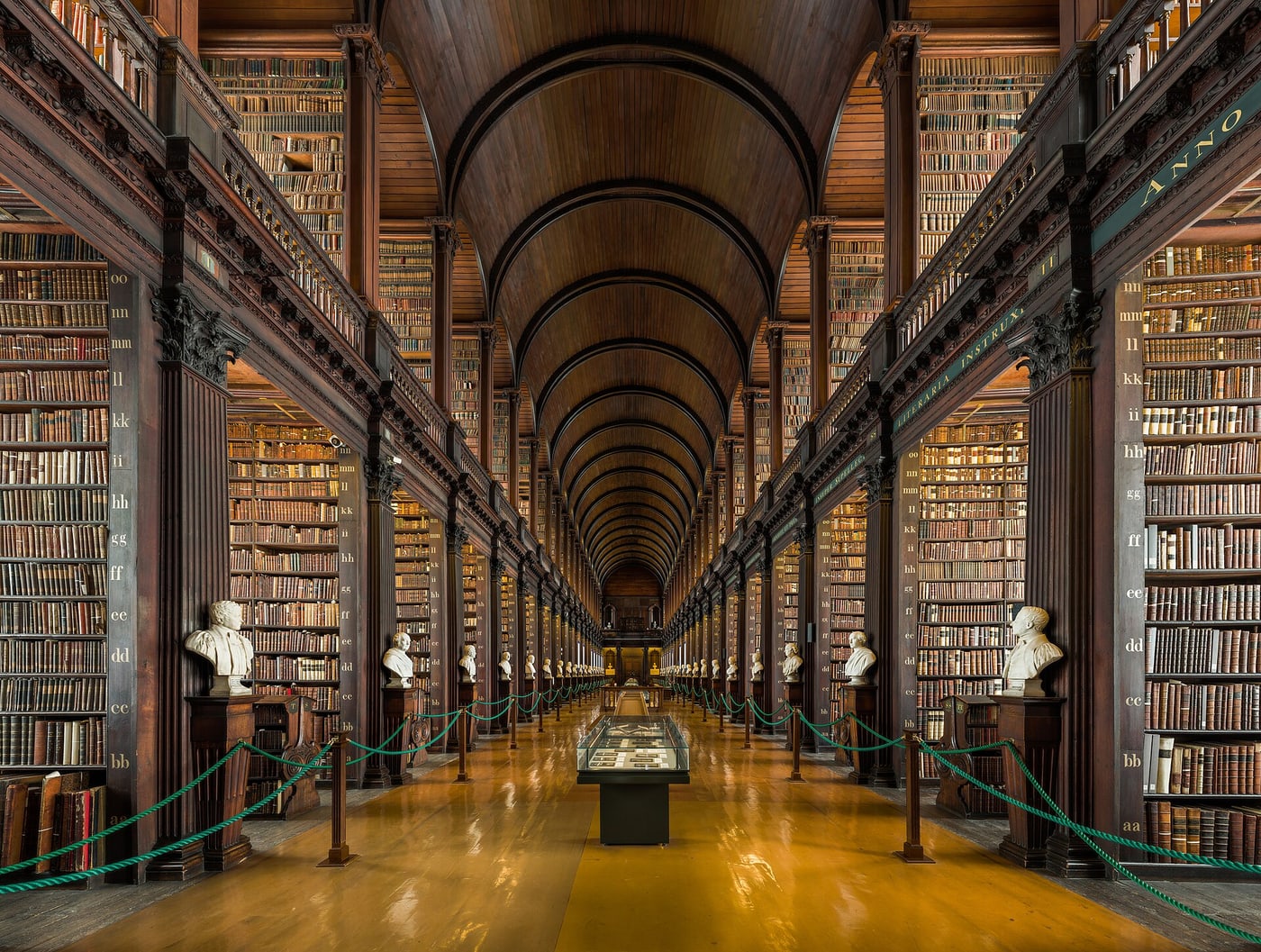
The Long Room’s repeated wooden bays draw the eye down a deep central aisle. The curved ceiling reinforces the effect, while pale busts punctuate the darker shelves. In an image like this, the architecture almost supplies its own perspective lines: you can trace the room’s length without needing a person in the foreground to show the scale.
This familiar book-filled view needs a current footnote. Trinity’s Old Library Redevelopment Project has involved moving most of the Long Room’s books to protect the collection, so visitors should not assume the shelves will match an archival photograph. The empty spaces are part of a conservation story. The room remains an extraordinary piece of architecture, and looking at older images helps explain why preserving both the building and its contents is such a substantial undertaking. [1]
2. George Peabody Library: books rise through an iron atrium
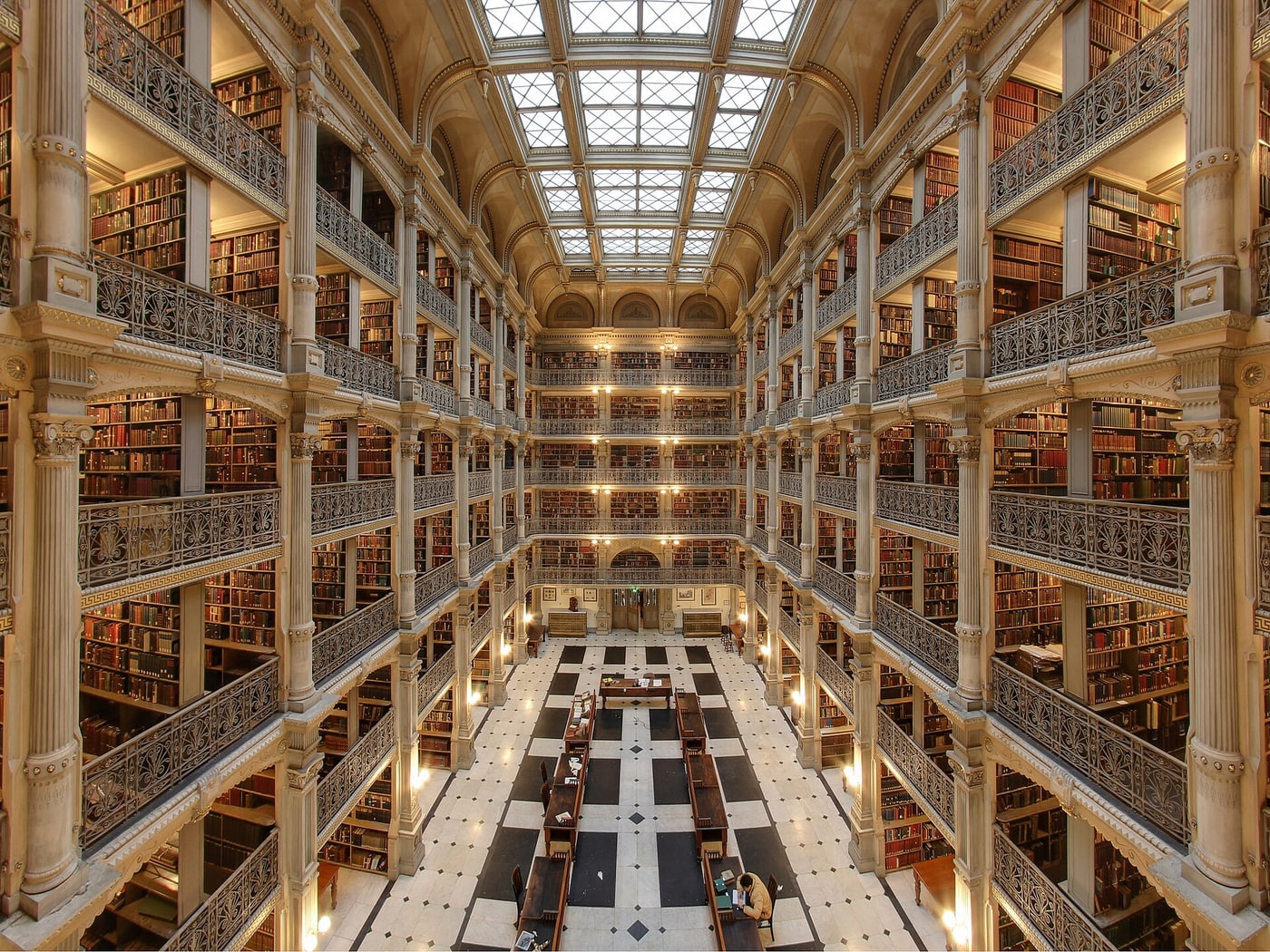
Baltimore’s George Peabody Library creates its drama vertically. Five tiers of ornamental cast-iron balconies surround the central space, rising towards a skylight more than 60 feet above the floor. The delicate-looking railings allow the upper levels to feel visually connected rather than sealed away behind heavy walls.
The contrast with Trinity’s Long Room is immediately apparent. Here the eye keeps lifting, pulled by the stacked galleries and the light at the top. The floor pattern gives the photograph a firm base while the surrounding structure seems almost lace-like. Johns Hopkins describes the collection and the architecture together, which is fitting: the shelves are essential to the room’s identity. Remove the books from your mental picture and much of its particular character disappears. [2]
3. New York’s Rose Main Reading Room: a grand space built for concentration
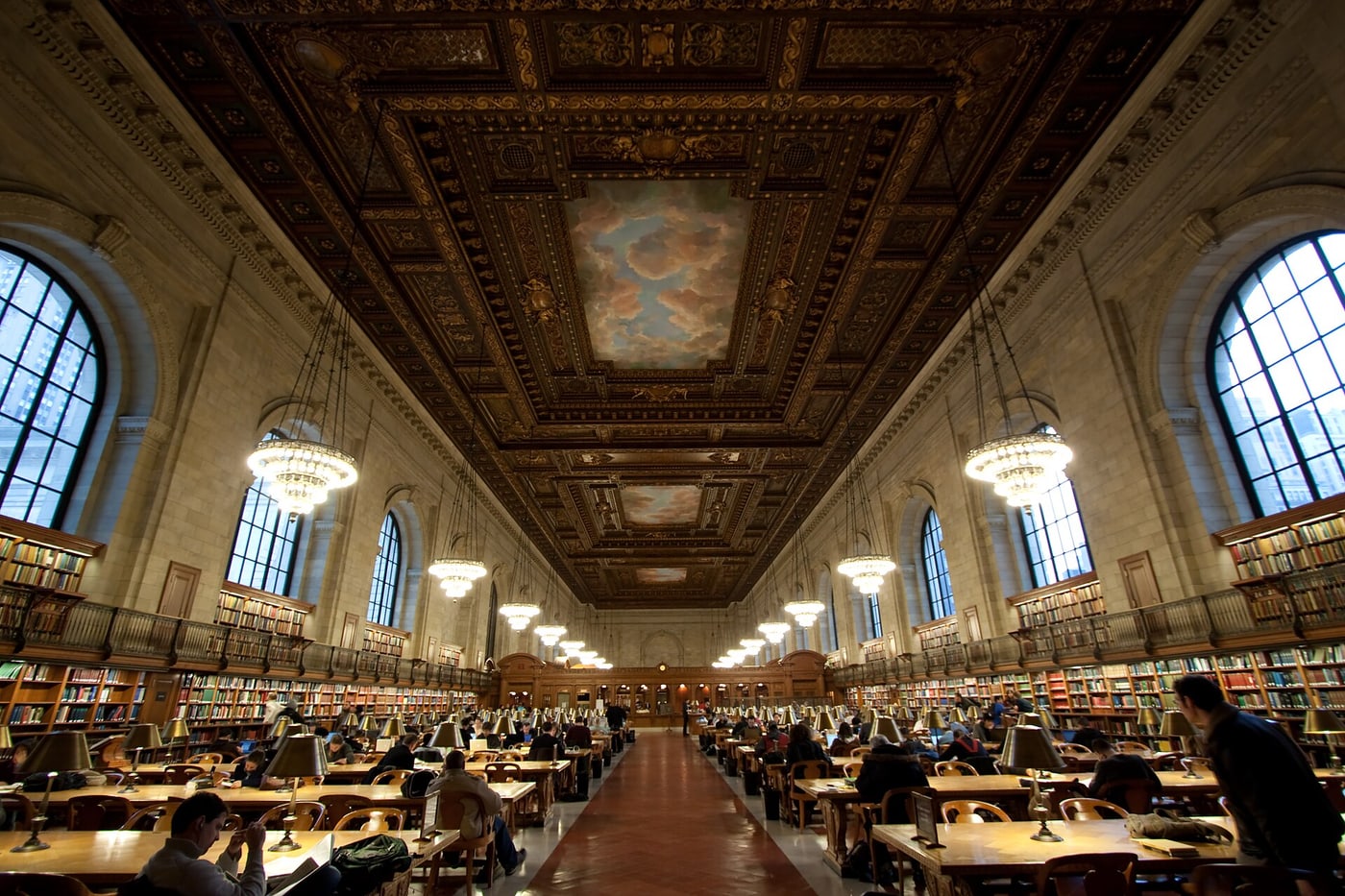
The Rose Main Reading Room at the New York Public Library offers a different kind of spectacle. Long tables, repeated lamps and a lofty decorated ceiling combine monumental scale with an everyday purpose. People come here to read and work, so the room’s visual order has a practical rhythm: seat after seat, light after light, page after page.
The painted sky above adds a surprising softness to the architecture. In the photograph, the warm wood and luminous ceiling keep the large interior from feeling purely severe. The library completed major ceiling restoration work before reopening the room in 2016. That history is a reminder that impressive public interiors need continual care. What looks timeless in a single image is also a working space maintained for the next person who sits down. [3]
4. Admont Abbey: a library filled with light and painted ceilings
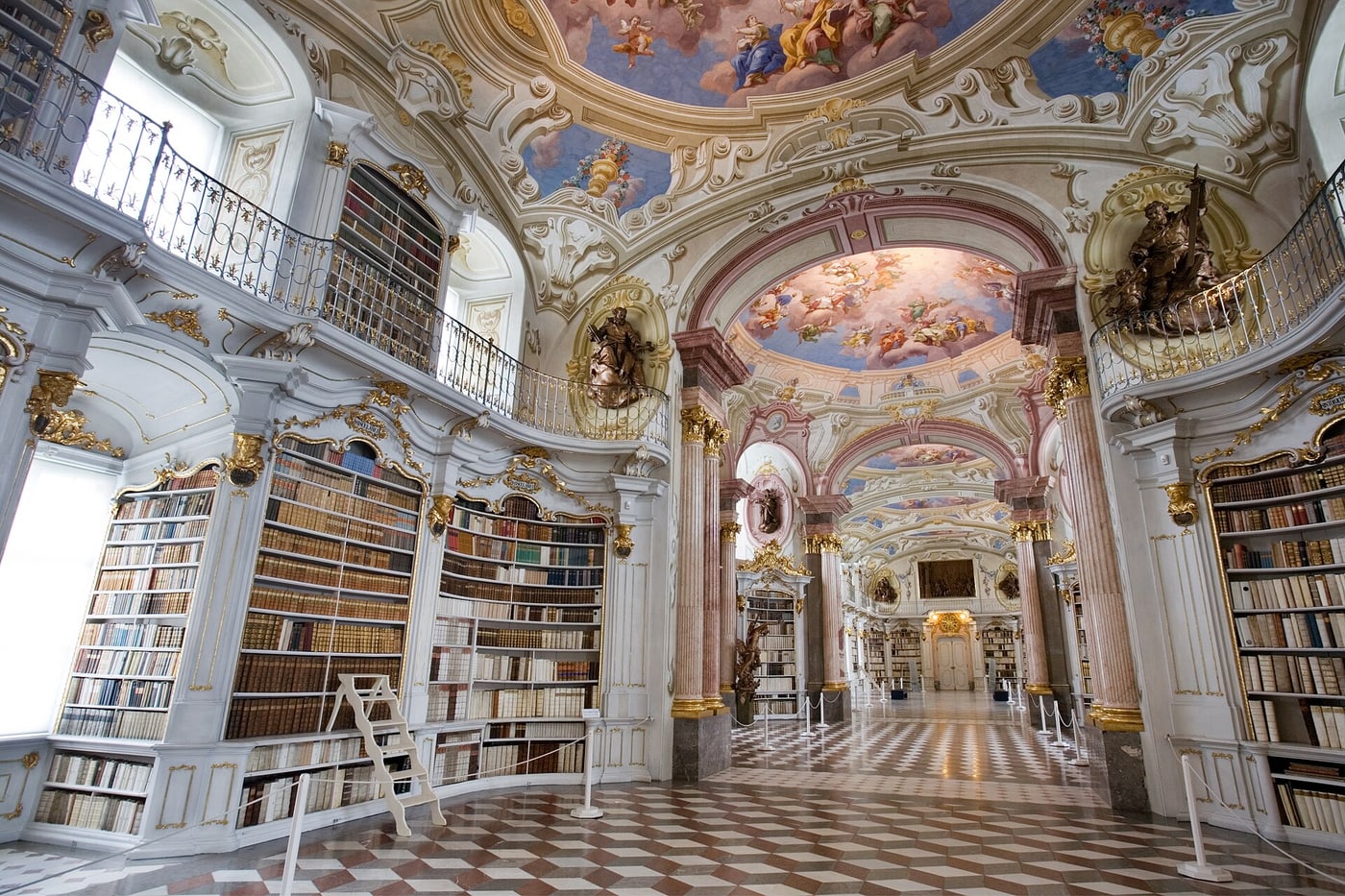
Admont Abbey’s library hall in Austria exchanges the dark-wood atmosphere of many famous libraries for a much brighter palette. Pale shelves, gold details, sculptural figures and painted vaults create a room that can resemble a ceremonial hall. The abbey identifies it as the world’s largest monastic library hall, with the architectural shell completed around 1776.
There is a lot to see, but the repetition keeps the room coherent. The shelves lead you from one bay to the next while the ceiling paintings pull attention upwards. A photograph taken along the central axis emphasizes that carefully arranged progression. It is tempting to focus only on the ornament; the books give the decoration its setting and purpose. The pleasure lies in seeing scholarship presented with this much architectural confidence. [4]
5. Vancouver’s Central Library: the spectacle starts outside
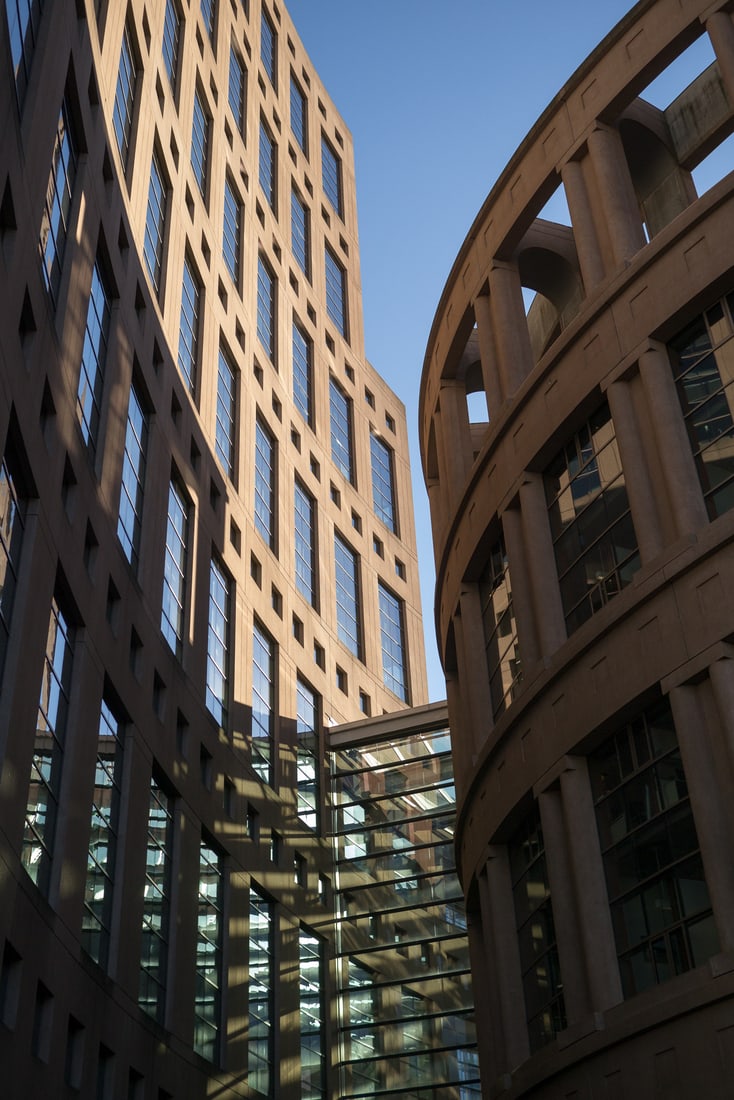
Vancouver’s Central Library makes its impression from the street. The curved outer wall and repeated openings give Library Square a strong, almost amphitheatre-like presence among surrounding city buildings. The library’s architectural guide documents the design and the development of the complex, which opened in 1995.
Including an exterior in a gallery of grand libraries changes the question slightly. Instead of asking what it feels like to sit inside, the photograph shows how a library announces itself as part of a city. The curve creates a recognizable edge, while the gaps and glazing allow light and views through the structure. It is a modern counterpart to the older interiors elsewhere on this list: an ambitious public building whose shape makes it a landmark before you open a book. [5]
6. Coimbra’s Joanina Library: gilded shelves and an unexpected night shift
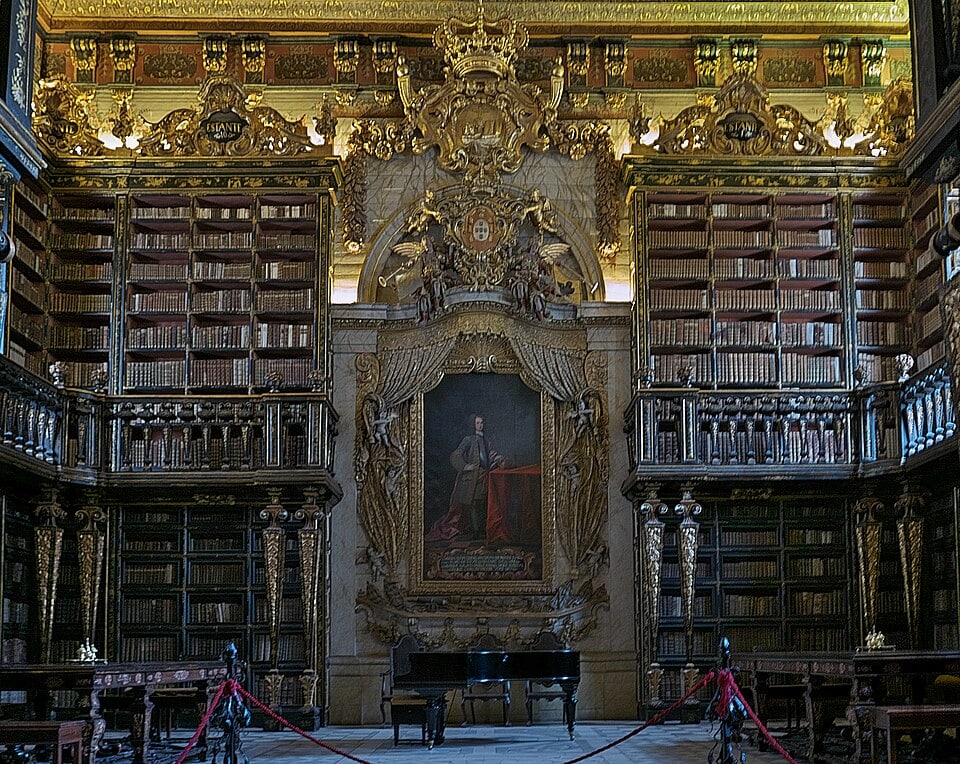
The Joanina Library at the University of Coimbra in Portugal combines densely decorated shelving with a theatrical arrangement of rooms. Gold details stand out against darker surfaces, and the openings between spaces frame successive views. A photograph can make the interior look like an elaborate set, although its collections and history are entirely real.
The university also records one of the library’s most unusual features: resident bats help control insects. It is an unexpectedly practical detail in such a formal-looking setting. The contrast is delightful without needing embellishment. A room designed to impress during the day has another layer of life after the visitors leave. The architecture, the books and the measures used to protect them all belong to the same story. [6]
The strongest library photographs show more than decorative shelves. They reveal how a building makes space for attention—through repetition, light, scale or a particularly memorable route through the room. These six places solve that problem differently, which makes comparing them almost as enjoyable as admiring each one alone.