
7 Real Landscapes That Look Almost Too Strange to Believe

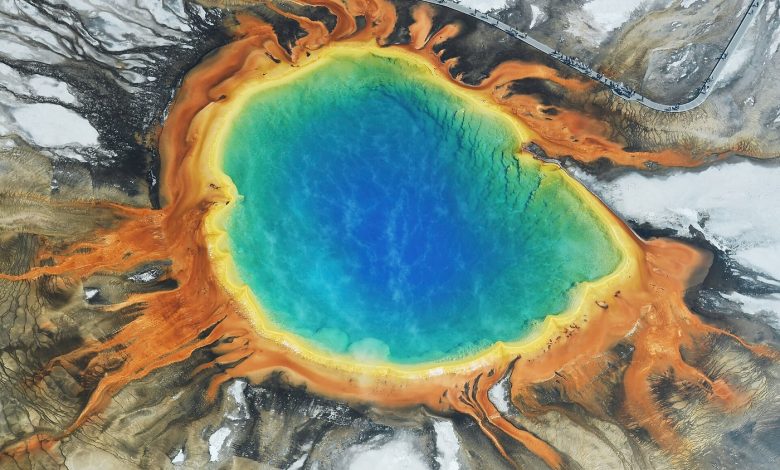
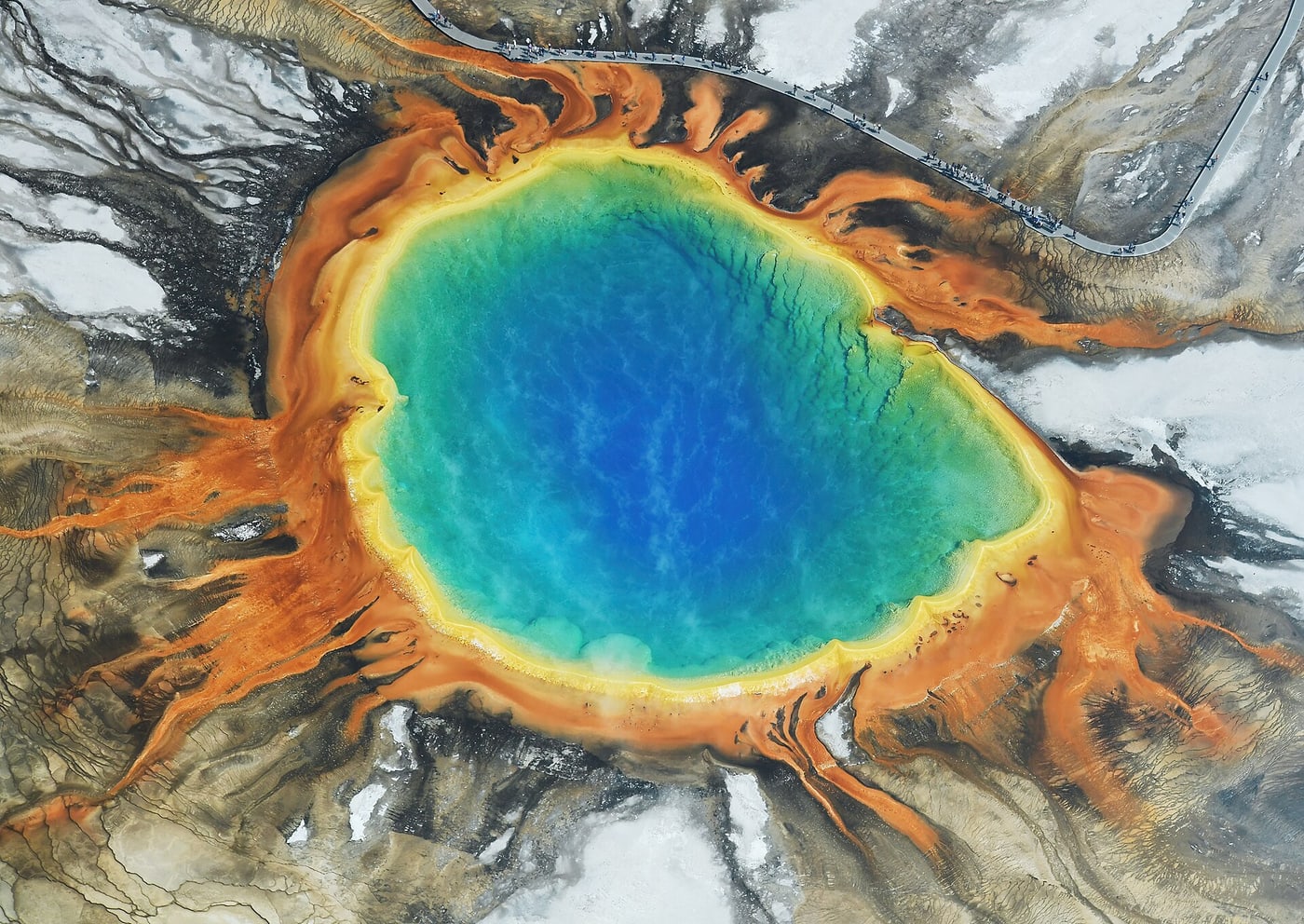
Grand Prismatic Spring. Photo: Carsten Steger / Wikimedia Commons. CC BY-SA 4.0. Resized; original image licence applies.
An aerial photograph can turn a hot spring into an abstract painting. A low angle can make a sandstone hollow resemble a breaking wave. The places in this gallery are real, but their photographs invite the same first reaction: how can a landscape look like that? Each has a physical explanation—and each deserves a little context beyond the image. Some appearances change with the light, the season or much longer environmental shifts.
1. Grand Prismatic Spring, Wyoming: colour around a blue centre
From above, Grand Prismatic Spring looks like an eye surrounded by a bright, irregular fringe. Its intense blue centre gives way to warmer colours near the edges. Heat-loving microbial communities help produce the orange and other coloured bands around the cooler margins, while the water itself contributes to the visual effect at the centre.
The aerial perspective matters. A visitor standing beside the spring sees steam, reflections and a much lower view, rather than the complete shape in this photograph. Both experiences belong to the same place. The National Park Service’s boardwalks protect visitors and the fragile thermal ground, so this is a landscape to observe from the designated routes. Its beauty comes from an active hot-spring system, not a decorative pool. [1]
2. Giant’s Causeway, Northern Ireland: stone with a startling pattern
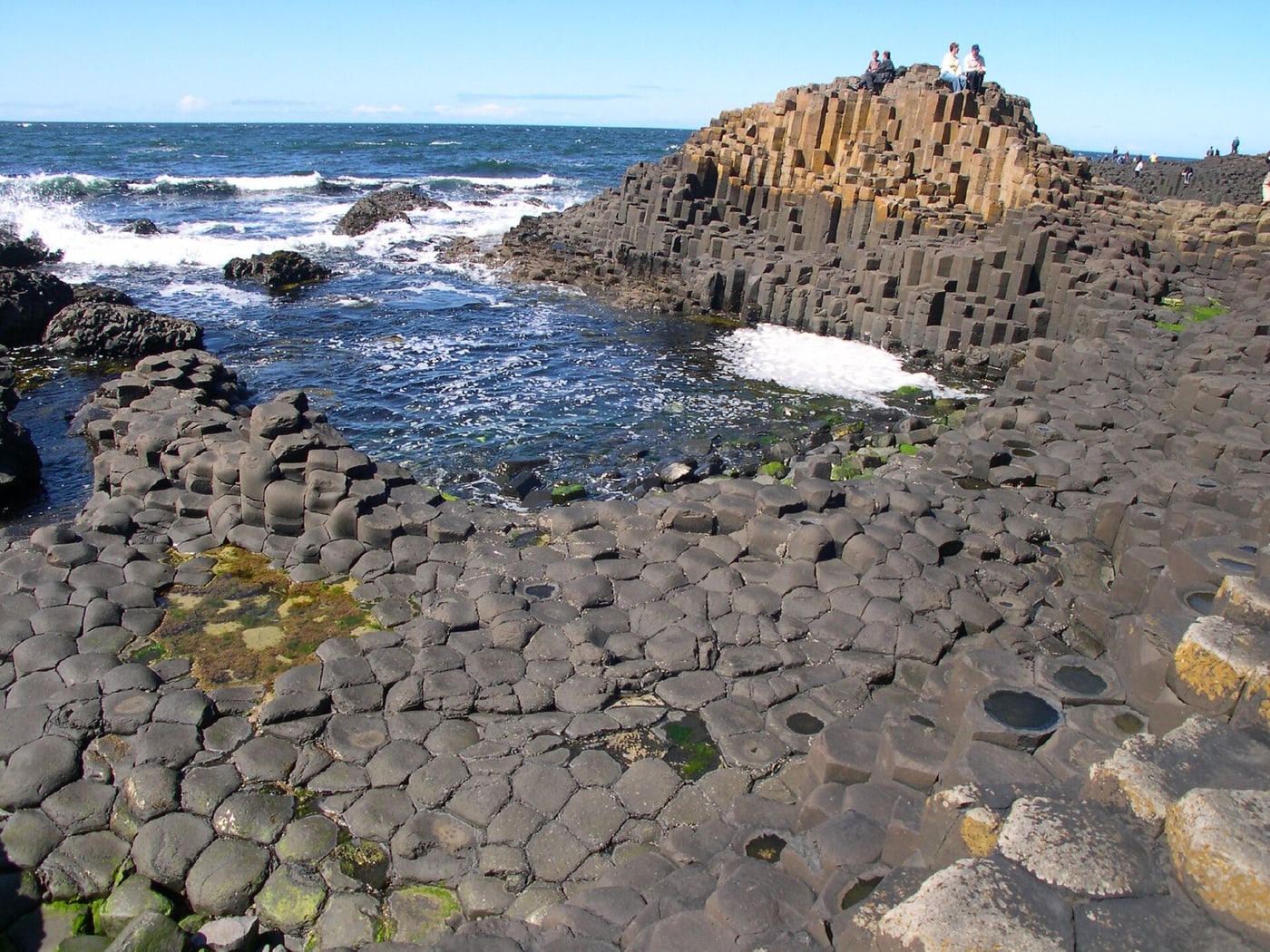
The interlocking columns at Giant’s Causeway seem almost too orderly for an exposed coastline. Many have a roughly hexagonal outline, but looking closely reveals variations in the number of sides, height and width. That variation is part of the appeal: a strong repeating pattern interrupted by the irregularity of a natural surface.
The columns formed as ancient lava cooled and contracted. Their geometry can make the shore resemble an enormous paved route, which helps explain why the site has inspired stories as well as geological investigation. In a photograph, the dark wet stone and pale sea also create a strong contrast. The result is a landscape that works at two scales—the broad sweep of coast and the individual shapes directly under the camera. [2]
3. White Sands, New Mexico: a desert that can resemble snow
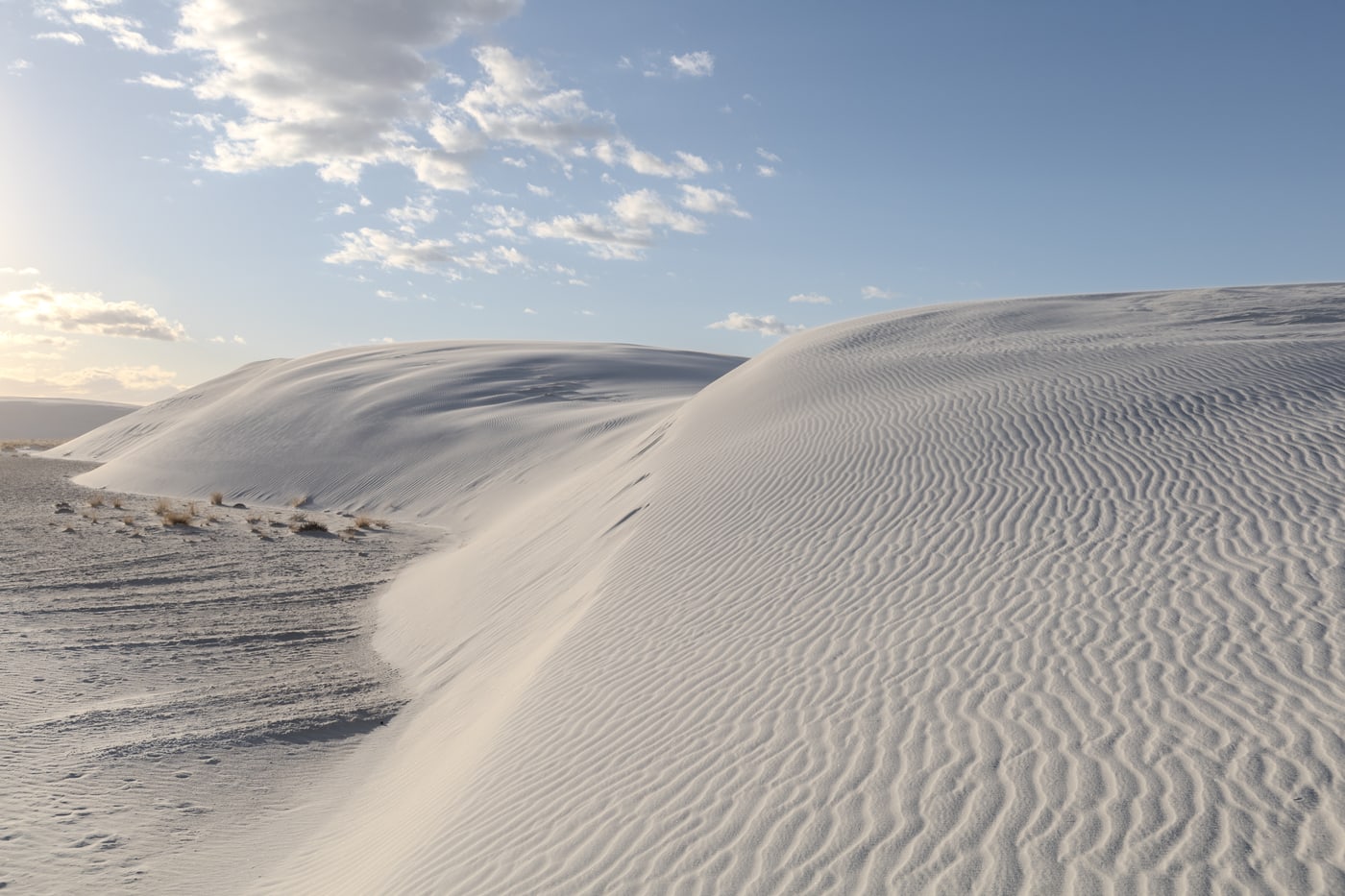
A photograph of White Sands can briefly confuse the seasons. Bright dunes, soft ridgelines and small wind-made ripples may suggest fresh snow until a plant or a distant mountain gives the scene away. The sand here is largely gypsum, rather than the quartz that is common on many familiar beaches.
The National Park Service describes an ongoing cycle in which water, crystals and wind contribute to the dune field. That movement gives a seemingly simple white surface an abundance of detail. Shadows turn shallow ripples into visible patterns, and the crest of a dune can divide warm sunlight from cool shade. The scene is particularly effective because it needs very little in the frame: a few lines, a patch of sky and a material in motion. [3]
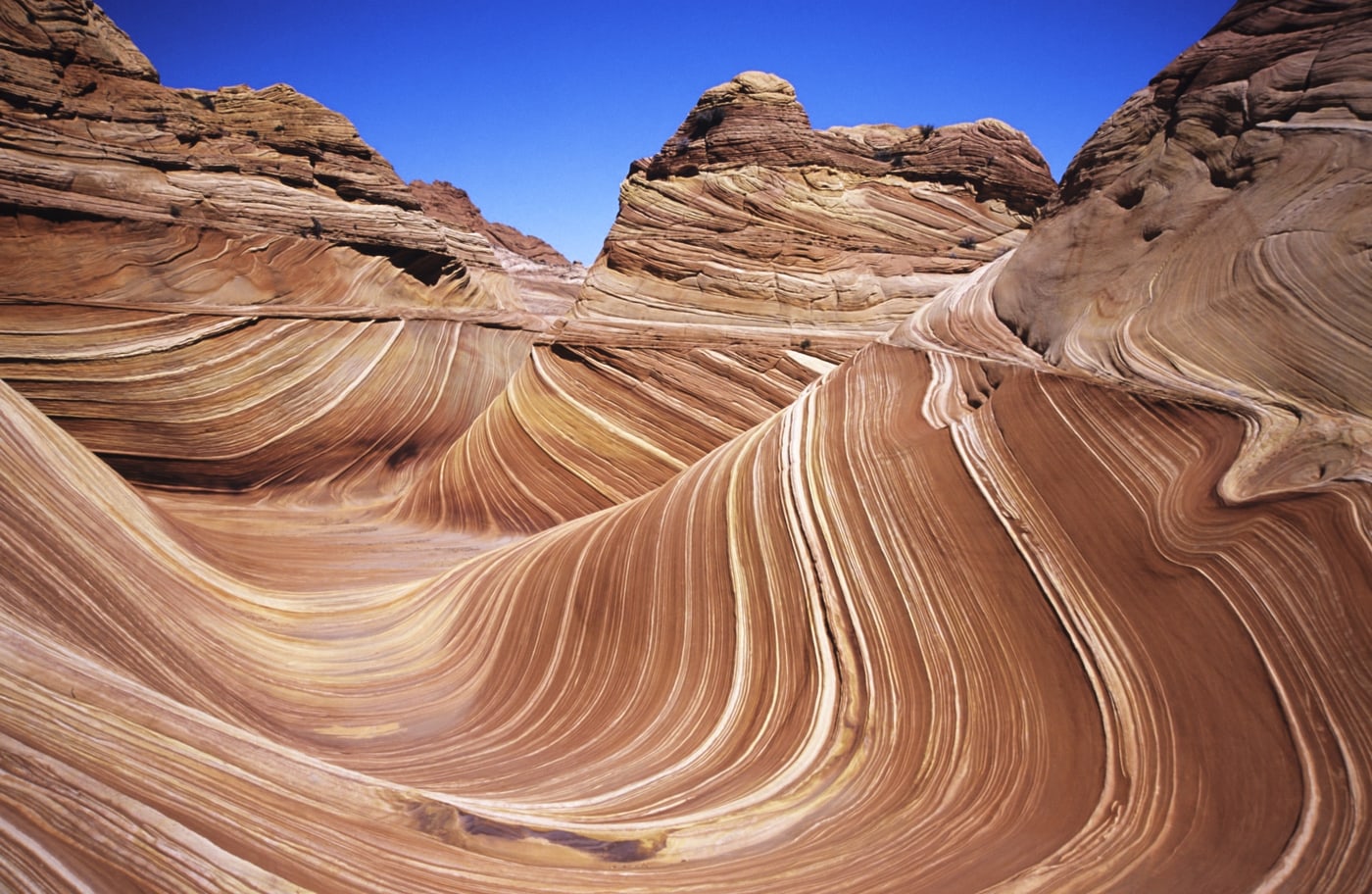
4. The Wave, Arizona: sandstone with the rhythm of water
The Wave’s stripes follow curving sandstone surfaces so closely that your eye begins to move through the picture before you have worked out the scale. A shallow hollow becomes a channel; a rounded ridge begins to resemble a swell. This is rock in the Coyote Buttes North area, although the name captures how fluid it can appear.
Different bands respond differently to the light, which gives the surface both pattern and depth. Cropping away the surrounding desert makes the formation feel even more abstract. It is also a fragile place with controlled access, not an unrestricted roadside photo stop. The Bureau of Land Management requires a permit for this area. A photograph can invite exploration while still leaving the actual route and access conditions to current official guidance. [4]
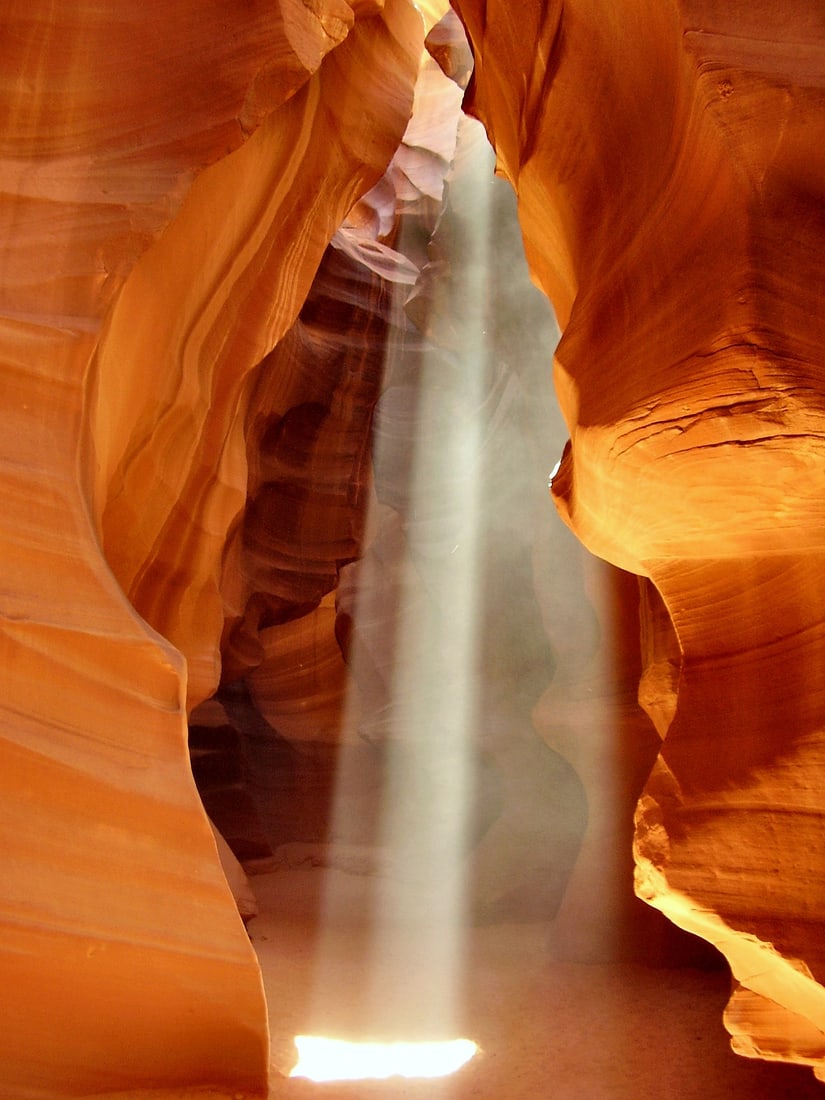
5. Antelope Canyon, Arizona: light turns a narrow space into sculpture
Antelope Canyon’s curved walls can look like folded fabric, especially when the camera excludes the ground and sky. Water has helped shape the sandstone passages, while light entering from above changes how their surfaces appear. Warm highlights can sit beside deep purple-looking shadows within the same frame.
This is a place within the Navajo Nation, with a cultural identity beyond its popularity in travel photography. Navajo Nation Parks gives the Upper Canyon’s name as referring to water running through rocks—a useful reminder of the process behind the shape. Tours and access are managed, and the famous light beams are dependent on conditions. The enduring attraction is broader than one particular shot: even an ordinary patch of reflected light can reveal a remarkable curve. [5]
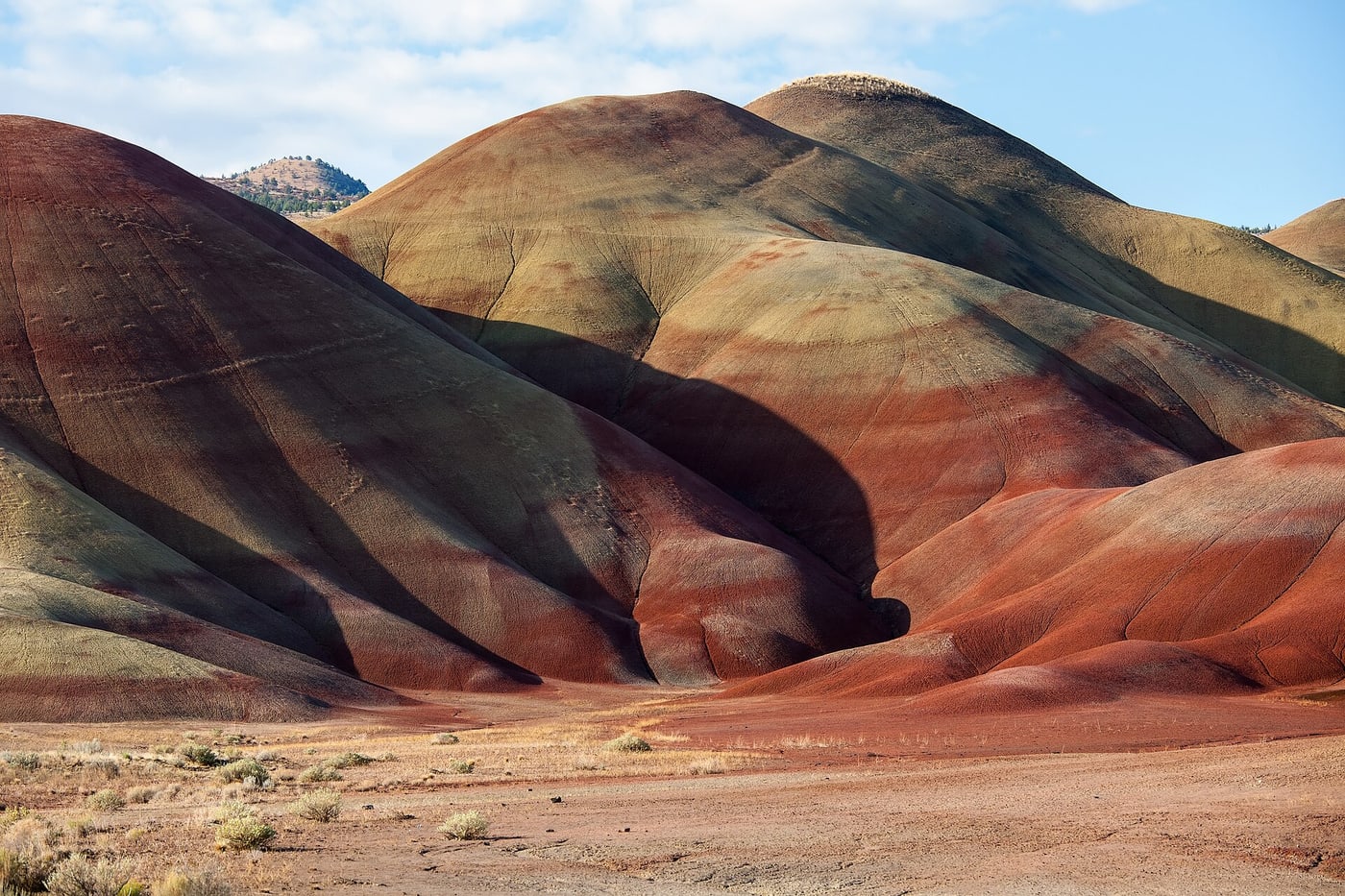
6. Painted Hills, Oregon: a landscape with visible layers
The Painted Hills are striking because their coloured bands remain legible across entire slopes. Reds, yellows, darker stripes and muted earth tones turn rounded hills into a record you can read from a distance. The National Park Service describes these layers as preserving evidence of changing conditions in the region’s past.
The colours in a photograph are also affected by present-day conditions. Moisture and shifting sunlight alter their intensity, while snow can conceal much of the pattern. That makes two honest photographs of the same hill look surprisingly different. The best detail to follow is often where a stripe continues around a bend: it reveals that the apparent painted surface is part of the hill itself, carrying on beyond the viewpoint. [6]
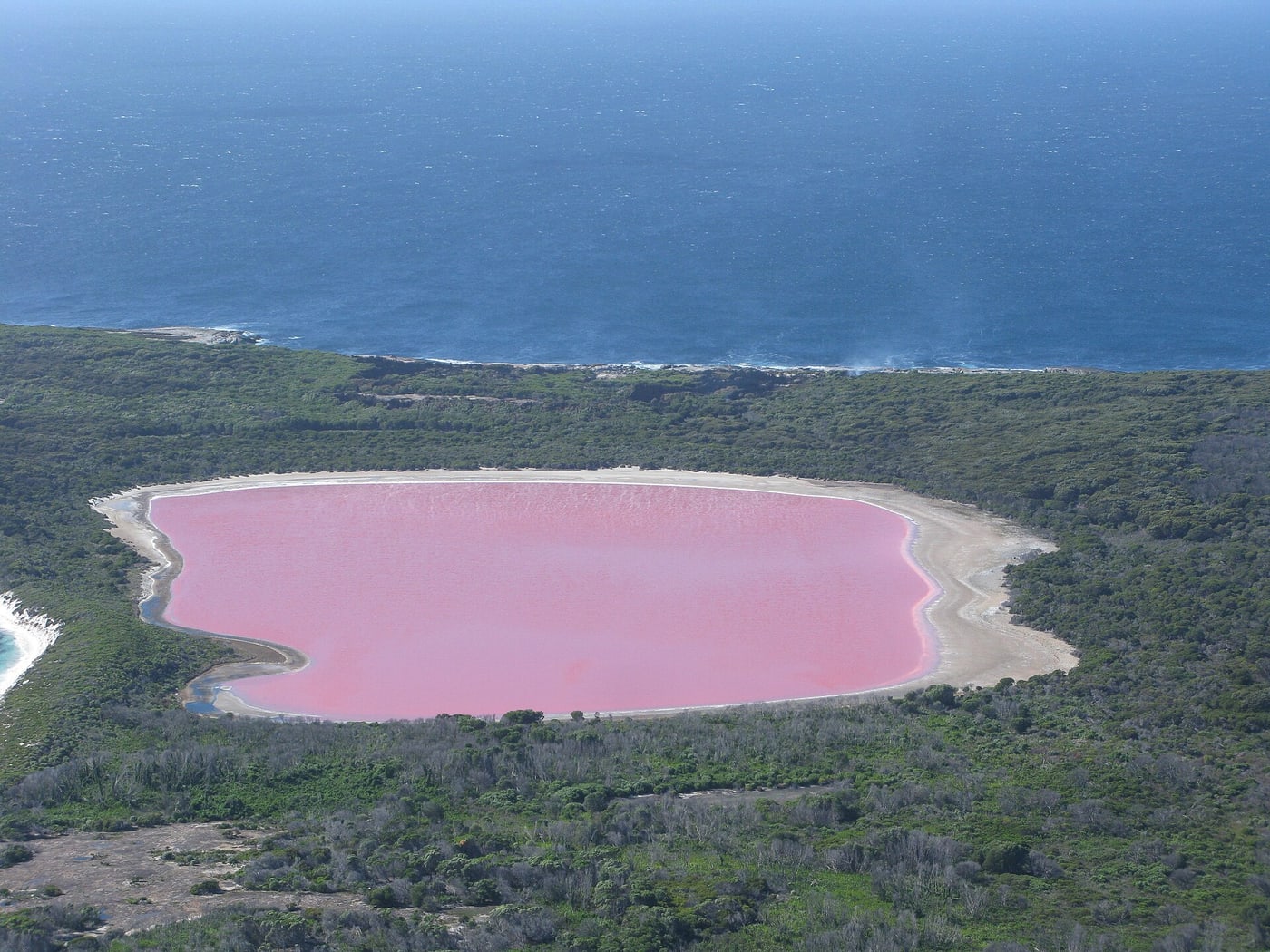
7. Lake Hillier, Western Australia: a famous photograph with a changing story
The pink lake in this photograph is Lake Hillier on Middle Island, shown in an archival image from 2011. Its contrast with dark vegetation and blue ocean helped make it an instantly shareable landscape. The important detail for anyone seeing the image today is the date: this photograph should not be taken as a promise of the lake’s current colour.
Tourism Western Australia now reports that environmental changes have affected Lake Hillier’s famous pink appearance. Its travel guidance points readers towards other salt lakes in the region while discussing possible longer-term restoration work. That update makes the old image more interesting rather than less real. It records a particular appearance of a changing natural system, and demonstrates why checking the story behind a travel photograph matters. [7]
These views are an invitation to look closely, not a guarantee of what any place will look like on arrival. Perspective, weather and time are part of every landscape photograph. Knowing that adds another layer to the picture, especially when the real explanation is as unusual as the view.
Sources and further reading
- Grand Prismatic Spring — National Park Service
- The history of Giant’s Causeway — National Trust
- Geology of White Sands — National Park Service
- Coyote Buttes North — Bureau of Land Management
- Lake Powell Navajo Tribal Park
- Painted Hills Unit — National Park Service
- Pink and rainbow lakes — Tourism Western Australia

.jpg)


