
6 Places Where Nature Has Changed the View Completely

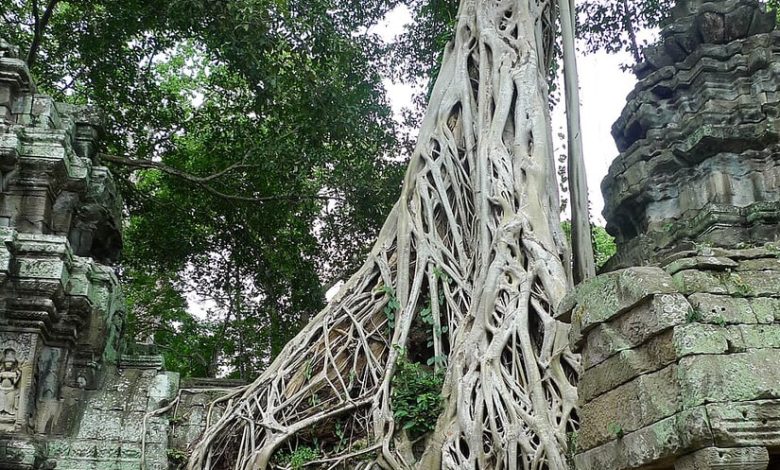
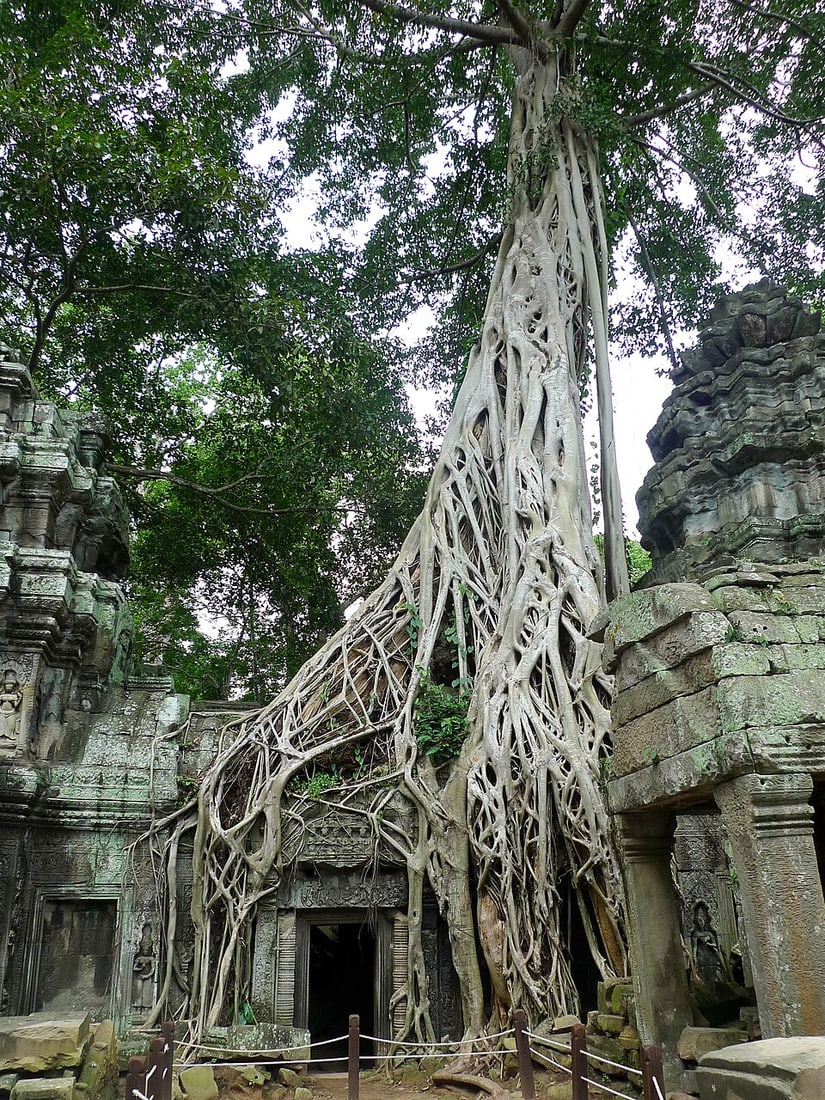
Ta Prohm. Photo: David Sim / Wikimedia Commons. CC BY 2.0. Resized; original image licence applies.
Buildings and ships are designed to hold a particular shape and serve a particular purpose. Plants, weather and shifting sand have no obligation to preserve either. The places in this gallery show what happens when those forces become part of the view. Their histories are different, and some are actively maintained today. The photographs capture moments in those histories rather than proving that each site is simply abandoned or open for unrestricted exploration.
1. Ta Prohm, Cambodia: roots become part of the architecture
At Ta Prohm, large roots spread across masonry in shapes that can look almost sculpted. The contrast is immediate: blocks arranged by human hands meet living structures that widen, divide and follow their own routes. A photograph can make it appear that the trees are gently holding the temple together, although the real relationship between roots and fragile stone is much more complicated.
APSARA National Authority describes the site’s history and ongoing conservation. This is a managed monument within the Angkor area, not a forgotten ruin left entirely to itself. That context adds an important layer to the familiar image. Preserving the place involves decisions about both the historic fabric and the trees that have become central to how visitors recognize it. The visual drama is real, but so is the work behind maintaining the scene. [1]
2. Kolmanskop, Namibia: the desert crosses the threshold
Sand inside a room changes the meaning of every architectural detail. A doorway becomes a frame for a dune, a wall’s faded colour meets a bright slope and the floor seems to rise towards the window. Kolmanskop, a former diamond-mining settlement near Lüderitz in Namibia, supplies some of the most striking examples of that transformation.
Its history includes a colonial mining economy and the people whose labour sustained it, so the beautiful decay is only one part of the story. As the settlement declined and was abandoned, windblown sand entered buildings that had once organized daily life. The photograph is especially effective because it preserves recognizable domestic proportions. We know what a room is supposed to look like, which makes the sand’s quiet rearrangement of the space feel so strange. [2]

3. SS Ayrfield, Australia: a ship becomes a base for greenery
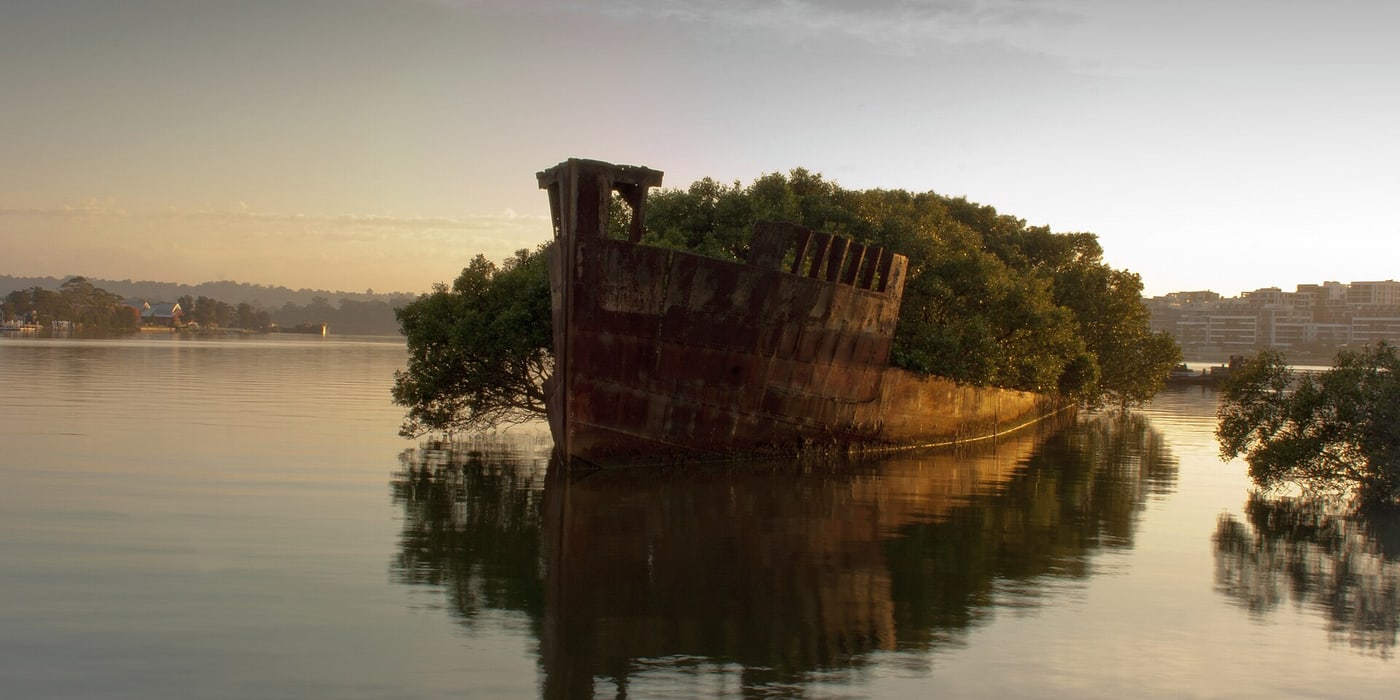
The rusting hull of SS Ayrfield in Sydney’s Homebush Bay carries a dense growth of trees and other vegetation. From a distance, the combination can resemble a small floating island with a metal outline. The ship’s industrial shape remains visible beneath the canopy, allowing the photograph to hold two very different identities at once.
Ayrfield belongs to the bay’s maritime and industrial history. Its later condition has made it a favourite photographic subject, but the appeal is more than novelty. Water reflects the hull while branches interrupt the expected outline of a vessel, softening what was built for a practical task. The scene is best understood as an enduring wreck with vegetation established on it, rather than an operating boat somehow carrying a forest around the harbour. [3]
4. Bannerman Castle, New York: an arsenal acquires a romantic silhouette
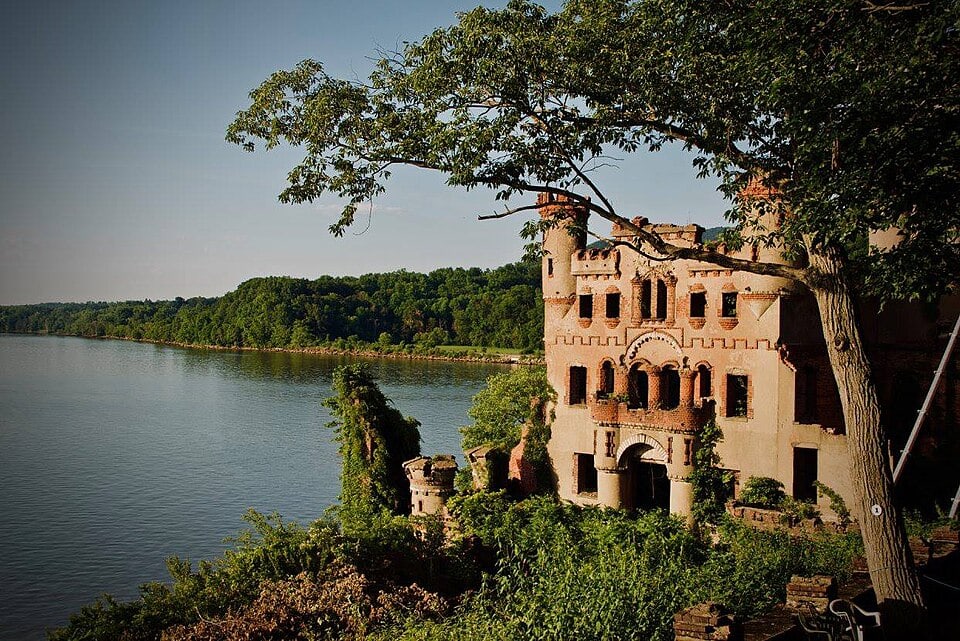
Bannerman Castle can look like a fragment of a European fairy tale unexpectedly placed in the Hudson River. Its original purpose was more practical. The castle-like buildings on Pollepel Island were constructed for Francis Bannerman’s military-surplus business, including storage. The surviving walls now stand among trees and greenery, with their broken outlines becoming part of the landscape.
The Bannerman Castle Trust documents both the site’s history and the work involved in preserving it. Its dramatic condition reflects human events and structural deterioration as well as vegetation, so “nature took over” is only a shorthand for a more complicated process. In the photograph, the openings in the walls frame empty space and foliage. That combination turns a former storehouse into a view whose strongest feature is what remains. [4]
5. Houtouwan, China: a hillside settlement takes on a green outline
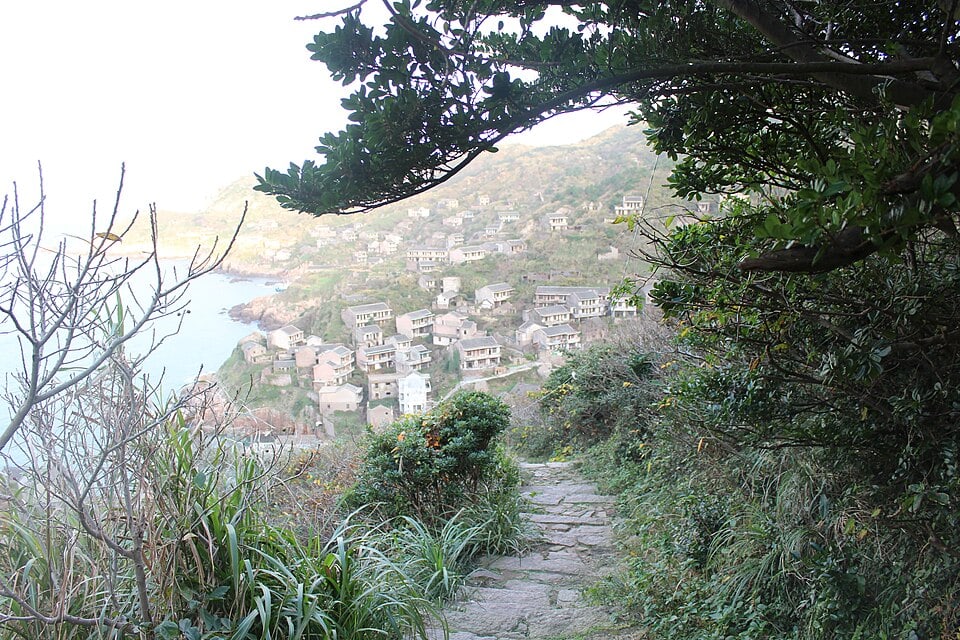
Houtouwan, on Shengshan Island in China’s Shengsi archipelago, is known for the vegetation that has spread across many former village buildings. Rooflines, windows and pathways remain visible, but plants soften the boundaries between the houses and the hillside. The effect is strongest when the eye first reads a broad green surface and only then notices the architecture underneath.
The settlement’s story includes people leaving as local circumstances changed, rather than a single cinematic moment when an entire village vanished. Photographs also vary with season and viewpoint. This image gives a wider sense of the hillside and its paths, helping place the overgrown buildings within a coastal landscape. It is a reminder that the most widely shared close-ups are selections from a larger place with a social history, not evidence of a world without people. [5]
6. Sorrento’s Valley of the Mills: greenery below the town
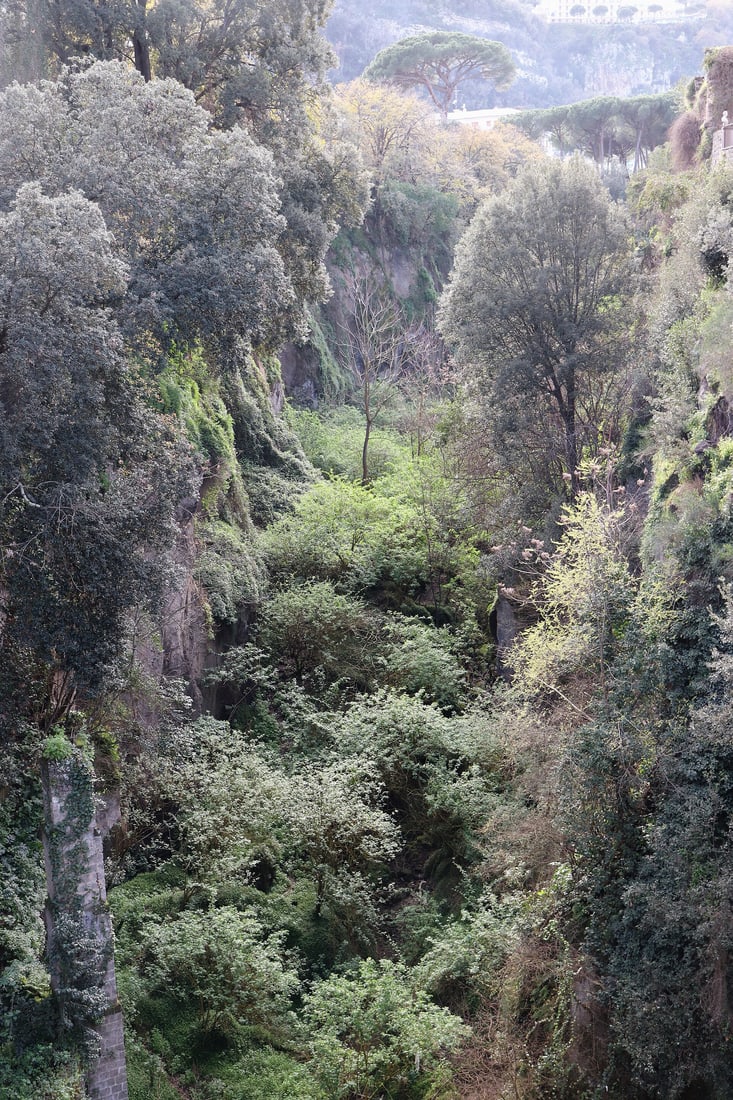
The Valley of the Mills in Sorrento creates a surprise through its position. Near the activity of the town above, a deep gorge contains old mill structures surrounded by vegetation. Looking down changes the familiar relationship between street and landscape: the buildings below seem to belong to a quieter, enclosed world only a short distance away.
The photograph emphasizes vertical space as much as the surviving masonry. Plants cover ledges and walls, and the darker depth of the ravine separates the scene from the brighter surroundings. The valley’s appearance has changed through time and management, so archival photographs should not be treated as a current access guide. What remains compelling is the contrast itself—a place once used for work, seen through the layers of growth that later changed its visible character. [6]
These images are compelling because they let two periods share the same frame. A doorway, a hull or a wall reveals an earlier purpose, while roots, sand and leaves show what followed. The fuller stories also include people who lived, worked or now care for these places, keeping the pictures from becoming anonymous scenes of beautiful decay.



.jpeg)


