
9 Dolly Parton Moments That Explain Her One-of-a-Kind Appeal

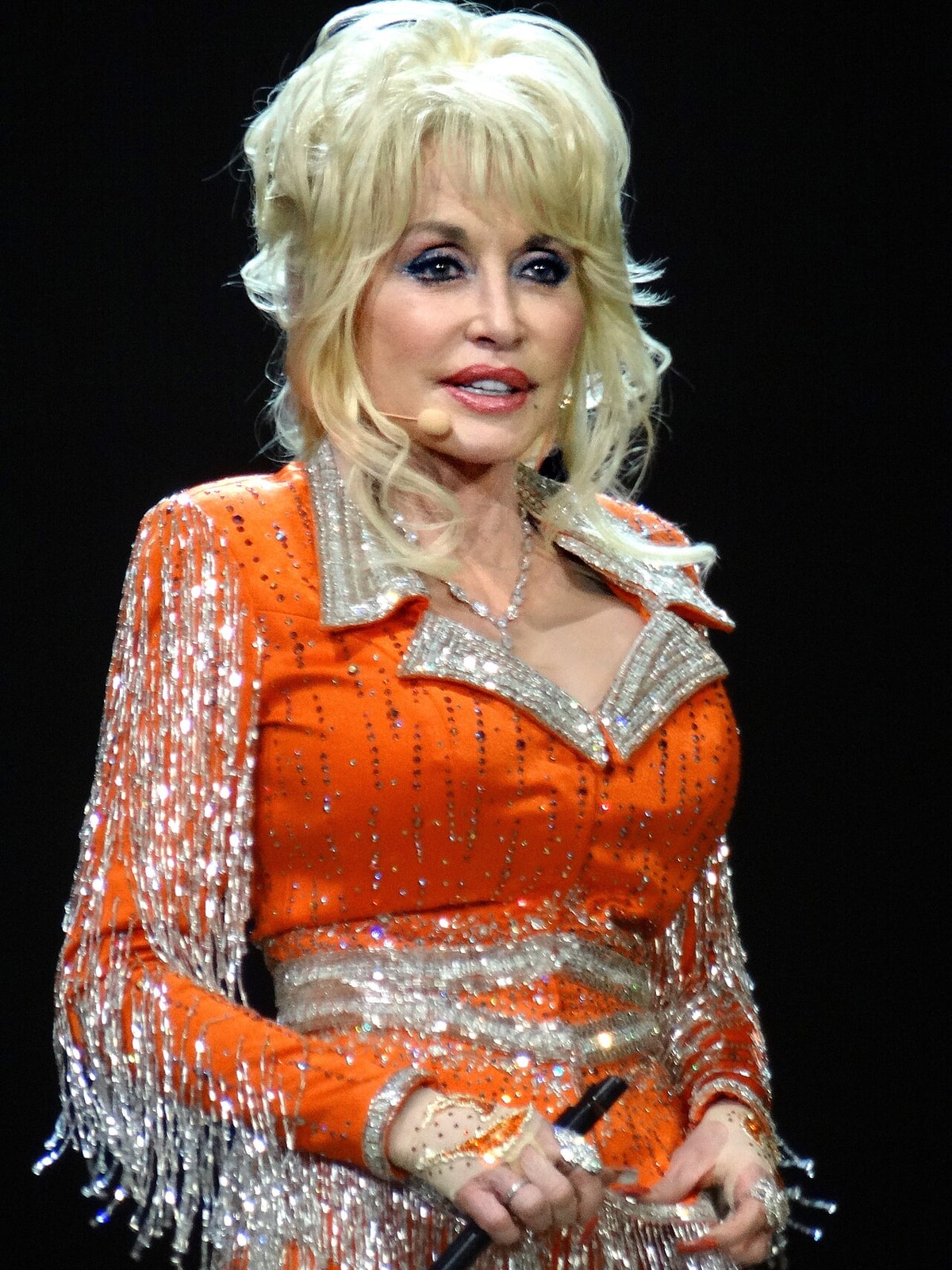
Dolly Parton on the Blue Smoke tour in Knoxville, May 28, 2014.
Photo: Kristopher Harris · CC BY 2.0
A Dolly Parton photograph rarely needs an introduction. The hair, the sparkle and the immediately recognizable smile can do the work before a caption appears. Yet the image is only the doorway into a much larger career. Parton moved between intimate songwriting, broad television comedy, film and ambitious community projects without losing the sense of a distinct person at the centre. These nine chapters explain that range. The gallery uses real archival and performance photographs, with their original occasions identified; where a picture illustrates a period rather than a particular recording, the caption keeps that distinction clear.
1. The television partnership that put a new voice in front of America
Parton's time on The Porter Wagoner Show brought her voice and presence to a national television audience. The professional partnership also produced duet recordings and became an important early chapter of her public career. In the 1969 publicity photograph, the two performers occupy the same frame, offering a reminder of how much television depended on a instantly readable pairing.
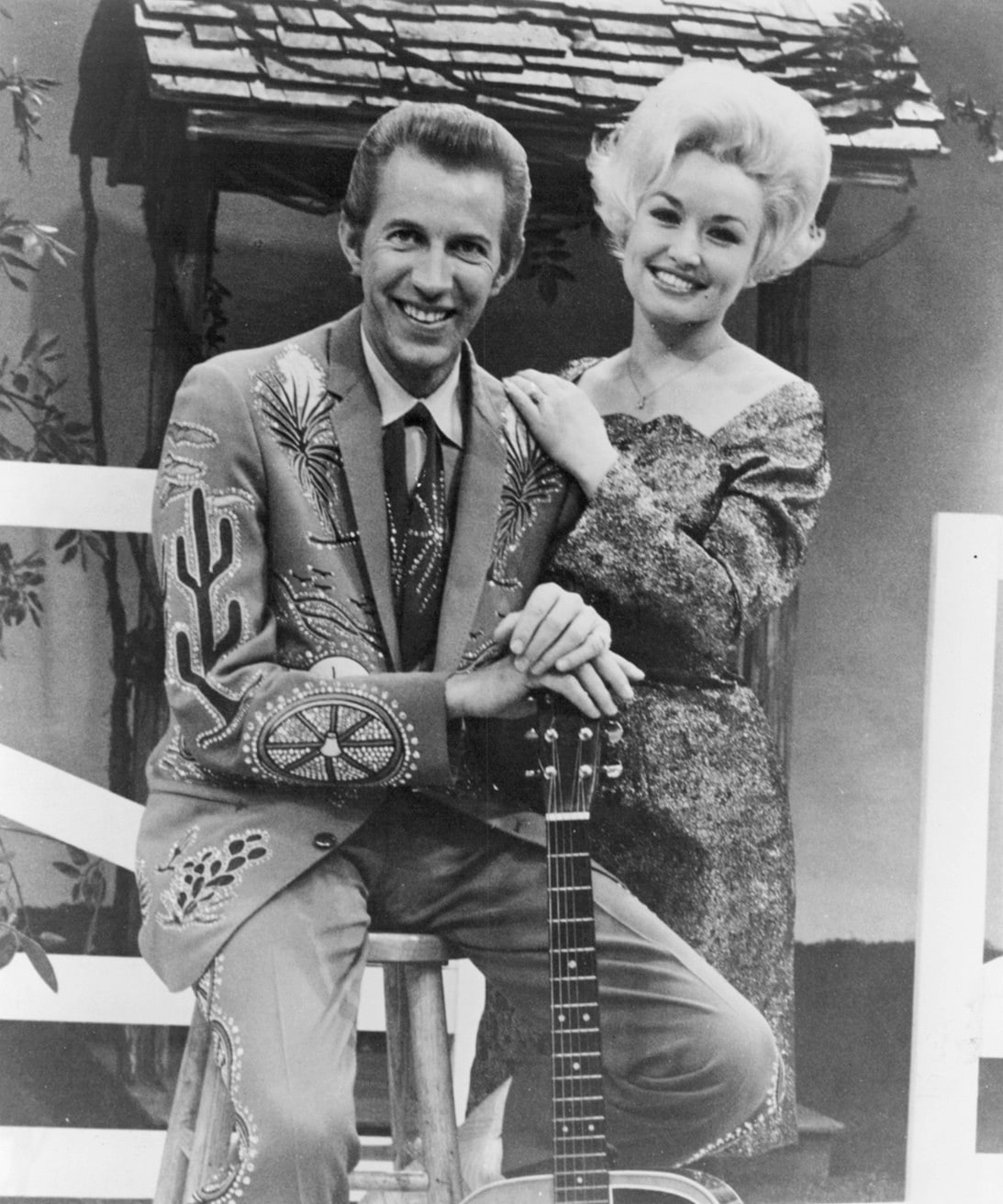
Parton's individual style is already visible within that partnership. A striking silhouette and direct expression make her easy to pick out, even in a shared photograph. The visual identity would become more elaborate, but the basic lesson was present early: a performer could contribute to an established show while giving viewers someone new to remember.
2. A songwriter who could make a small scene feel enormous
Parton's 1970s catalogue included Jolene and I Will Always Love You, songs whose emotional situations are easy to grasp and difficult to forget. Her official career timeline places both among the defining releases of that decade. Their power does not depend on an elaborate plot: one sets out a plea, the other finds tenderness inside a departure.
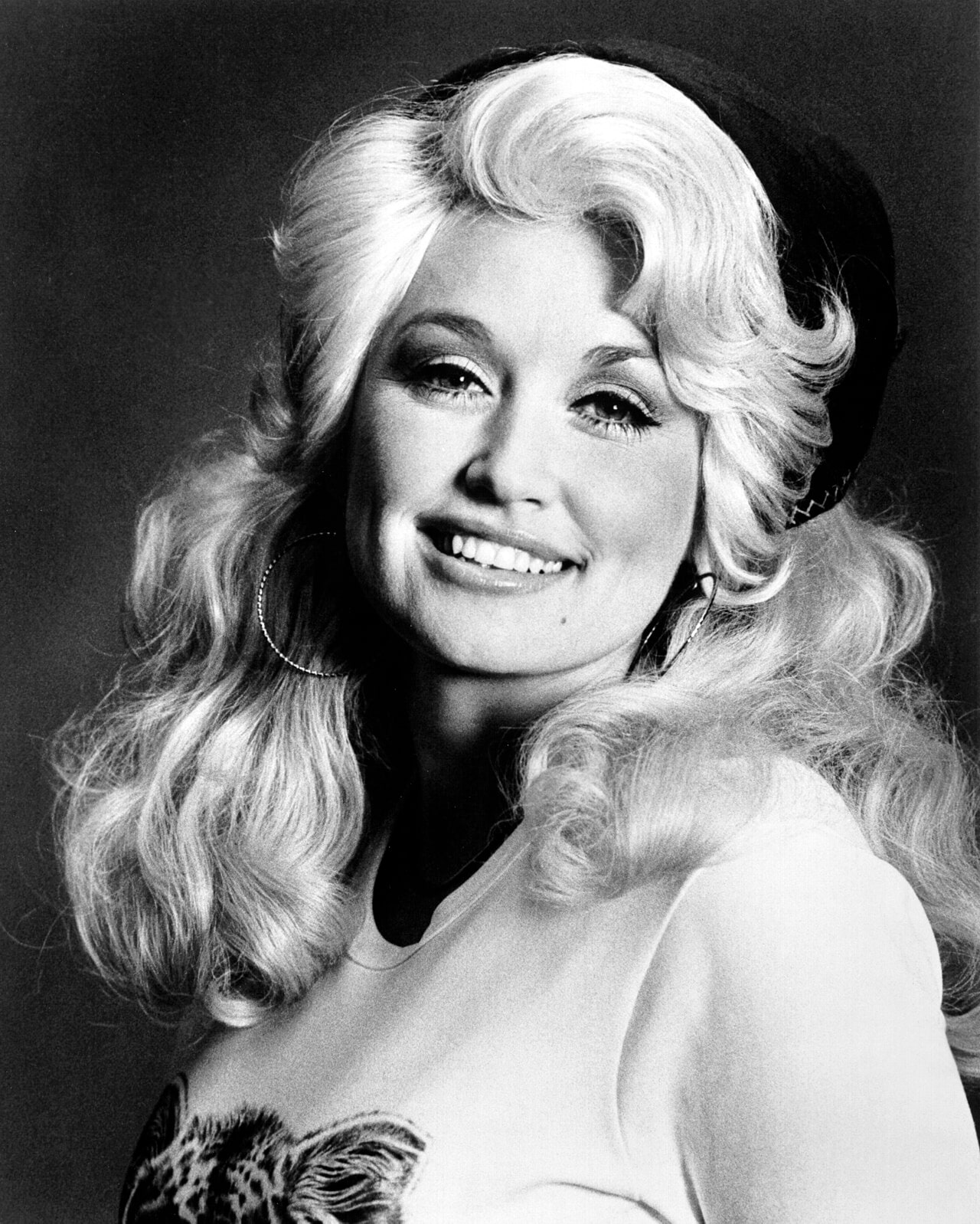
The 1970 press photograph shows the public image being built around that writing. Hair and jewellery create glamour, but the close framing leaves the face to carry the picture. That balance also helps explain the music's reach. The presentation can be large while the emotional premise stays intimate enough for an individual listener to inhabit.
3. The larger-than-life look became part of the storytelling
By the late 1970s, the visual vocabulary was unmistakable. The archival publicity portrait in this section combines high-volume hair, carefully framed features and an outfit with plenty of detail. Even in black and white, the image has a strong hierarchy: the face arrives first, then the texture of the hair and clothing. Nothing depends on a complicated background.
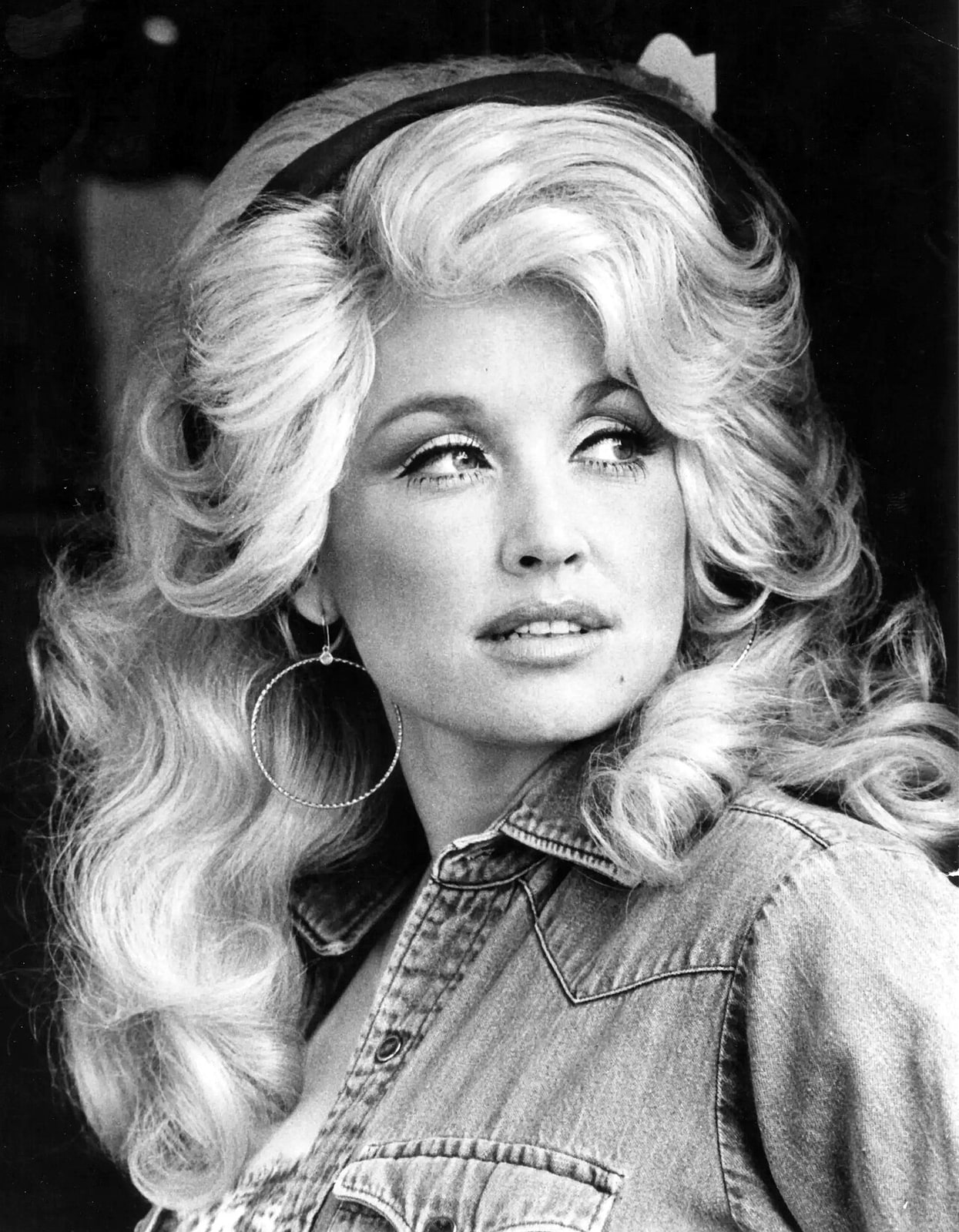
It is a useful way to understand the difference between being decorated and being recognizable. Lots of performers wore glamorous clothes. Parton's image brought the elements together consistently enough that the combination became its own signature. The photograph can feel highly constructed and personable at the same time, which is a harder balance to achieve than it looks.
4. Comedy found room beside the country songs
A photograph of Parton with Carol Burnett points to another part of the appeal: she could share a frame with a celebrated comedian without disappearing into the guest role. Variety television brought singing, conversation and broad entertainment into the same programme, asking performers to do more than reproduce a record on stage.
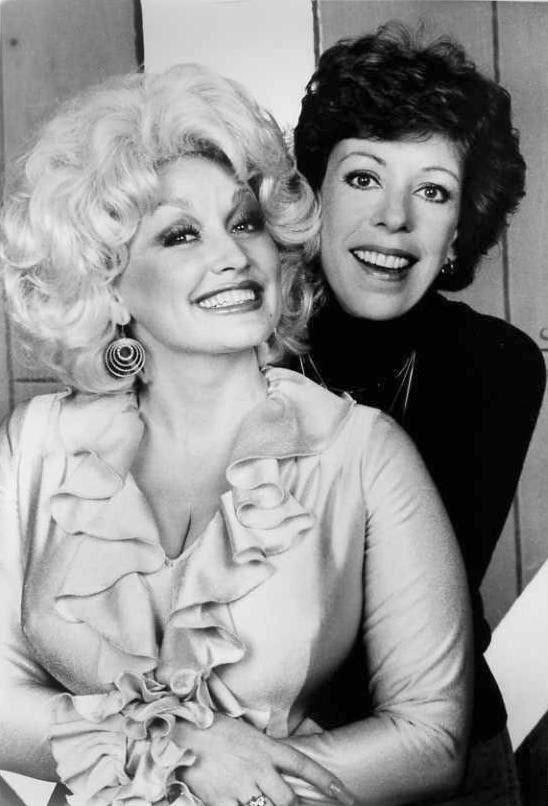
The image works because it places two distinct public personalities together. Viewers do not have to choose between musical skill and the willingness to play. That flexibility became useful as Parton's career expanded. A familiar voice could introduce an audience to a new setting, while humour kept the transition from feeling like a formal announcement that a singer was now attempting something different.
5. 9 to 5 took her into the movie conversation
The 1980 film 9 to 5 placed Parton alongside Jane Fonda and Lily Tomlin, while its title song connected the movie to her recording career. It was a particularly effective crossover because the song and the film shared a recognizable world of work, frustration and the wish to take back a little control.
The portrait here is an earlier publicity photograph, not a still from the movie. That earlier image helps show how much of an established identity Parton brought to the screen. She did not need to become visually anonymous to enter another medium. The familiar persona could be a starting point, giving the film an immediate connection with viewers who already knew her music.
6. Dollywood made a place part of the brand
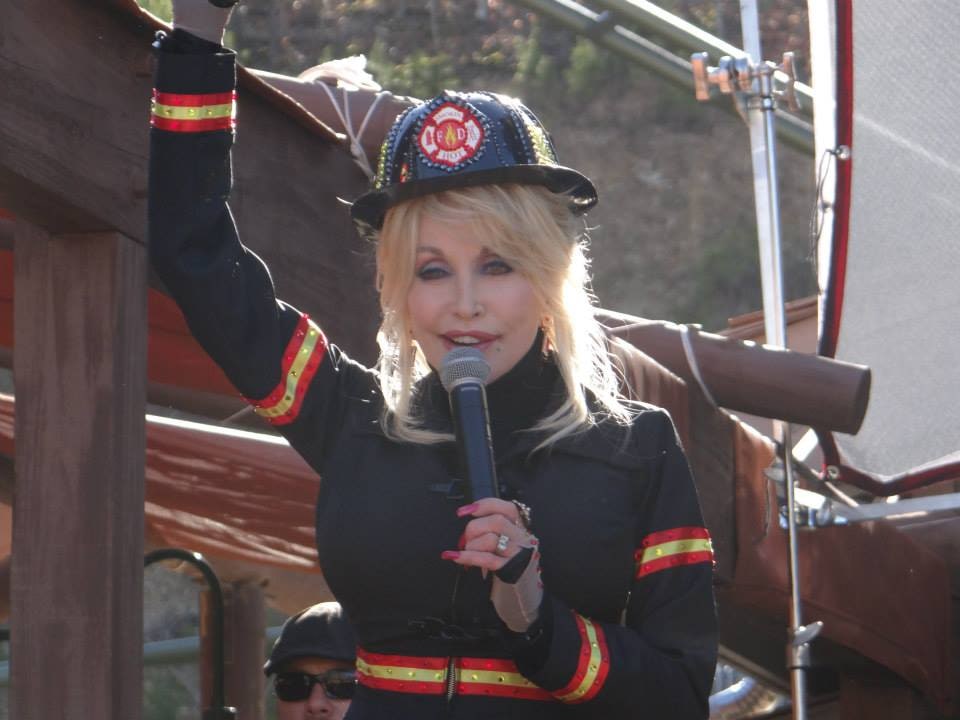
Dollywood linked Parton's name with a destination in the Tennessee region central to her life story. The picture of her wearing firefighter-themed clothing was taken while presenting attractions at the park; it is not a concert costume. That specific occasion explains the unusually playful look and the public-facing gesture.
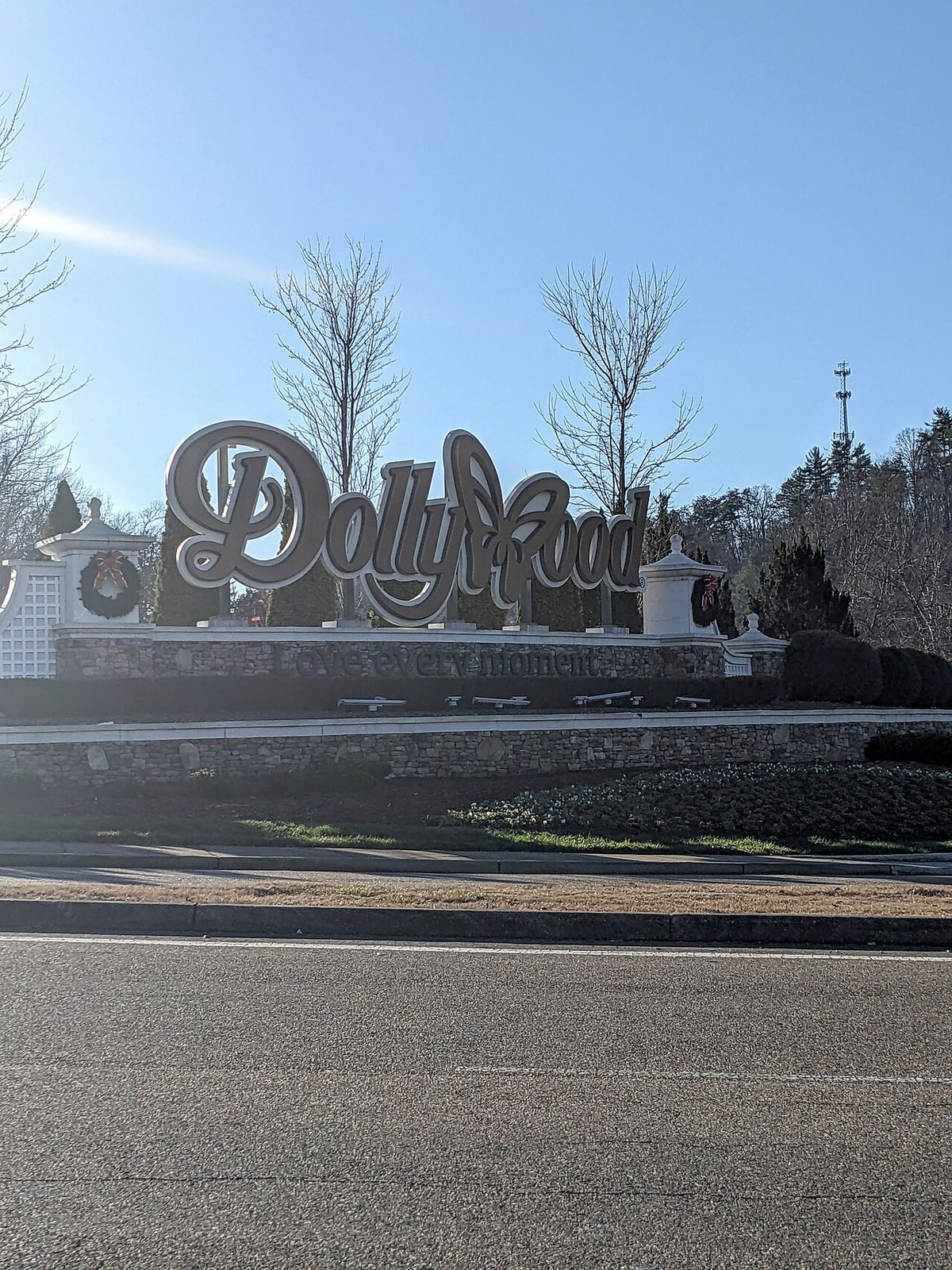
The entrance photograph supplies the other half of the idea. A theme park turns a name into somewhere families can physically visit. Songs are heard, films are watched, but a place adds weather, travel, shared routines and repeat visits. It is a very different way for a public figure to become part of someone's family memories.
7. Imagination Library put the next audience in the picture
Parton's Imagination Library began in 1995 in Sevier County, Tennessee. The programme sends age-appropriate books to enrolled young children, working through local partners as it expands. Its purpose is straightforward: make books a regular part of childhood, including in homes where buying them may be difficult.
There is a pleasing connection between that work and a career built on storytelling. A song can introduce an audience to a character in a few minutes; a picture book can become the beginning of a child's own reading habit. The archival portrait is an illustration of Parton, not a photograph of a book delivery. The programme's history and local enrolment details are available from its official site.
8. The Opry stage kept the roots visible
The photograph of a Grand Ole Opry broadcast shows a different arrangement from a solitary glamour portrait. Musicians, microphones and the stage setting remain in view. Parton is part of an ensemble and an institution, with the performance taking place inside a shared musical tradition rather than an isolated publicity setup.
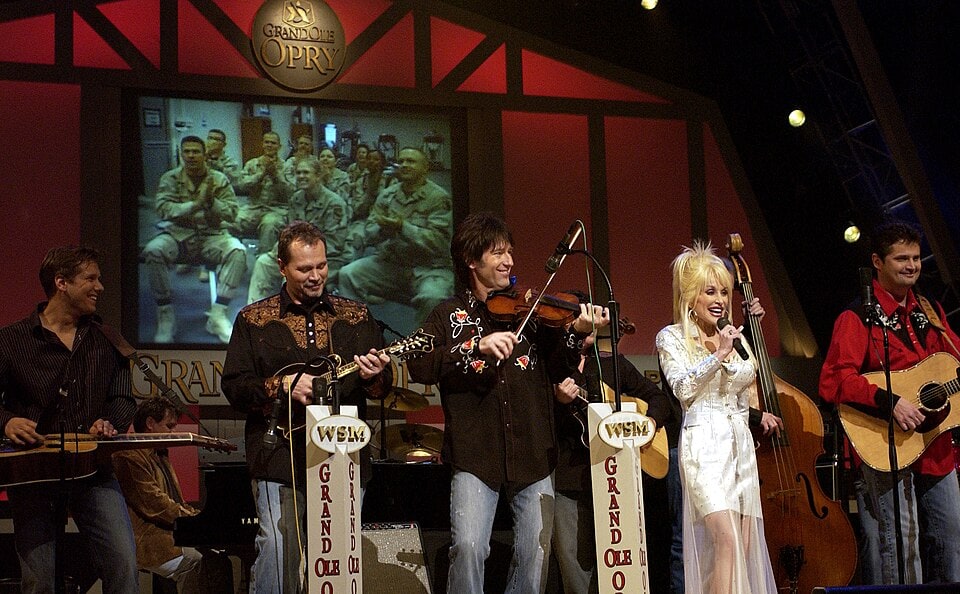
That wider frame is valuable in a career gallery. It reminds us that a recognizable individual image is supported by other performers, technicians and places. The source identifies this as a 2005 broadcast that U.S. soldiers could watch by video feed from Iraq, giving a specific occasion to a photograph that might otherwise be reduced to a generic picture of someone singing.
9. A concert image brings the elements together
The 2014 Blue Smoke tour photograph in Knoxville is a useful closing image because the familiar elements are all present: vivid clothes, detailed embellishment, a carefully built silhouette and a performer facing the audience. Unlike the early black-and-white portraits, the colour becomes an active part of the composition. The bright outfit holds the eye against the darker surroundings.
A photograph cannot reproduce the voice or the atmosphere of a concert. It can show how much the presentation contributes to the memory of one. Looking back across this gallery, the remarkable feature is not that the clothes stayed the same. It is that a consistent personality remained legible while the settings, collaborators and scale of the work kept changing.
Parton's cultural reach makes more sense when these chapters are seen together. The songwriter, television guest, actor, park figurehead and reading advocate were different public roles, but the connection between them was visible. The pictures invite a closer look at that continuity: a public image with enough confidence to move between very different stages, and enough warmth to remain approachable in each one.
Sources and further reading
- Dolly Parton: Biography
- Dolly Parton: The 1970s
- Archive photograph: 1977 publicity portrait
- Archive photograph: Dolly Parton and Carol Burnett
- Dolly Parton: The 1980s
- Dollywood: Our story
- Imagination Library: About us
- Archive photograph: Grand Ole Opry broadcast
- Performance photograph: Knoxville, May 28, 2014



.jpg)
_(cropped).jpg)


