
6 ’70s Stars Whose Signature Looks Still Stop the Scroll

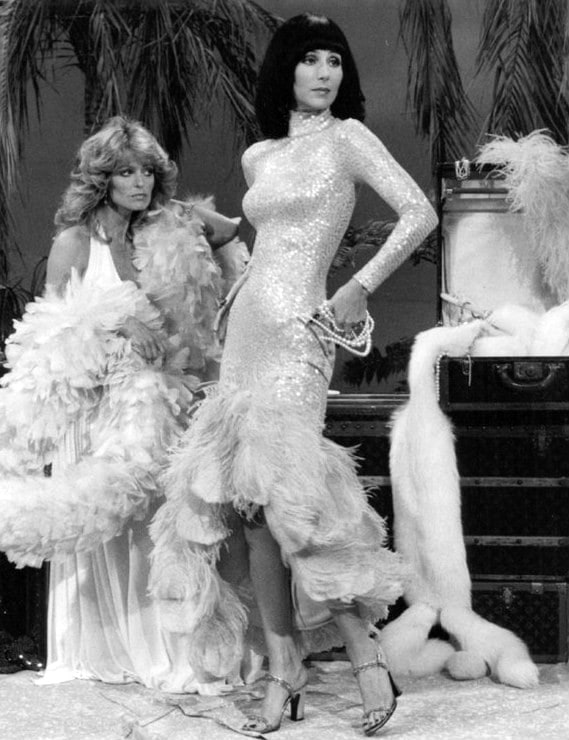
Farrah Fawcett and Cher in an archival television photograph from 1976.
Photo: CBS Television · Public domain
The 1970s did not have one celebrity uniform. Cher could turn a television appearance into a full-length fashion moment, while Debbie Harry needed little more than a direct look into the camera. Between those extremes were Farrah Fawcett’s buoyant hair, Diana Ross’s polished glamour, Diane Keaton’s easy individuality and Dolly Parton’s intricate stage style. These real archive photographs bring six distinctive versions of the decade together. Some preserve a whole outfit; others capture the expression or detail that made a face instantly recognizable.
1. Cher: a silhouette designed to hold the whole frame
The joint photograph of Cher and Farrah Fawcett is valuable because it preserves the outfits instead of reducing both women to headshots. Cher's long, fitted silhouette and the volume near the hem create a strong vertical line. The styling invites the eye to travel from the face through the garment, making the whole body part of the composition.
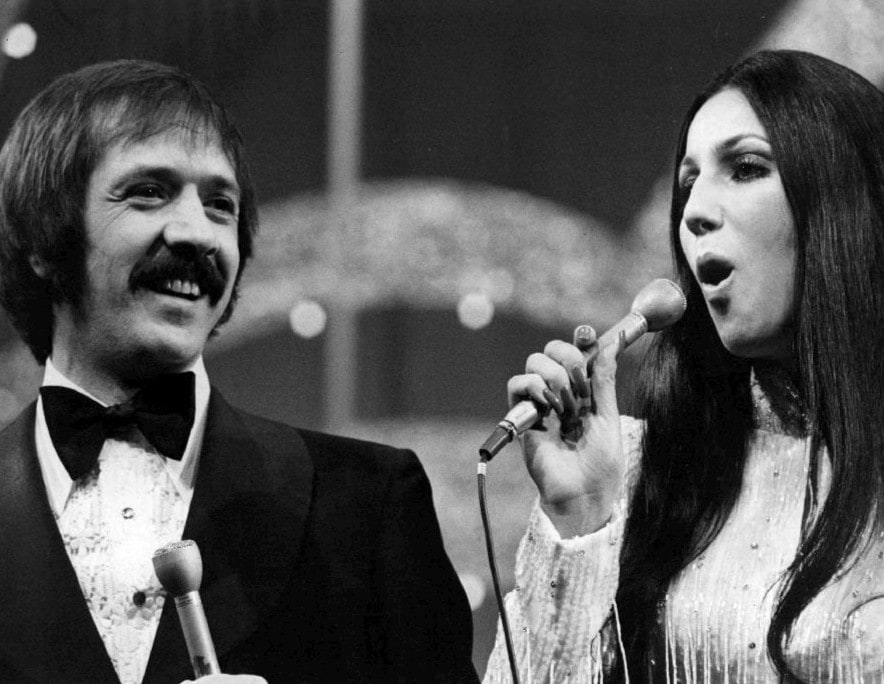
A second image, with Sonny Bono in 1973, changes the emphasis. Now the microphone and shared performance setting are part of the story. The two pictures show how a recognizable performer could move between costume, music and personality. The clothes are memorable, but they work in partnership with the pose and occasion. Removing all that context would leave a much less interesting piece of fashion history.
2. Farrah Fawcett: movement before the picture even moves
In the 1971 studio portrait, Fawcett's hair creates a soft frame that seems almost to move beyond the still photograph. The turned head and open expression keep the composition from feeling stiff. The source connects this particular portrait with The Feminist and the Fuzz, so it belongs to a specific publicity setting rather than a generic account of her entire decade.
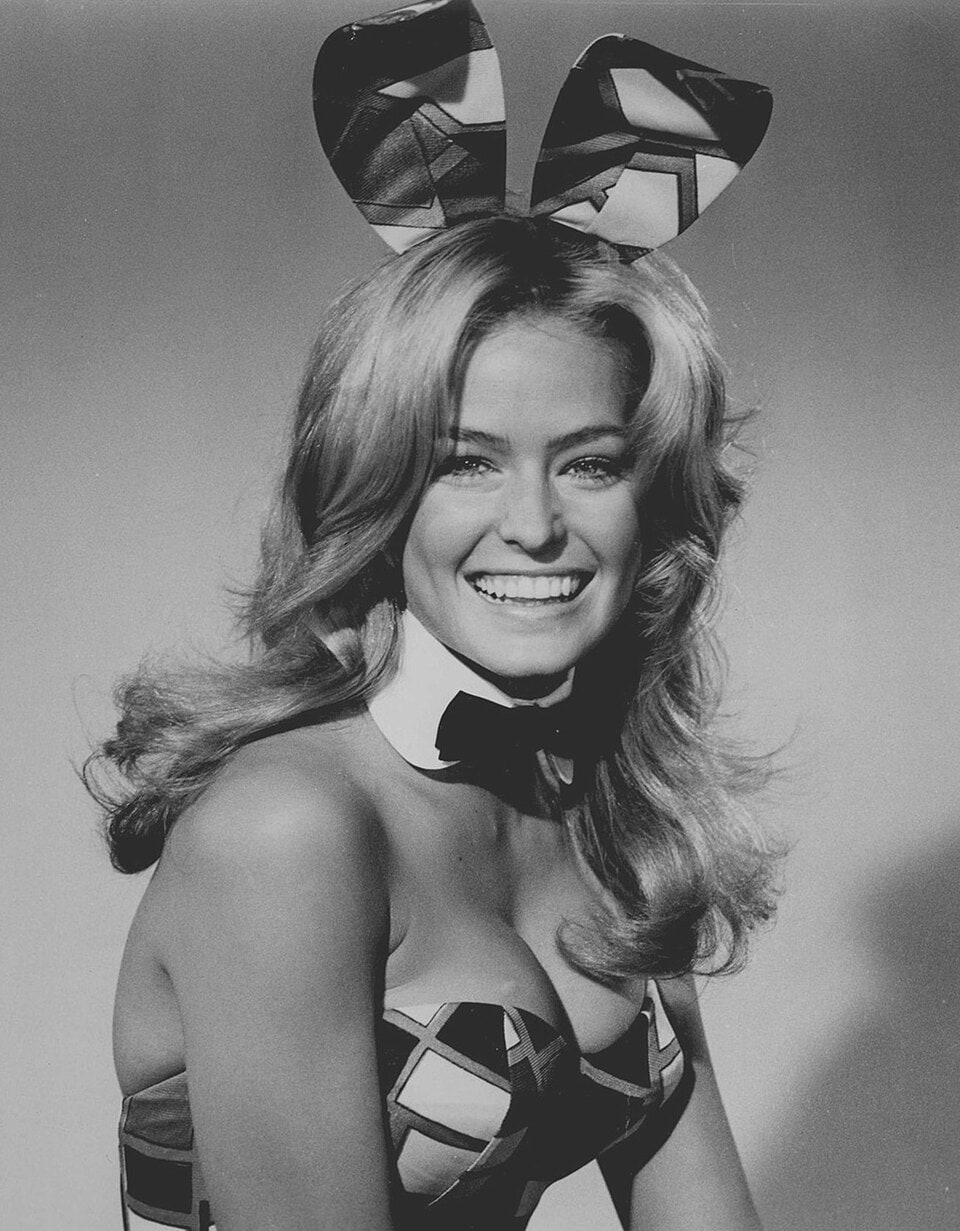
The image also shows why a signature look cannot be reduced to an item of clothing. Hair, expression and the angle of the shoulders can be as recognizable as a dress. Even in black and white, the contrast between the face, hair and darker details remains clear. A modern viewer can recognize the visual energy without needing the original television context explained first.
3. Diana Ross: the power of a tightly framed portrait
The 1976 Ross photograph is almost the opposite of a full-length red-carpet picture. The face dominates, with the hand and hair helping to shape the frame. There is little background to compete for attention. That economy is part of the image's strength: you are directed toward the eyes and expression immediately, then toward the surrounding textures.
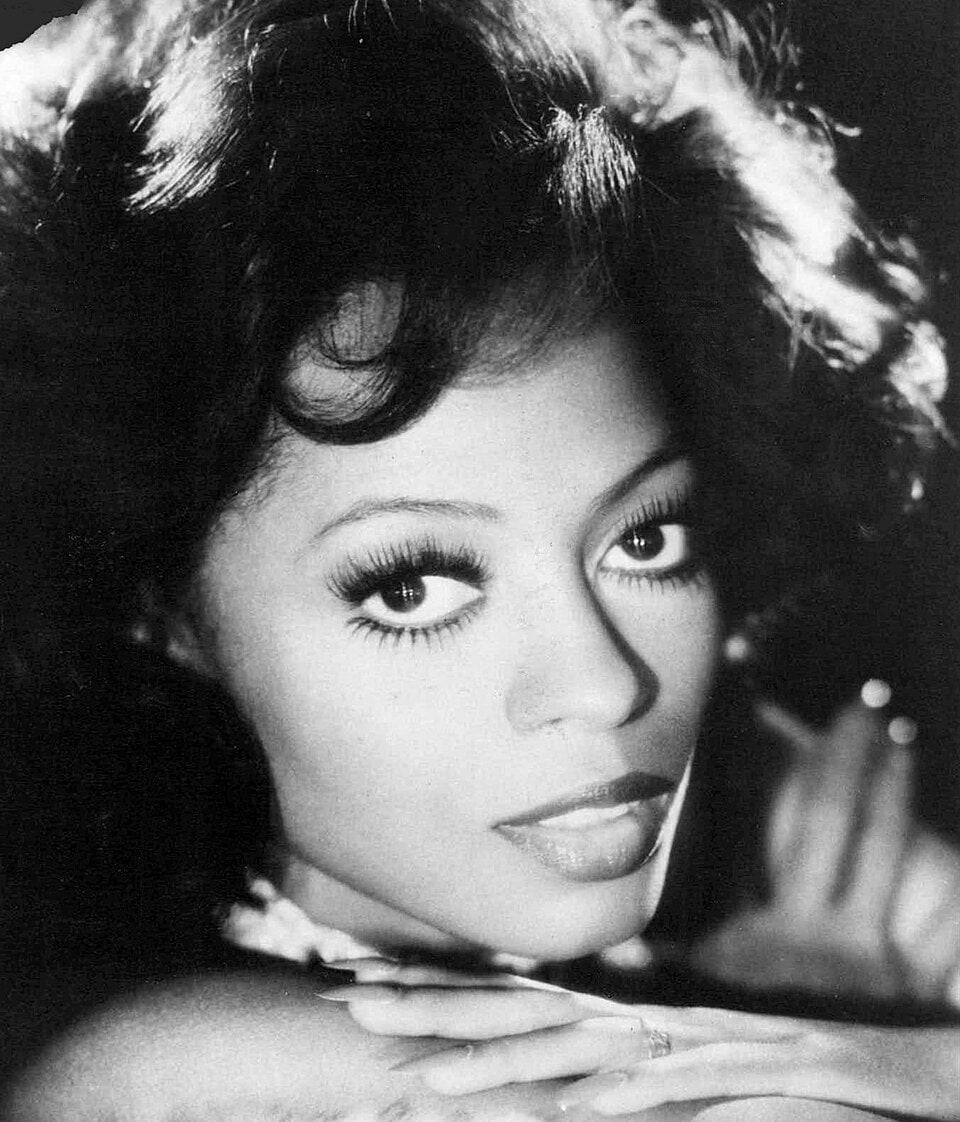
A close portrait can tell a style story even when very little of an outfit is visible. Makeup, hair shape and the way light falls across the face establish the look. It is worth resisting the temptation to invent a colour palette from a monochrome print. What the photograph clearly gives us is structure and contrast, and those elements already explain why the image remains so easy to read at thumbnail size.
4. Diane Keaton: an image that leaves room for the character
This photograph is associated with Looking for Mr. Goodbar, a film released in 1977; the source identifies the print as publicity for a later television showing. That distinction is useful. The image belongs to a character and a production, so the clothing and expression should not automatically be treated as a record of what Keaton wore in private.
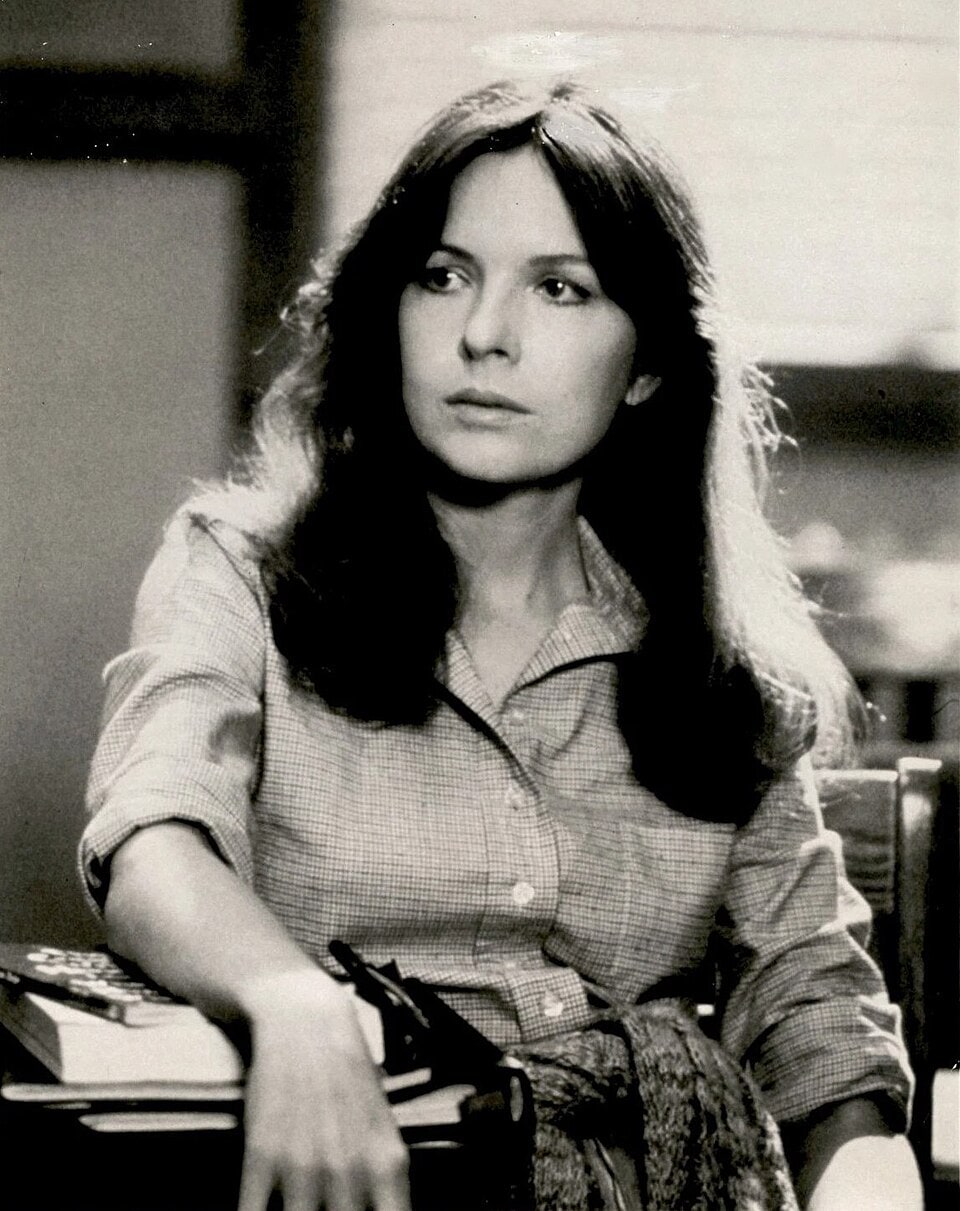
The frame has a more lived-in, scene-based quality than the glamour portraits elsewhere in this gallery. The seated pose, surrounding objects and less theatrical styling create a different kind of interest. It reminds us that period fashion is not only preserved in spectacular gowns. Ordinary-looking clothes, photographed within a film's world, can also reveal how a decade imagined a particular person and her place in it.
5. Debbie Harry: a direct gaze and a clean contrast
The 1977 Blondie-era portrait makes its strongest impression through contrast. Light hair sits against a darker neckline, while a direct gaze gives the image a firm centre. There is no need for a complex set or an elaborate pose. The photograph establishes a recognizable public identity using a relatively small number of visual elements.
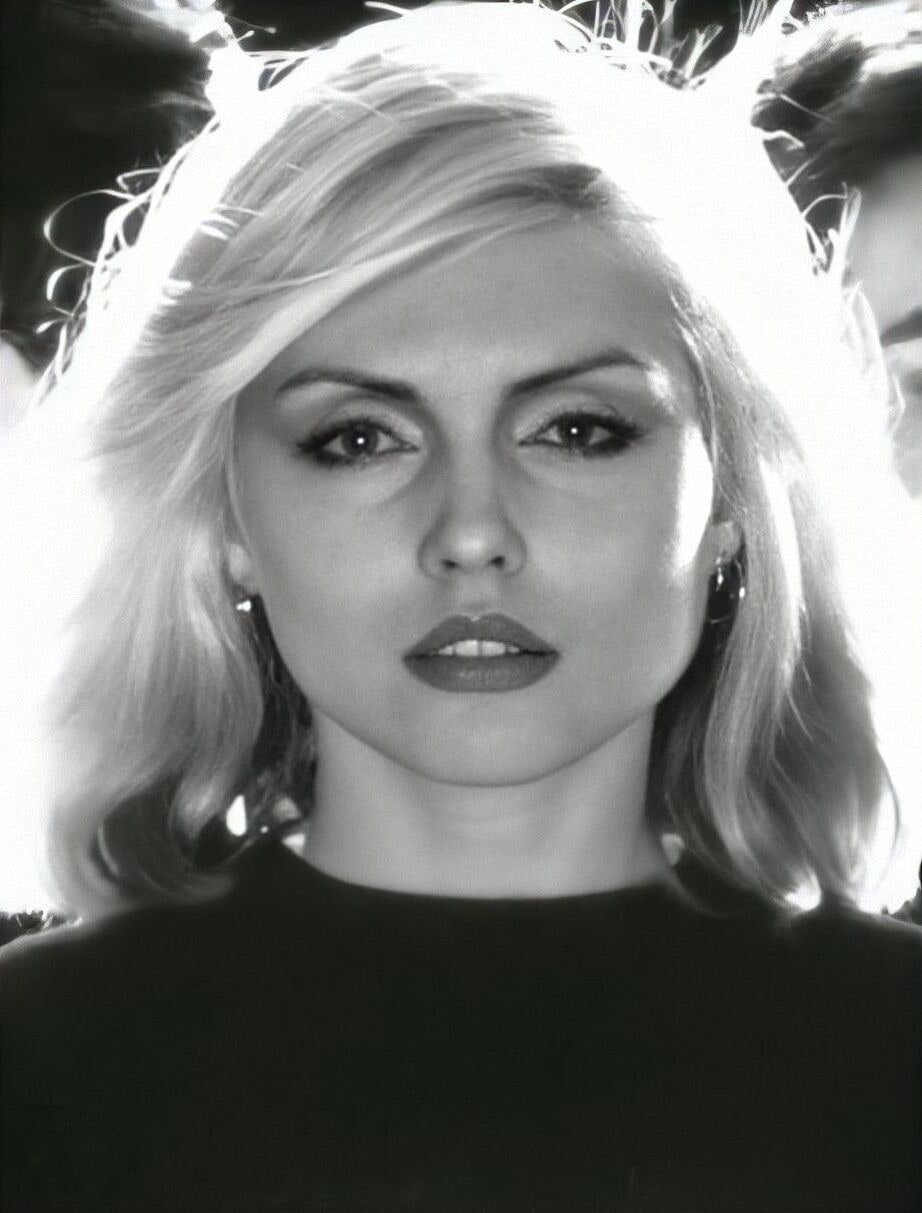
That simplicity is different from being plain. The shape of the hair, the definition around the eyes and the dark clothing all cooperate to keep the face prominent. In a gallery full of curls, embellishment and performance costumes, the more pared-back arrangement feels distinct. It is a good reminder that a period's style can contain opposing tendencies at once; the archive does not have to choose one of them as the only authentic version.
6. Dolly Parton: detail without losing the focal point
Parton's 1977 publicity image contains plenty to look at, but the face remains the centre. High-volume hair creates an unmistakable outline, while the clothing supplies texture below it. The photograph is carefully arranged enough to feel glamorous, yet the expression keeps it from becoming a distant fashion display. That combination is a large part of its continuing appeal.
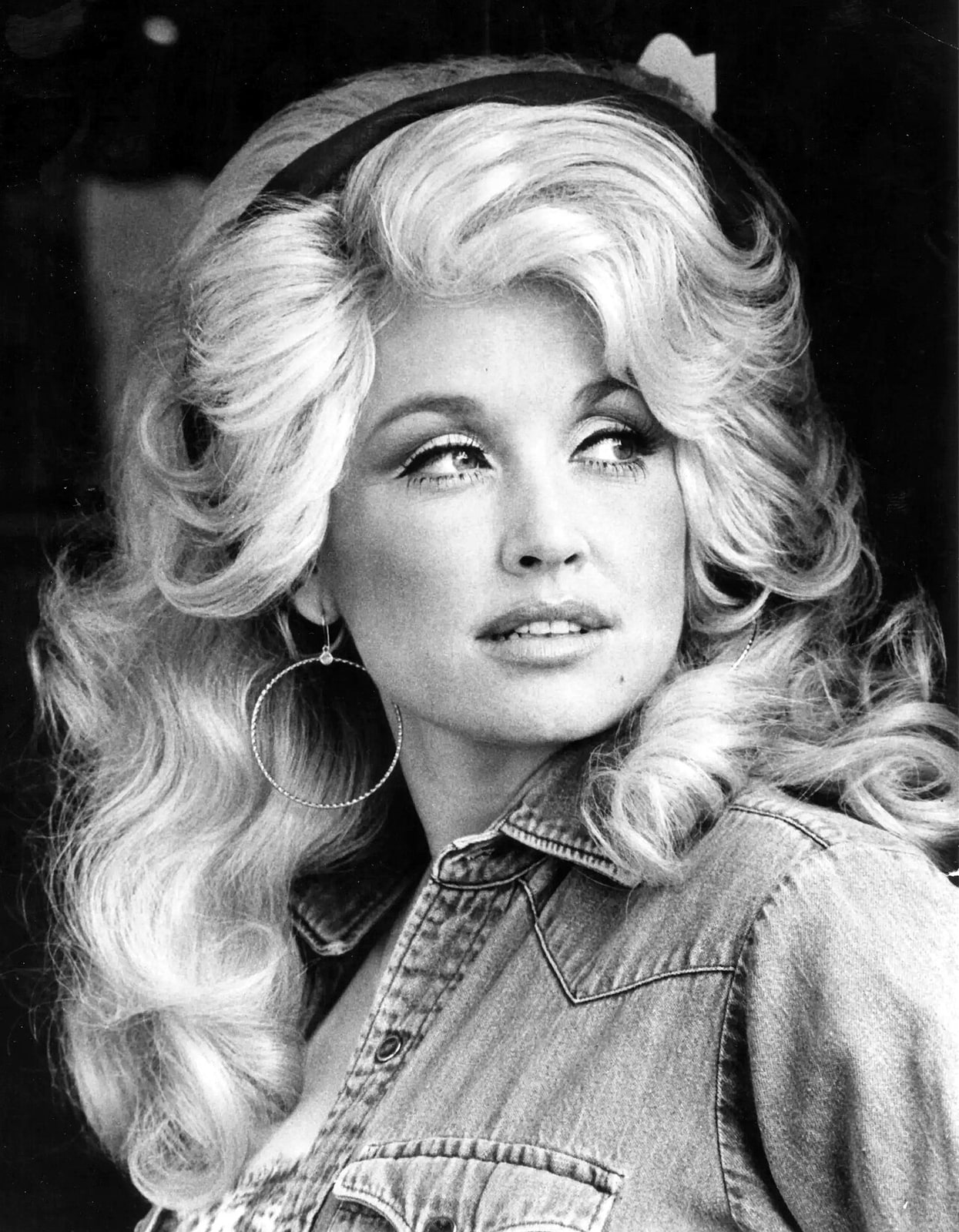
Look at the image at a smaller size and the lesson becomes clearer: the broad shapes survive even when the finer details disappear. The hairstyle, neckline and face remain readable. A successful signature look has that kind of consistency. It can reward close inspection while also working quickly, whether on a record-shop display, a magazine page or the much smaller screen through which many people now encounter the archive.
Look through these pictures together and the seventies become surprisingly hard to sum up in a single trend. Cher’s silhouette, Fawcett’s movement, Ross’s poise, Keaton’s individuality, Harry’s directness and Parton’s decorative detail each pull the eye in a different direction. That variety is why the photographs still hold attention. They preserve six performers finding a visual identity strong enough to remain recognizable long after the original television broadcast, film release or publicity campaign.





.jpg)

.jpg)

_(cropped).jpg)