
7 Real Animal Giants That Make Everyday Scale Feel Ridiculous

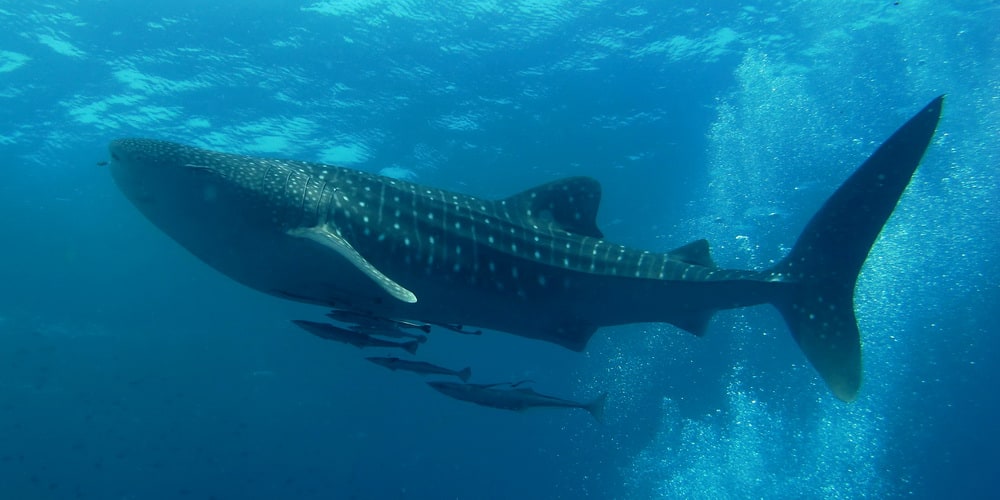
A whale shark photographed underwater.
Photo: Abe Khao Lak · CC BY-SA 4.0
A close-up can make almost any animal look imposing. These giants barely need the help. One is the largest living fish; another is the tallest animal on land; a third is so difficult to encounter that a preserved museum specimen becomes an attraction in its own right. The surprise is how differently they achieve their size. Water supports an immense body, long legs lift a head above the trees, and a powerful tail extends an animal far beyond the part we usually notice first. Here are seven real creatures whose proportions deserve a closer look.
1. Blue whale: the scale champion hiding in plain water
A blue whale can extend beyond 100 feet, according to NOAA, and large individuals can weigh roughly 150 tons or more. Those figures are hard to translate into a photograph of an animal whose back barely breaks the surface. The ocean conceals most of the shape, leaving a long, smooth outline that can look deceptively modest until a boat enters the frame.
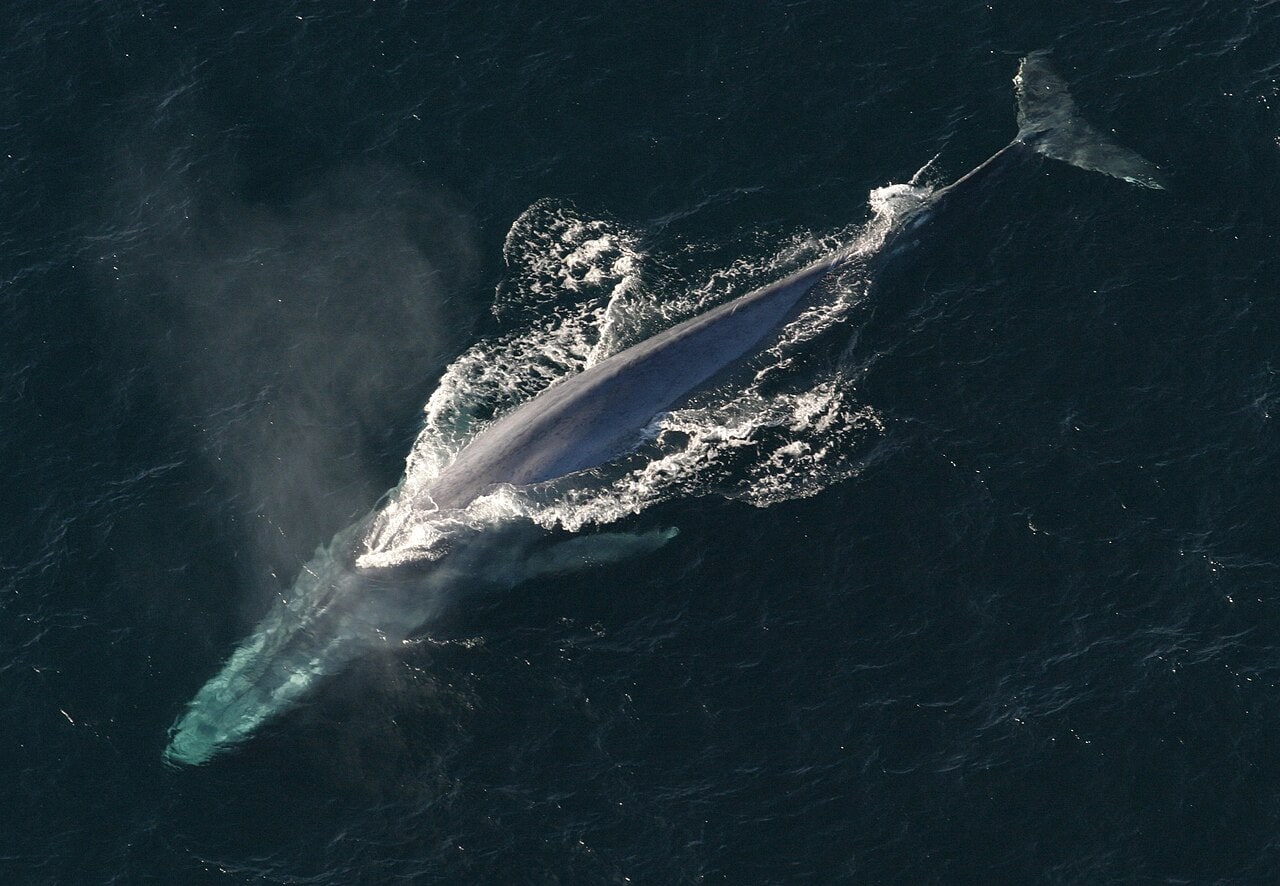
Look closely at the photograph and notice how little of the animal sits above water. Unlike an elephant, a whale does not have to support its whole mass on legs. Water changes the engineering problem. Its enormous mouth also serves an unexpectedly small menu: blue whales filter krill rather than pursuing prey anywhere near their own size. A giant body and tiny food are entirely compatible when the feeding system can process enough water.
2. African elephant: a moving landscape on four feet
The African savanna elephant is the largest living land animal. That status becomes more convincing when you stop looking only at the tusks and notice the depth of the torso, the width of the head and the substantial legs beneath it. A photograph can flatten all those dimensions into a silhouette; an elephant standing among grasses and shrubs restores a little of the missing perspective.
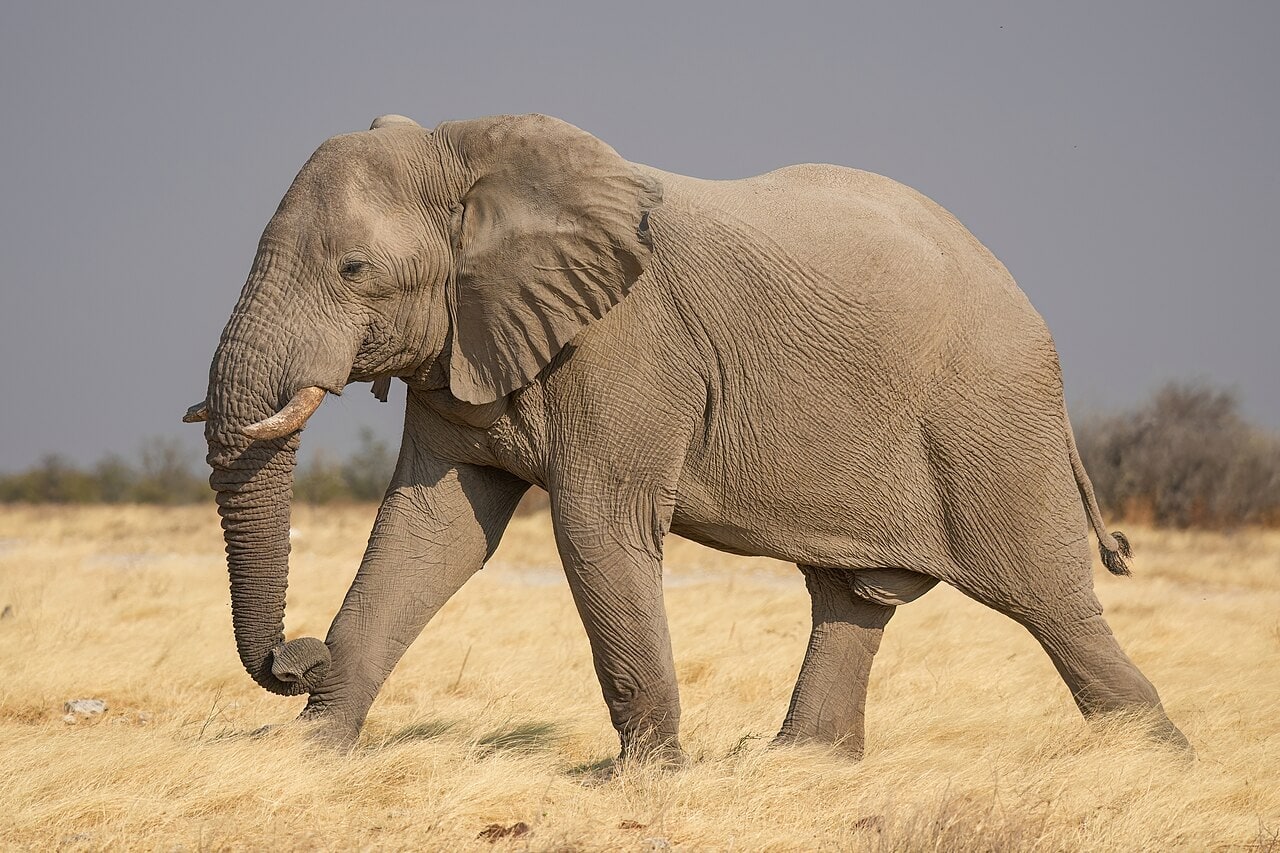
Its trunk supplies the counterpoint to all that bulk. The same animal that dominates a landscape can investigate small objects and draw food toward its mouth with a flexible extension of its face. That combination of scale and dexterity is part of what makes elephants so absorbing to watch. The tusks may draw attention first, but the trunk gives the enormous body a remarkably precise way of interacting with its surroundings.
3. Giraffe: the familiar animal that still looks improbable
A giraffe turns height into its defining feature. Its long legs and neck place the head well above the level at which most large mammals browse. San Diego Zoo describes giraffes as the tallest living land animals. Seeing one photographed beside trees is often more effective than seeing it alone: suddenly the branches, rather than the horizon, become the useful measuring line.
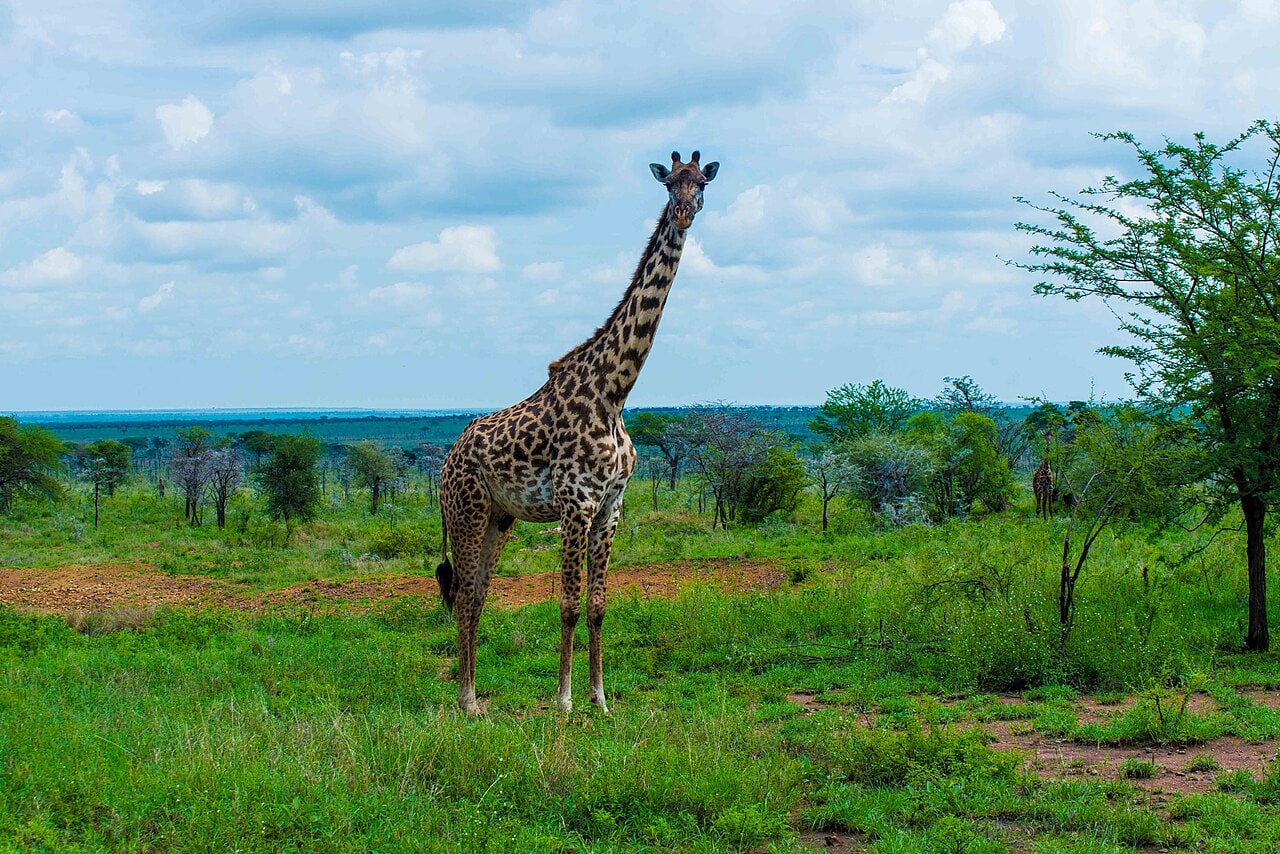
Those proportions also change how an ordinary activity looks. Feeding takes place well above the level at which most mammals browse, while the feet remain far below the head. The patterned coat breaks the long body into patches, making the outline more complex than a simple stretch of neck and legs. Familiarity can make us forget how unusual the whole arrangement is: an animal whose everyday view begins near the treetops.
4. Whale shark: an enormous fish with a surprisingly gentle silhouette
The whale shark is a shark, not a whale. It is also the largest living fish. Its broad head, long body and patterned skin make it unmistakable in a clear underwater photograph. The name can suggest an aggressive movie creature, but this is a filter feeder whose meals include plankton and other small organisms. A huge mouth does not automatically mean a diet of huge prey.
The spots add another layer of fascination. They form a pale pattern over the darker body, continuing behind the broad head toward the tail. Follow that pattern and the length becomes easier to appreciate. The shark is an example of a giant that challenges its own intimidating label: it belongs to a group famous for teeth, yet its extraordinary size is sustained through a very different feeding strategy.
5. Saltwater crocodile: low to the ground, enormous in person
A saltwater crocodile does not need to stand tall to command attention. Much of its length extends behind the body in a powerful tail, so a frontal photograph can conceal the very feature that makes a large specimen so impressive. Seen from above or at an angle, the whole outline becomes easier to understand: head, torso and tail form one continuous, heavily built animal.
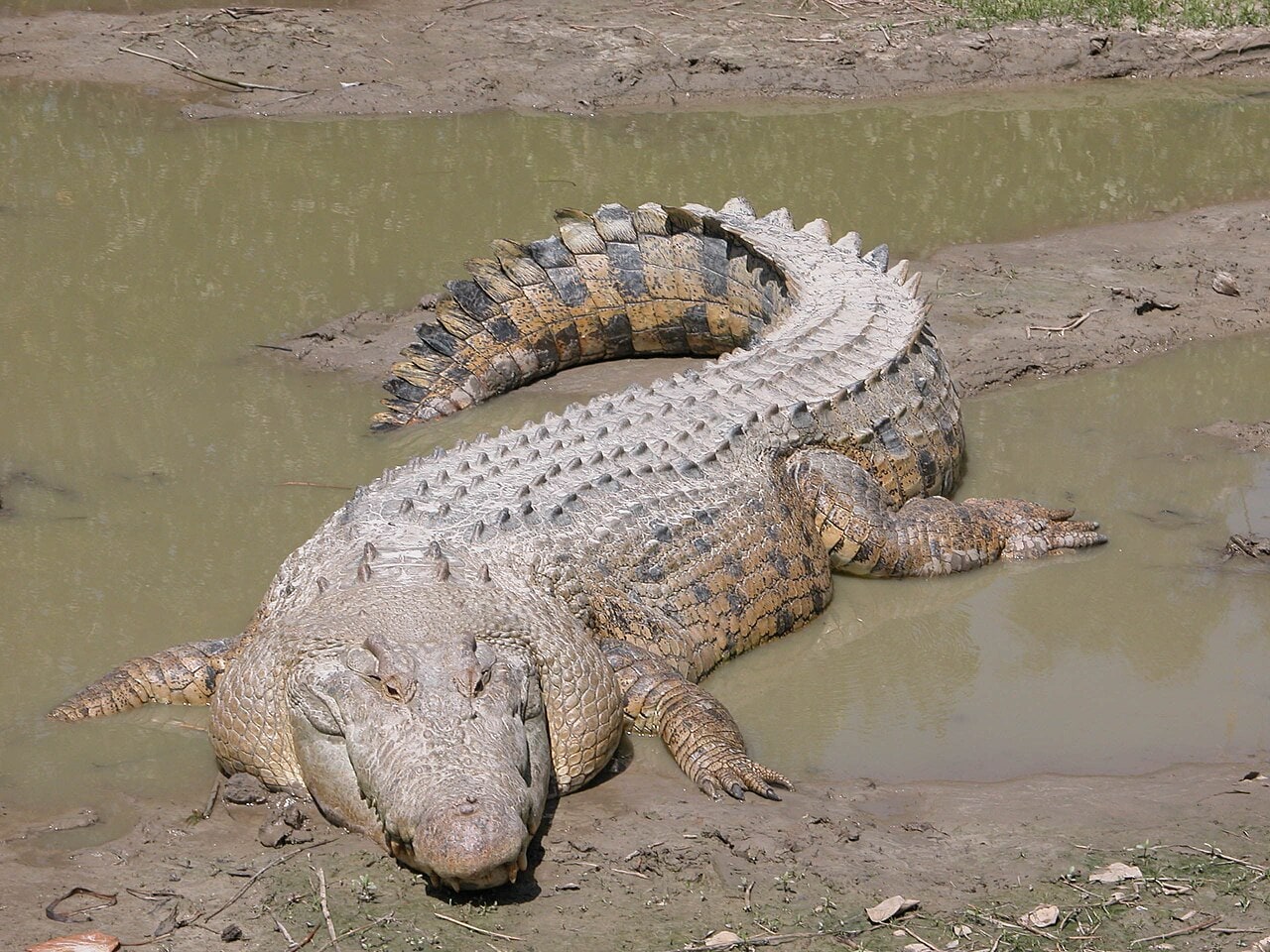
The low profile is part of the surprise. A huge animal can rest close to the surface rather than announcing its presence through height. The ridges along the back and the heavy tail make the complete outline much more impressive than the head alone. In photographs, water and mud can obscure those proportions; seeing the whole animal is what turns a familiar crocodile shape into an appreciation of its real bulk.
6. Ostrich: when a bird becomes a heavyweight
The largest living bird takes a different route from the animals above. An ostrich's long legs and neck create height, while its broad, feathered body supplies the mass. It is a flightless bird, and its proportions make that immediately understandable: the legs dominate the structure far more than the wings. Even the head can look surprisingly small compared with everything beneath it.
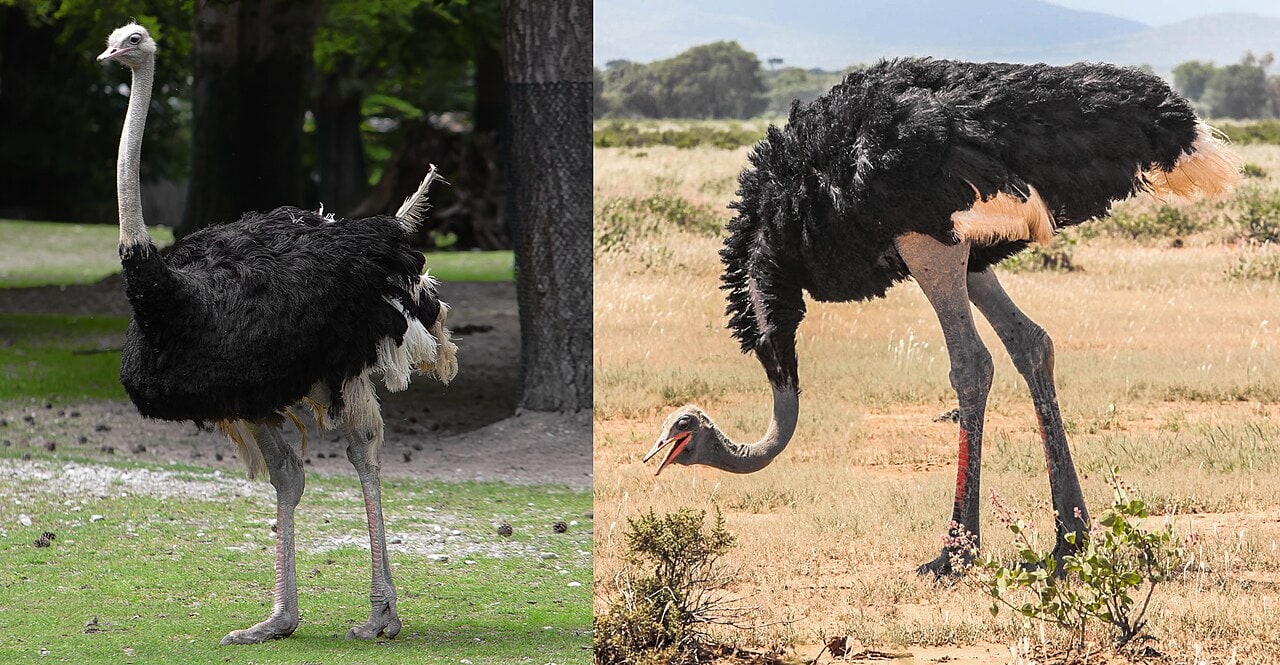
The contrast between the feathered body and bare lower legs makes the structure especially easy to notice. The head seems almost delicate above so much bird, while the wings play a very different visual role from the broad wings of a soaring eagle. It is a useful reminder that a giant does not have to be a predator or a creature from the deep ocean. Sometimes it is a familiar bird built on a startlingly large scale.
7. Colossal squid: the museum specimen that makes the name believable
The colossal squid is difficult to photograph in its natural deep-water setting, which makes preserved specimens especially important. Te Papa in New Zealand holds a specimen that weighed 495 kilograms and measured about 4.2 metres in total length. Those are measurements of a particular animal, not a claim that every colossal squid reaches exactly the same dimensions.
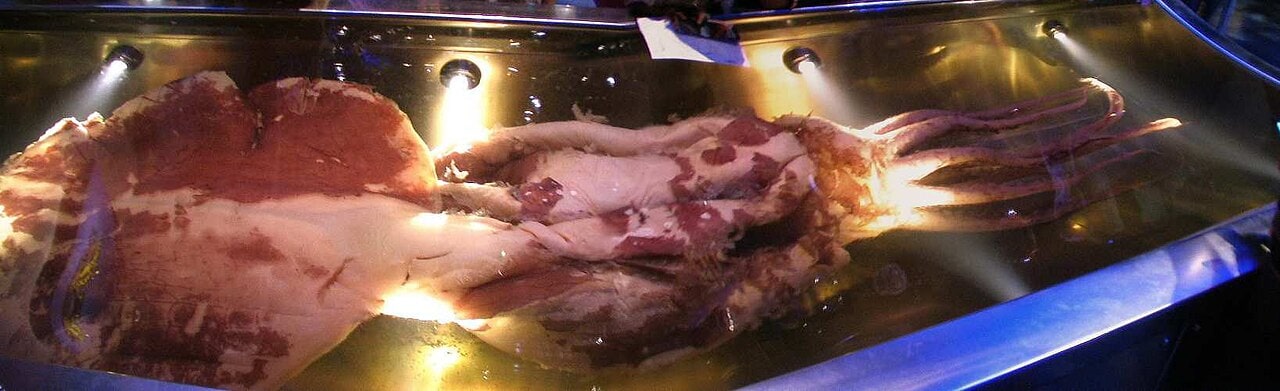
A museum tank offers something a dramatic illustration cannot: a real object that visitors can stand beside. Preservation changes the way soft tissues look, so the specimen should not be mistaken for a perfect portrait of the living animal. Even so, the mantle, arms and mass remain striking. It is a different kind of spectacle from a whale at the surface—quieter, closer and full of details that most people would otherwise never have a chance to see.
These animals are not interchangeable contestants in one size competition. The tallest, heaviest, longest and largest-bodied creatures are winning different categories. That is what makes the photographs worth lingering over. A giraffe changes the height of a landscape; a whale changes the apparent size of a boat; a squid changes what you expect to find inside a museum tank. Their real proportions are more interesting than an exaggerated thumbnail.



.jpg)

