7 Animals That Look Like Someone Invented Them

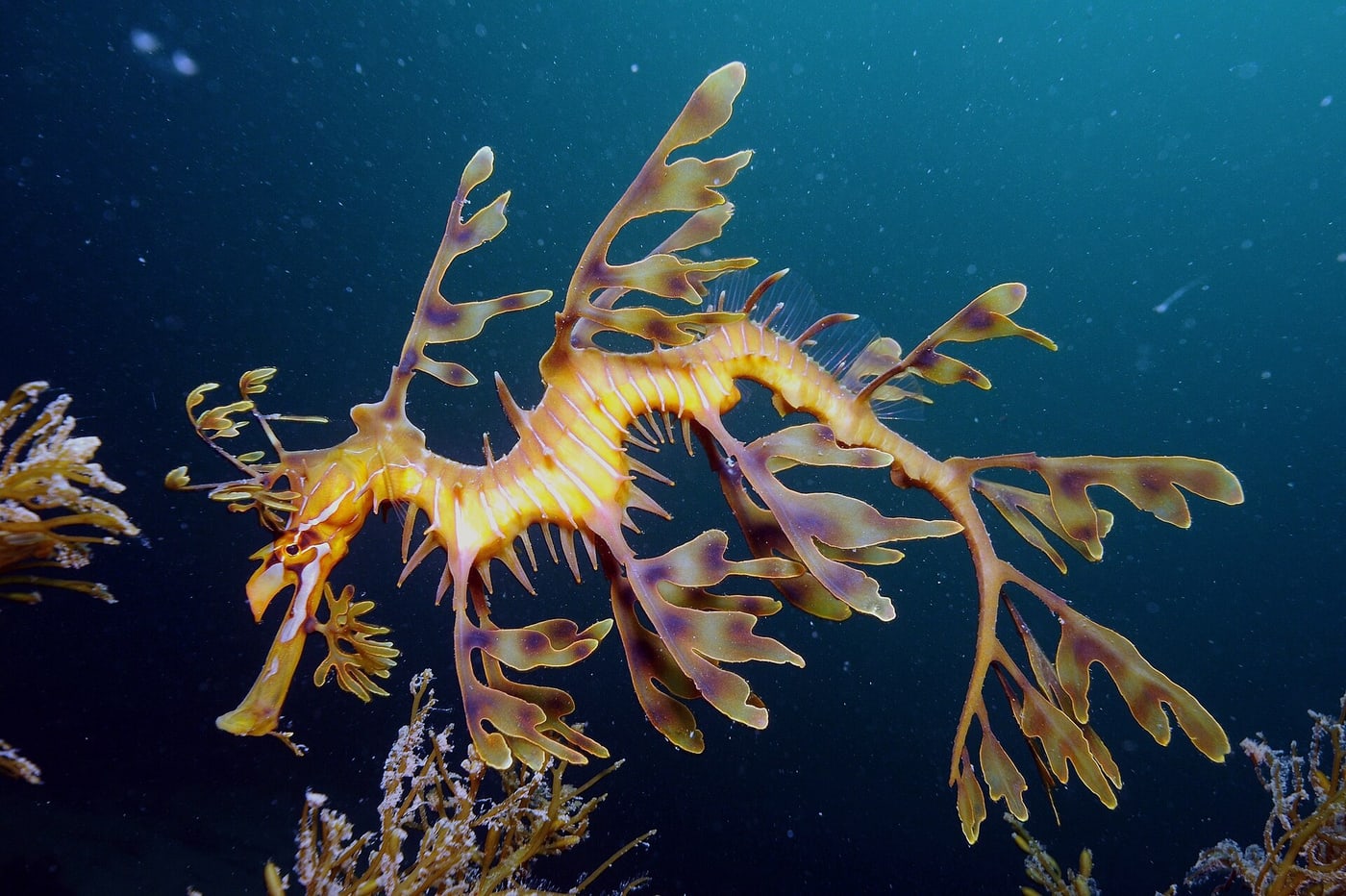
Leafy seadragon. Photo: James Rosindell / Wikimedia Commons. CC BY-SA 4.0. Resized; original image licence applies.
Some animals need no dramatic camera angle to stop you scrolling. Their outlines are unusual enough: a fringe around the face, a bill that seems too big for the head, or a body wrapped in overlapping scales. Look a little longer and the apparent oddity usually begins to make sense. These seven real animals turn a gallery of strange appearances into a glimpse of the many ways a body can solve the problems of everyday life.
1. The axolotl keeps its feathery fringe
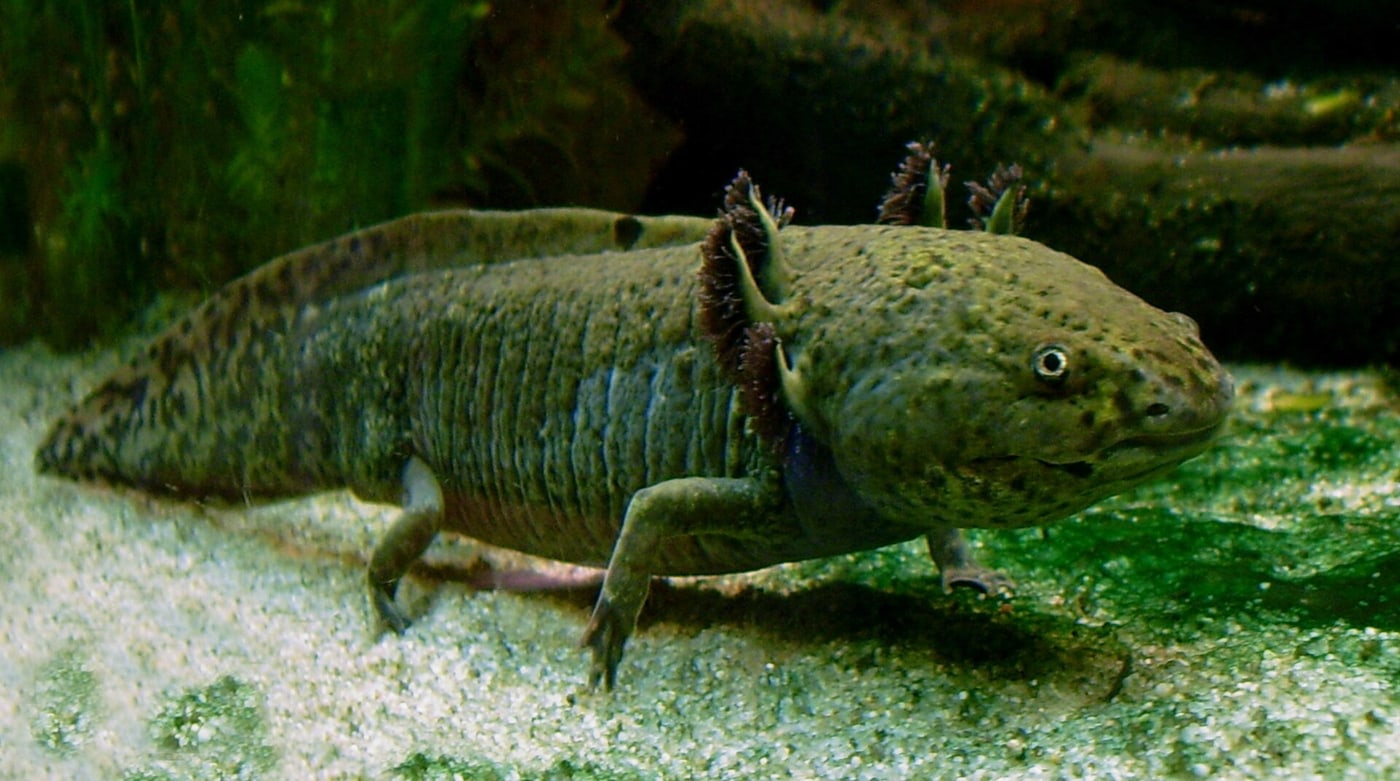
The branching structures behind an axolotl’s head are external gills. They give this aquatic salamander a remarkable profile, especially when the delicate filaments stand out against the water. Axolotls typically keep several juvenile features into adulthood, including those visible gills, rather than following the familiar salamander pattern of transforming into a mainly land-dwelling adult.
The photograph also offers a useful correction to the pink cartoon version many people know. Axolotls come in darker, mottled colours too. Their appearance can be charming without being a sign that they are smiling or posing for a human observer. Start with the fringe, then notice the small limbs and long tail: the entire animal is shaped around a life in water. [1]
2. The shoebill gives its bill top billing
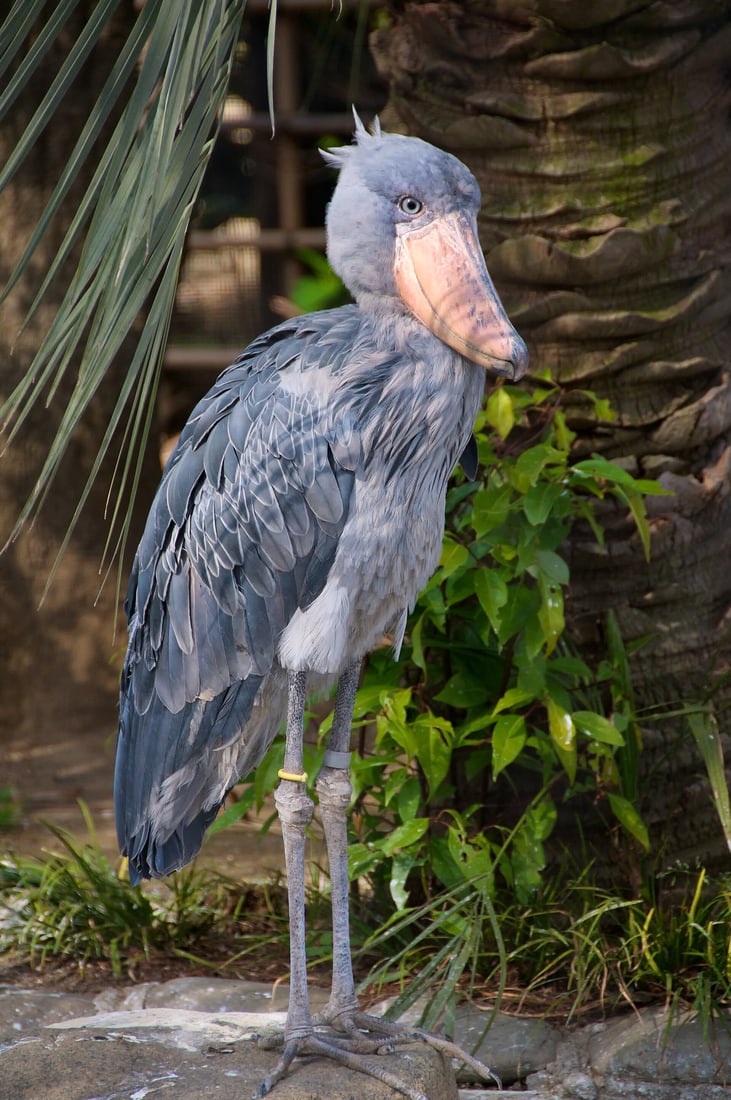
A shoebill’s enormous beak makes the rest of its face look almost understated. The broad shape, hooked tip and steady eyes produce an expression that people readily interpret as stern. In the wetlands of central and eastern Africa, that equipment belongs to a patient hunter. A bird that seems to be standing motionless may be waiting for its chance to strike at prey in shallow water.
Its bill also has uses beyond catching food. San Diego Zoo describes the birds carrying water in it to cool eggs or chicks, as well as making clattering sounds. That is a lot of work for the feature that gives the species its name. The sculptural appearance becomes even more impressive when you imagine the still bird suddenly moving. [2]
3. The saiga wears its climate equipment on its face
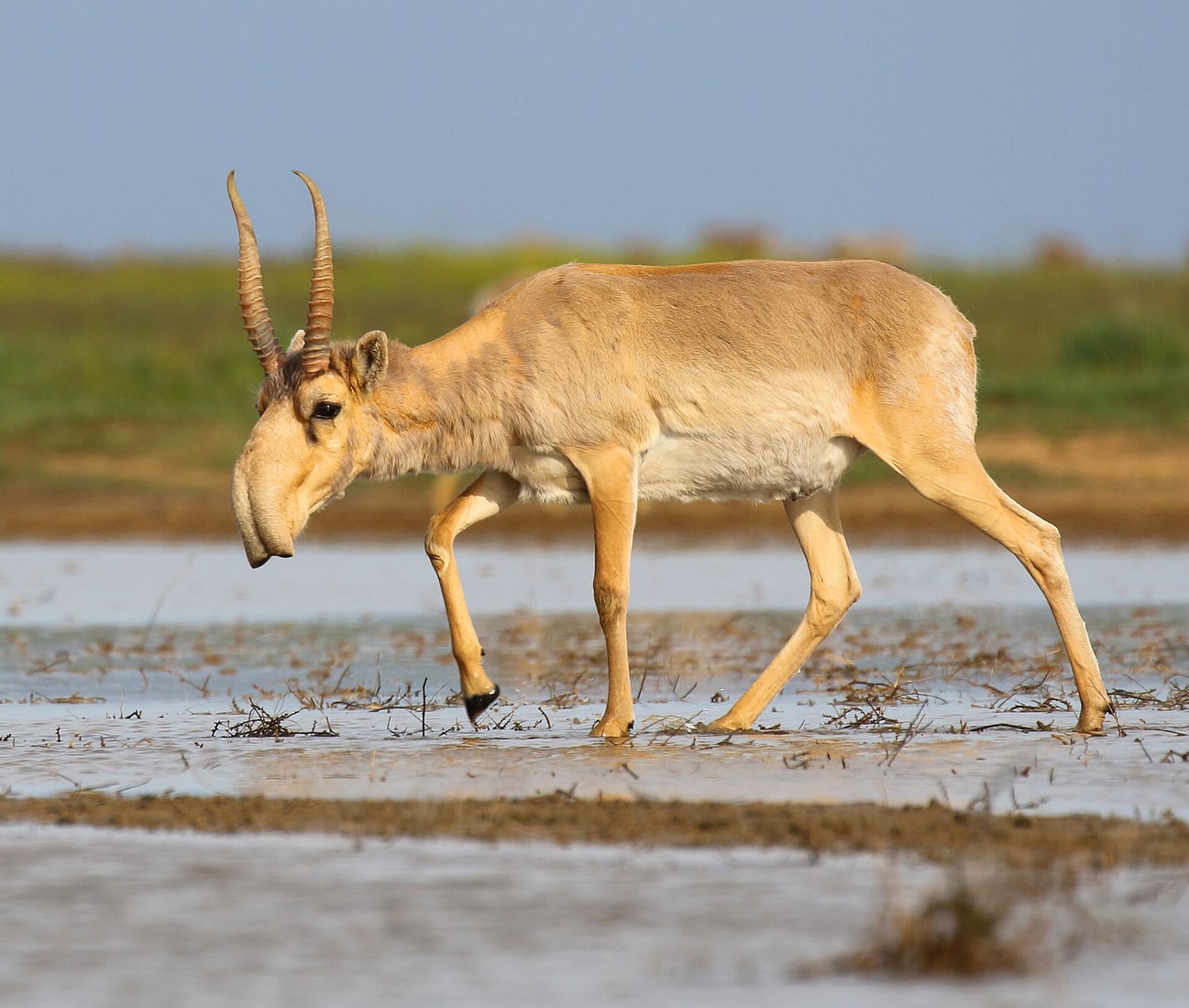
The saiga’s oversized nose hangs over its mouth, giving the animal a profile unlike the neat muzzle people often expect from an antelope. The shape has a practical role on the Eurasian steppe. The Saiga Conservation Alliance explains that it helps filter dust and warm cold air, useful functions in a landscape with very different seasonal conditions.
Seen from the side, the face can distract from the slim legs and compact body underneath it. Put those details together and the animal looks less like a visual joke and more like a specialist built for open country. Its conservation story has included severe losses and substantial recoveries, which is another reason to resist reducing the species to its most shareable feature. [3]
4. The narwhal’s “horn” is a tooth
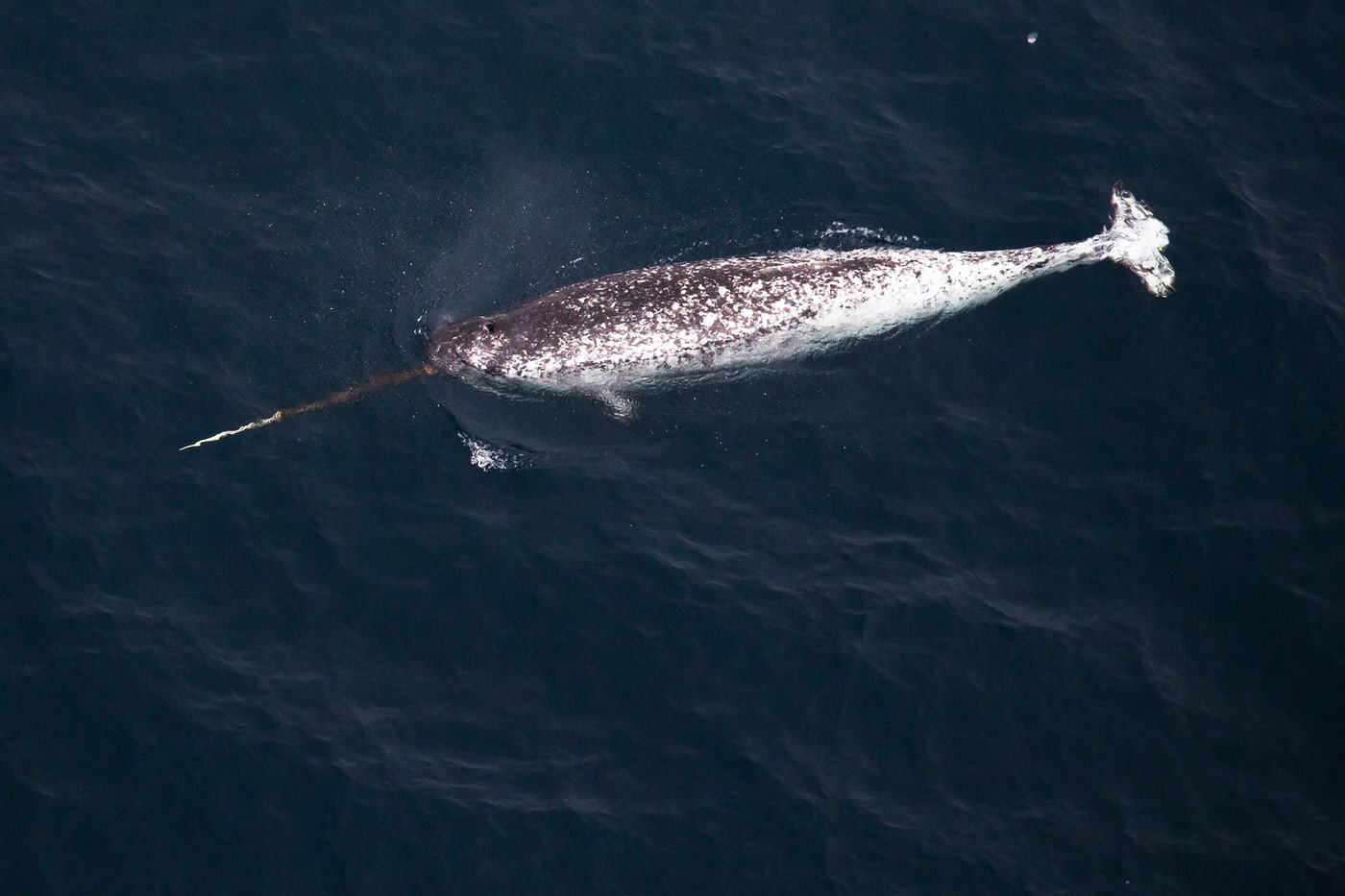
A pale whale moving through dark Arctic water would already make a striking photograph. Add a long, spiralling projection and the silhouette becomes instantly recognizable. The narwhal’s tusk is an elongated tooth, most commonly seen in males. Calling it a horn gives the right fairy-tale impression while missing the anatomical surprise.
NOAA describes several roles associated with the tusk, including social and sensory functions. It is more interesting to keep that complexity than to imagine every animal using it in the same simple way. From above, the tusk also changes how we read the whale’s proportions: the eye follows a line far beyond the rounded body. Few animals can alter an entire photograph with one tooth. [4]
5. The leafy seadragon disappears in plain sight
At first glance, the leafy seadragon can resemble a fragment of drifting seaweed. Its elaborate appendages interrupt the outline of the body, while the small fins that actually move it are much easier to miss. This fish lives in coastal waters around southern Australia, where blending into vegetation is a useful way to avoid attention.
The photograph rewards a second look. Trace the long snout, locate the eye and follow the body through the apparent leaves. The animal begins to emerge from its disguise without losing any of its strangeness. Aquarium of the Pacific notes that its tail cannot coil like a seahorse’s. Even among close-looking relatives, the details of how an animal moves and holds itself can be surprisingly different. [5]
6. Glass frogs make camouflage a little transparent
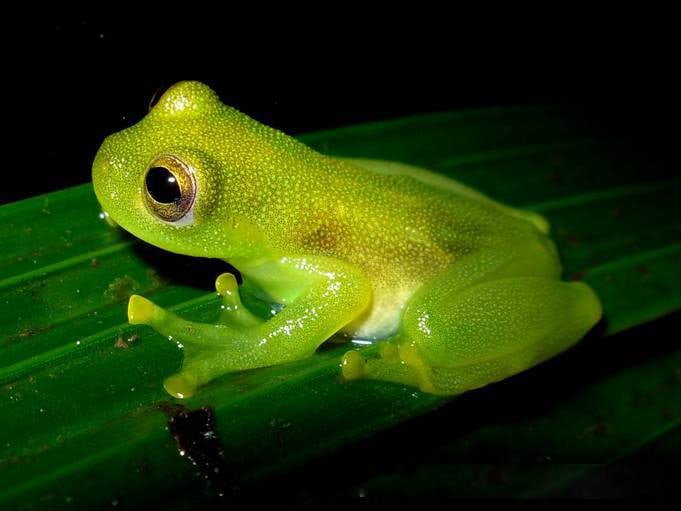
A glass frog viewed from above can seem simply small and green. The name comes from the translucent or transparent skin on the undersides of members of this group, which can reveal internal structures. Species differ, so a photograph of one frog should not be treated as a complete guide to all of them.
Researchers studying the northern glassfrog found an additional trick: resting animals could move many red blood cells into the liver, increasing transparency. That finding concerns a studied species, rather than proving every glass frog works identically. Even without seeing the underside, the photograph captures the delicate body and leaf-like colouring that help explain why these frogs can be so easy to overlook. [6]
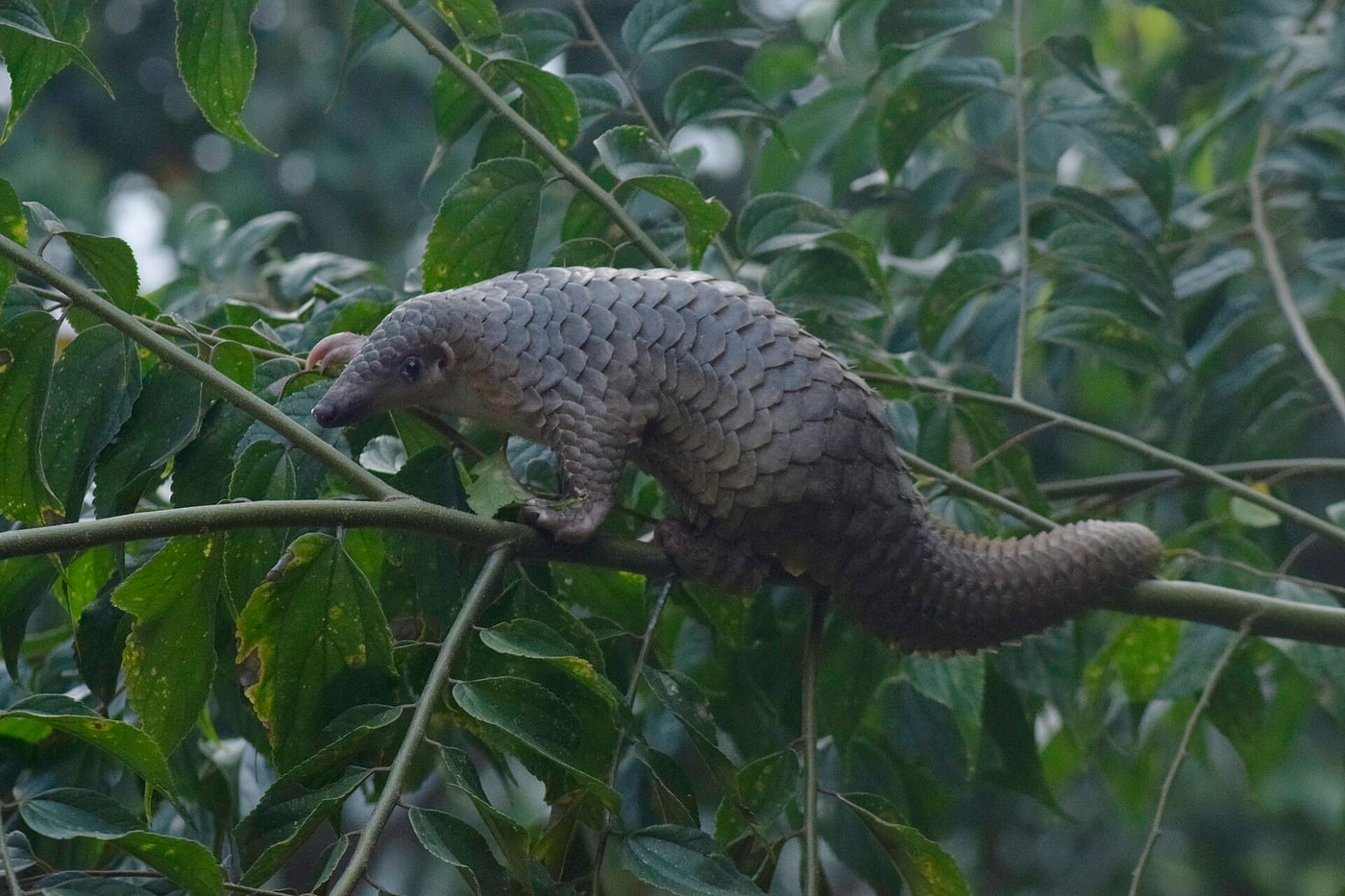
7. The pangolin looks armoured from head to tail
Overlapping scales give a pangolin the appearance of a small walking pine cone. It is a mammal, and those scales are made from keratin, the same broad type of material found in human nails. In the photograph, the repeating pattern is especially clear along the back and tail, where each scale becomes part of a flexible covering.
The narrow head and long body are equally distinctive once you look beyond the armour. Pangolins feed on ants and termites, and their defensive response can include curling into a ball. That protection has not kept them safe from illegal wildlife trade. Their unusual appearance is a reason to learn about them, while remembering that an extraordinary-looking animal still needs an ordinary chance to survive in its habitat. [7]
The appeal of these animals starts with a double take. It becomes more satisfying when the gills, scales, tusk or leaves have a story attached. Nature has produced a much wider range of workable body plans than our everyday encounters tend to suggest.